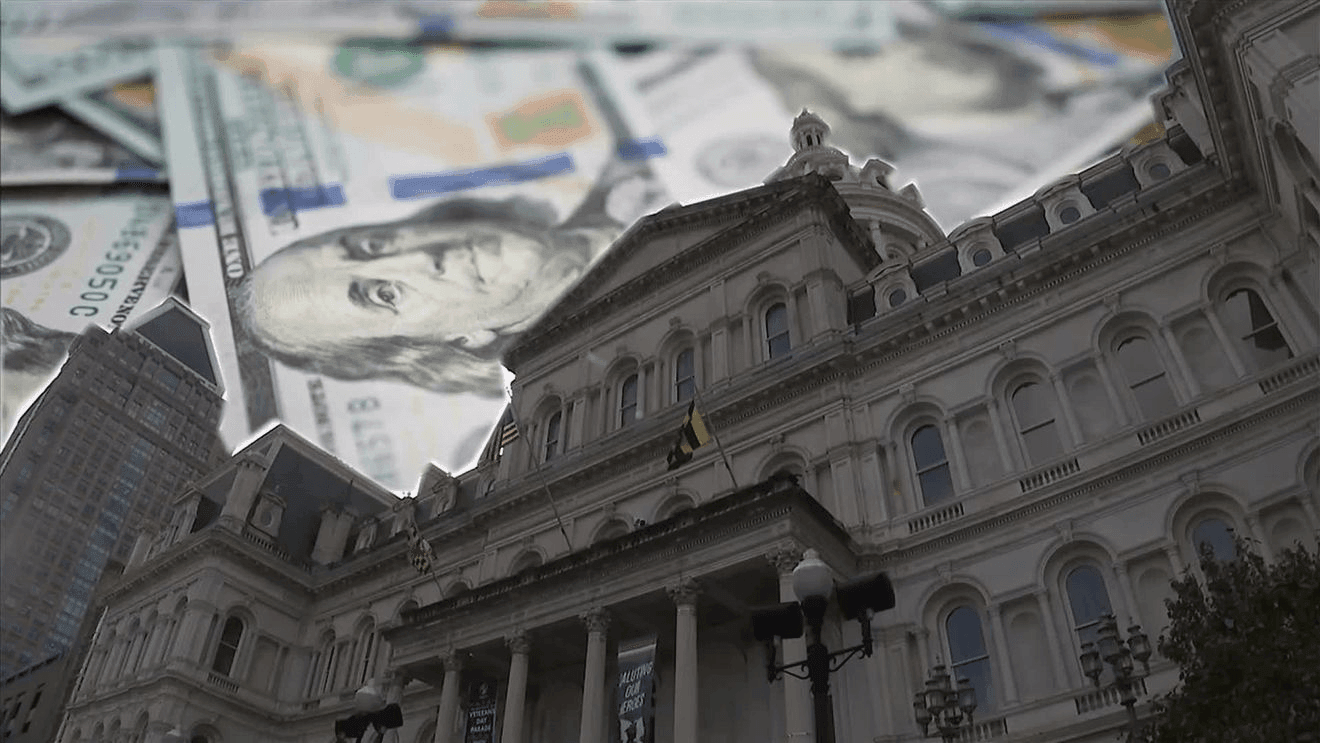
BALTIMORE (WBFF) — Baltimore City Council members moved quickly on Monday to lower the city’s property tax, however, critics insist the so-called tax relief plan could actually result in tax increases.
The measure received early approval Monday and would reduce the property tax rate by 1 cent for every $100 of assessed property value. Under the plan, owners of a $200,000 home would see a $20 tax reduction, while owners of a $500,000 home would receive a $50 tax break.
Supporters argued the proposal offers tax relief without jeopardizing city operations. “This proposal strikes the right balance by providing meaningful tax relief while preserving core city services for residents,” said council Vice President Sharon Green-Middleton. Councilman Zeke Cohen also supported the approach, saying, “Cutting property taxes is an important way to give back to the residents in this city.”
ALSO READ | Baltimore City Council eyes record budget as promised property tax cut fades
But Councilman Yitzy Schleifer warned the plan could raise taxes for some homeowners. “The people who win only win slightly and the people who lose lose big time,” said Schleifer.
Schleifer’s concerns center on a separate change included in the proposal: increasing the homestead property tax credit cap from the current 4 percent to 5 percent. He said that adjustment could allow homes to be assessed at a slightly higher rate, potentially offsetting the 1-cent tax-rate reduction.
“This bill robs Peter to pay Paul. This is not the city giving anything to the taxpayers this is neighbors subsidzing other neighbors,” Schleifer said. “Let me be clear, this vote and this bill is a tax increase;… this increases the homestead cap a protection that homeowners have,” said Schleifer.
ALSO READ | Amid affordability concerns, some states look to provide property tax relief
The 1-cent reduction also does not align with the city’s own 10-year financial plan, which called for a 2-cent reduction next year.
BE THE FIRST TO COMMENT
Opponents argued that true tax relief should come from reducing government costs. “This is not responsible tax reduction. Responsible tax reduction is finding savings and finding ways to be more efficient within government to reduce taxes,” argued Schleifer.
 Local Story