The Scott Jennings Show
8:00 pm - 10:00 pm
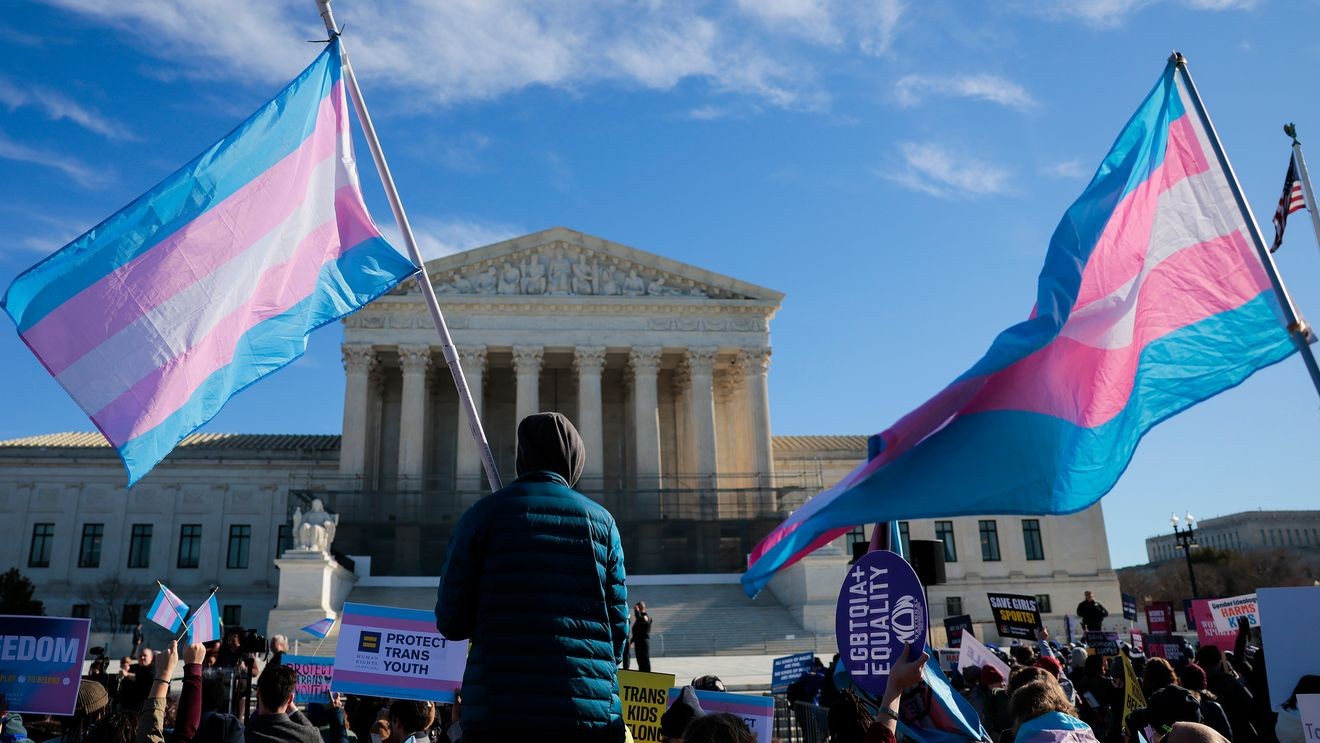
WASHINGTON (TNND) — The Supreme Court is expected to rule in favor of Idaho and West Virginia’s bans on transgender athletes who identify as female from participating in girls’ and women’s sports in public schools, clearing the way for more than two dozen other states with similar restrictions.
Justices heard arguments for more than three hours earlier this week on two cases challenging state laws on trans athletes, and most analysts’ takeaway was the high court will rule in favor of the states in a legal and political battle that has been brewing for years. Arguments on both sides were over concerns of fairness, scientific uncertainty and discrimination.
Both cases, Hecox v. Little and BPJ v. West Virginia, are the first time the Supreme Court will directly weigh in on the issue. The restrictions on transgender athletes are fairly new, with Idaho being the first state to pass a ban in 2020 and starting a wave of others like it.
Prior to Idaho’s statute, the decision on how to handle transgender athlete’s participation was mostly left up to local athletic associations. But the last six years has brought a wave of laws quickly passed in more than half the country as the political debate over the issue intensified.
Idaho, whose statute’s constitutionality is being debated by the justices, was the first to enact a statewide law in 2020. West Virginia’s was passed in 2021, another early adopter of the restrictions that have now passed in 27 states.
Idaho Attorney General Raul Labrador said it was an issue of common sense.
“If anybody 10 years ago would have said that we would be before the U.S. Supreme Court today, arguing whether a male who identifies as a female should have a right to participate in women’s sports, I think most people would think that we were crazy,” Labrador said Tuesday on “Fox & Friends.”
State officials who argued the case said they were confident the Supreme Court would deliver a resounding decision.
“We all fully expect that this is going to be a 9-0 decision. We are right on the facts. We’re right on the constitution. We are right in public opinion, but importantly, we’re right on common sense. And these are the kind of issues that even conservatives and liberals can agree on,” West Virginia Attorney General McCuskey said at a press conference on Monday.
A decision on the cases is expected to come early this summer.
Backlash over transgender athletes participating in women’s sports became a national flashpoint when Penn swimmer Lia Thomas become the first trans woman to win an NCAA championship after spending the first two years of her career on the men’s team. San Jose State University’s women’s volleyball program also became the subject of national debate when five schools forfeited matches because its roster included a transgender athlete.
A bill barring transgender girls and women from competing in female athletics from elementary school through college passed the House last year but stalled out in the Senate with Democrats all opposed to it.
Trump signed an executive order in February directing the Department of Education to tell school systems and colleges that forcing girls and women to compete with trans girls and women was a Title IX violation that risked losing federal funding. The NCAA revised its policy after the order limiting participation in women’s athletics to athletes who were assigned female at birth.
On Wednesday, the Trump administration announced it had opened investigations into 15 school districts and three colleges for allowing transgender athletes to compete in girls’ and women’s athletics.
There is no clear count of the number of trans athletes playing in K-12 sports. NCAA president Charlie Baker told Congress in 2024 that there were fewer than 10 trans athletes out of 510,000 students who play college sports. But the rarity has done little to minimize the political debate or stop bans from going into effect.
Republicans have held up the issue of transgender athletes and Democratic lawmakers’ unwillingness to support bans as evidence the party has gone too far left and is out of touch with the public.
Polling has found Americans’ support for trans athletes being able to play on teams matching their gender identity has slipped over the years as more bans have gone into effect. A Gallup survey last summer found 69% of Americans said transgender athletes should only be allowed to play on sports teams that match their birth gender, including 45% of Democrats and 23% of independents.
How to deal with trans athletes has somewhat divided Democratic politicians, though some high-profile figures have said concerns about fairness are legitimate and suggested restrictions may be necessary. California Gov. Gavin Newsom, a frontrunner for the 2028 presidential nomination, made waves last year when he was early to break with the party.

 National Headline