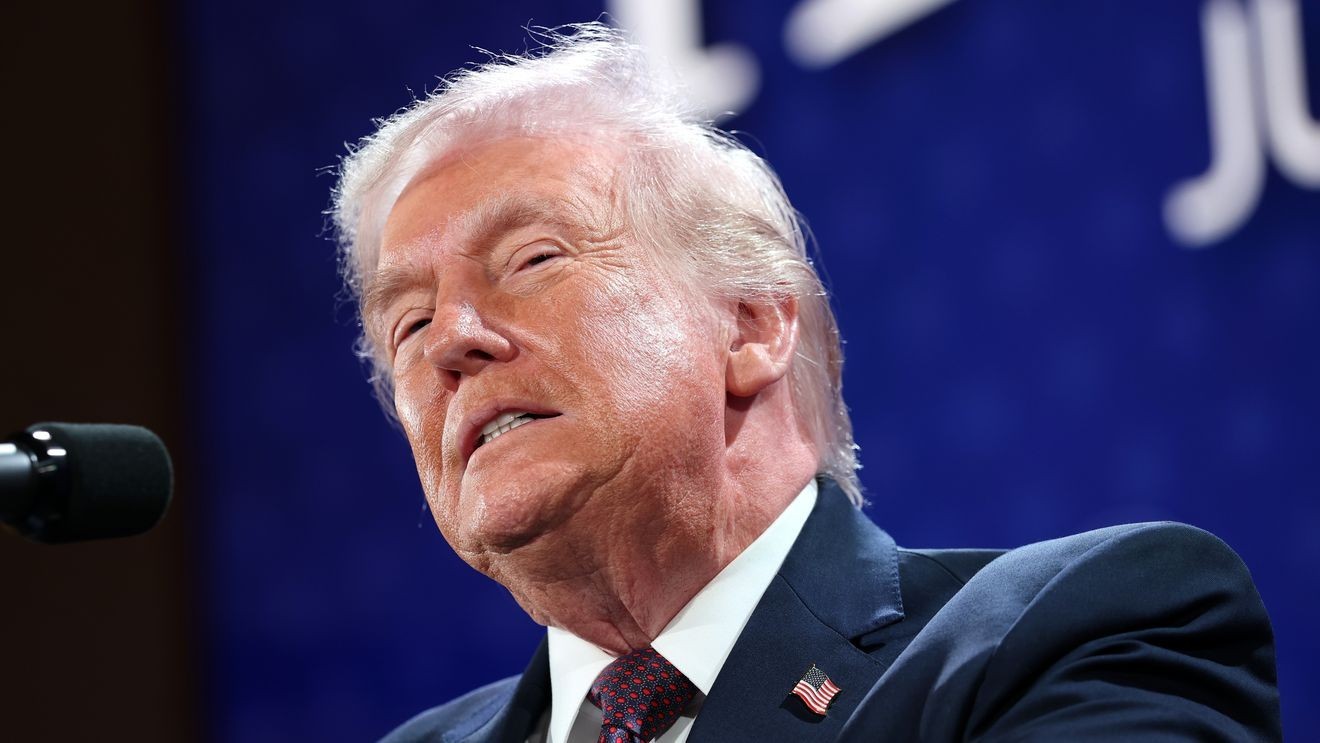
(TNND) — President Donald Trump is pushing for the passage of a bill that would require voters to provide in-person proof of citizenship to register and an eligible photo identification to cast a ballot.
“America’s Elections are Rigged, Stolen, and a Laughingstock all over the World. We are either going to fix them, or we won’t have a Country any longer,” Trump said in a weekend social media post while calling on Republicans to support Texas Rep. Chip Roy’s SAVE America Act.
The bill is expected to get a House vote this week.
Two previous versions of the bill passed the House on a partisan basis but stalled in the Senate, which has a higher threshold for passage.
Experts said the same is likely to happen this time around.
“I just don’t see any way, shape or form that you’re going to get to 60 votes in the Senate,” said Mark Jones, a political science fellow at Rice University’s Baker Institute.
The bill has some “relatively common sense” parts that could drive bipartisan consensus, Jones said. Polling shows most Americans support voter ID.
But Jones said the bill “raises the costs and obstacles and barriers” for voter participation, and he said Democrats won’t go along with that.
Americans would need to show documents, like a passport or a birth certificate, to register to vote.
The Brennan Center for Justice said its research shows that more than 21 million Americans don’t have those documents on hand.
About half of Americans don’t have a passport, according to the Brennan Center.
And millions lack access to a paper copy of their birth certificate, the group said.
The Brennan Center said the SAVE Act would disenfranchise American voters, with younger voters and minorities disproportionately affected.
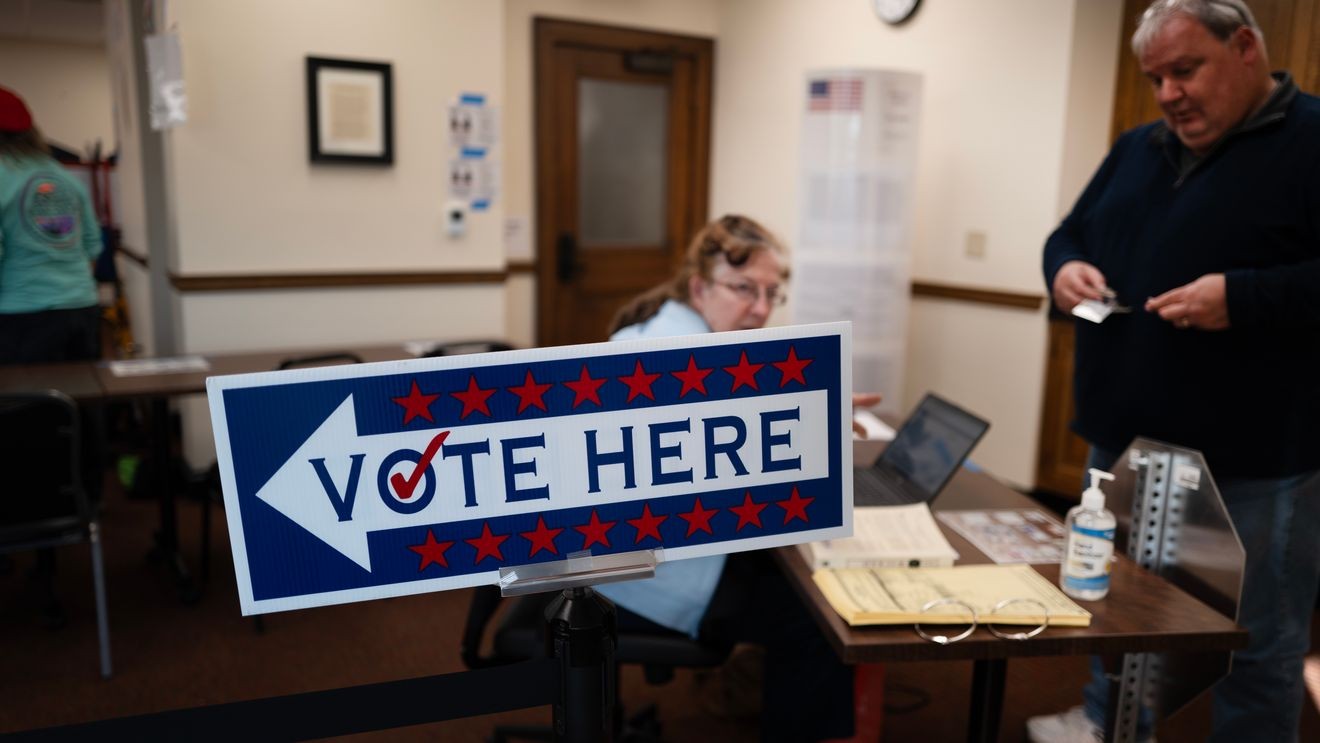
And when showing up at the polls, voters would need to show their passport, REAL ID-compliant card that indicates citizenship, or something of the like.
The bill also requires states to purge noncitizens from voter rolls.
Federal law already prohibits noncitizens from voting in federal elections.
No state allows noncitizens to vote in statewide elections.
The only exceptions are a limited number of local elections, mostly municipal or school board elections.
Todd Belt, the Political Management program director at George Washington University, said the current elections system does fine in stopping noncitizens from voting.
“For the most part, it does,” he said. “And it’s almost nonexistent. So, it’s a pretend problem, and it’s a pretend problem that Donald Trump likes to run with because it furthers his narrative about the election in 2020 (being fraudulent). It also helps to keep people scared about immigrants.”
Jones said the SAVE America Act would reduce the potential for and perception of fraud in elections. But both he and Belt said there’s no evidence of widespread fraud that would sway the outcome of any election.
“There’s very little evidence across the country of noncitizens registering to vote and then casting votes,” Jones said. “Republicans have been looking under every rock, in every haystack, to try to find these individuals. And while a few pop up every so often, it’s extremely rare.”
Trump, who recently suggested Republicans nationalize voting, also called for an end to mail-in voting with a few exceptions.
Jones said the handful of states with universal mail-in voting – such as California, Colorado and Oregon – are more vulnerable to fraud. Those states mail ballots to people by default, and the states lose control of all of those ballots until they’re returned, he said.
But Jones again downplayed the extent of the risk to election integrity.
And Belt said vote harvesting – collecting and submitting completed absentee or mail ballots on behalf of voters – is an election fraud risk that’s not even addressed by the SAVE America Act.
Jones said Republicans’ and Democrats’ competing priorities with voting make passage of the SAVE America Act unlikely, even if it gets past the GOP-controlled House along partisan lines.
Republicans are mostly focused on fraud concerns, while Democrats are concerned that such a bill would suppress voter participation.
“When Republicans and Democrats are looking at this issue, they’re looking at (election) legitimacy from two different lenses,” Jones said.

 National Headline