The Alex Marlowe Show
7:00 pm - 8:00 pm
WASHINGTON (TNND) — The U.S. got off to a strong start in hiring to start to 2026 after a year of stalling job creation in a sign of resilience from an economy trying to navigate rising prices and uncertainty.
U.S. employers added 130,000 jobs last month, surpassing economists’ expectations and a signal the labor market is showing signs of life after last year’s struggles. January was the best month for job growth since December 2024 in a welcome turnaround after hiring essentially ground to a halt last year amid economic uncertainties and a higher interest rate environment.
Wednesday’s report, which was delayed several days due to the partial government shutdown, also included major revisions that reduced the number of jobs created last year to 181,000. It was the slowest year for hiring since the pandemic in 2020 and less than half of the previously reported figure of 584,000.
Healthcare accounted for most of the job gains with 82,000. Factories broke a 13-month streak of job losses with a modest gain of 5,000 and construction added 33,000. The federal government shed 34,000 jobs in the Trump administration’s efforts to shrink the federal workforce. The unemployment rate fell to 4.3% from 4.4%.
Average hourly wages also increased 0.4% from December to January, giving inflation-squeezed budgets some breathing room. Wages are growing at 3.7% on an annual basis, higher than inflation but a gap that has been shrinking in recent months with fewer workers job hopping and lower demand for labor.
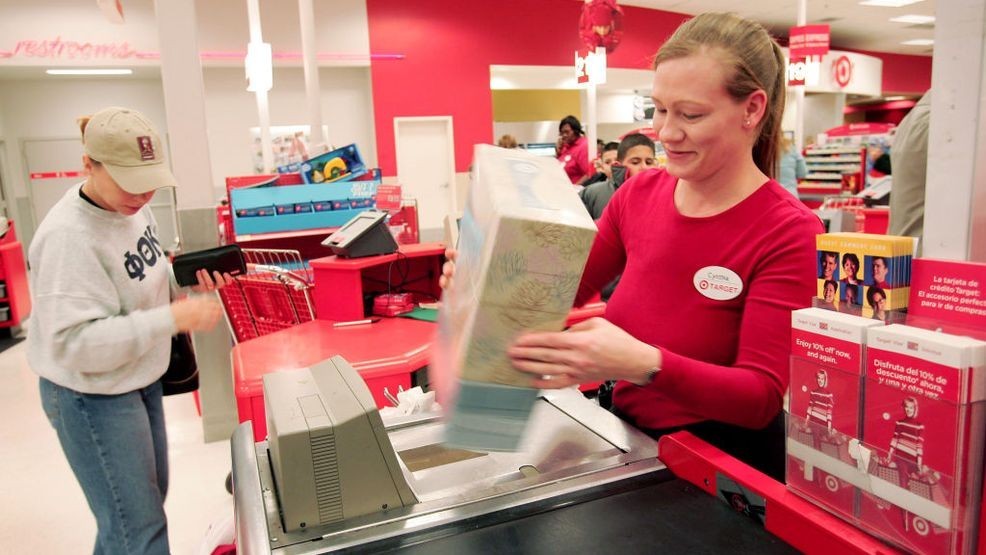
A clerk rings up sales for a customer at a Target store November 30, 2004 in Chicago, Illinois. High oil prices and a weak economy have retailers concerned about holiday sales figures. (Photo by Scott Olson/Getty Images)
The labor market has been stuck in a holding period for months with companies holding off on adding new employees but avoiding major layoffs. The low-hire, low-fire dynamic has kept unemployment from spiking but also created a challenging environment for fresh college graduates and people who are out of work from finding a job.
““It wasn’t spectacular. It wasn’t a lavish feast, but it wasn’t anything to raise alarm as far as the health of the labor market is concerned. Like comfort food, it’s reassuring about the state of the labor market and the U.S. economy,” said Sean Snaith, director of the University of Central Florida’s Institute for Economic Forecasting. “Amidst an environment that’s seemingly chaotic, that’s the kind of data that we needed to see.”
Private-sector data of the labor market had painted a worse picture, with private-sector employment shrinking and layoffs hitting highs not seen since recessions like the pandemic or post-financial crisis. Consumer confidence has fallen as more Americans struggle to keep up with inflation and fret over their ability to land a job if they were to lose the one they have.
Layoffs have been low overall, but a handful of major companies recently announced significant cuts. Outplacement firm Challenger, Gray & Christmas reported this month that companies cut 108,000 jobs last month, the worst January for job cuts since 2009.
Unemployment has also remained low despite poor hiring numbers in part because of the Trump administration’s crackdown on immigration, which has reduced the number of people looking for work, economists say. With fewer people looking for a job, it reduces the amount that needs to be created to keep unemployment steady.
Economists have attributed the slowdown in hiring to rising costs and uncertainty from frequently evolving trade policy from the White House. Artificial intelligence is also adding to the uncertainty as tech and professional services companies examine whether it can handle more tasks.
It comes as the economy has continued to grow with the most recent data showing a robust 4.4% annual growth pace in the third quarter off another solid 3.8% rate from April to June.
Strong hiring numbers bolstered the Federal Reserve’s case to keep rate cuts on hold during last month’s meeting. Fed chair Jerome Powell said after the January pause that officials believed they were well-positioned to react to however the economy develops. The January jobs report could lead the Fed to continue delaying its rate cut cycle with signs of a stabilizing labor market, economic growth and slow disinflation.
Fed officials are trying to get inflation back to their target of 2% for the first time in more than four years without rates weighing on economic activity and causing a spike in job cuts. Inflation data for January is scheduled to be released on Friday, and officials will also get February’s jobs report before their March meeting.
Some Fed officials have argued the U.S. labor market is struggling more than data originally indicated and pushed to lower rates at the January meeting. That case will be undercut if the economy continues to add jobs at the same pace, though that is far from certain. Officials forecast just one cut in 2026 after their December meeting, though Wall Street is anticipating two reductions.
“The U.S. labor market is far from perfect, with hiring still concentrated in a handful of industries, certain demographics enduring elevated unemployment rates and cyclical demand for new labor still tepid,” Wells Fargo economists wrote in a note. “That said, it appears the labor market is closer to stabilization than rapid deterioration, and this will embolden the hawks on the FOMC to push for no changes to the fed funds rate for the foreseeable future.”

 National Headline