(TNND) — The veteran suicide rate reached a six-year high, according to a Department of Veterans Affairs’ annual report.
VA’s 2025 report on veteran suicide, which pulled data through 2023, found 6,398 veterans died by suicide in the most recent year analyzed.
That was a small drop from 6,442 in 2022.
But those who died by suicide as a share of the population increased for both men and women.
The overall veteran suicide rate rose to 35.2 per 100,000 veterans, compared to 34.7 the year before.
For women, the rate rose from 13.7 to 13.9.
For men, it rose from 37.3 to 37.8.
VA called suicide prevention its top clinical priority.
“Veteran suicide has been a scourge on our nation for far too long,” VA Secretary Doug Collins said in a news release.
Face the Fight is a coalition working to complement VA’s work to cut the veteran suicide rate.
USAA launched Face the Fight alongside founding partners Reach Resilience and the Humana Foundation a little over two and a half years ago and has since grown its alliance of nonprofits, corporations and government liaisons to over 300.
Their purpose is to unite cross-sector partners to dramatically reduce veteran suicide through grant-making, equipping coalition members with training tools and resources, and more.
And Chris Ford, the Face the Fight lead at USAA, said the coalition has invested more than $42 million in direct grants since its inception.
Face the Fight’s ambitious goal is to cut the veteran suicide rate in half by 2032.
VA said 61% of veterans who died by suicide in 2023 weren’t receiving VA health care in the last year of their life.
David Rozek, the senior scientific advisor for Face the Fight and an associate professor at UT Health San Antonio, said VA care seems to be a protective factor.
And Rozek said his group wants to make sure that veterans who aren’t enrolled at VA don’t fall through the cracks.
That means reaching more veterans, especially outside of traditional clinical settings.
“I’m a clinical psychologist. … People aren’t banging on my door daily to talk to me when they’re suicidal. We need to think where can these touch points happen outside of clinical settings and grow that area with peers, with communities, with kind of different connection points that would likely have a huge impact if we think about how to do that right,” Rozek said.
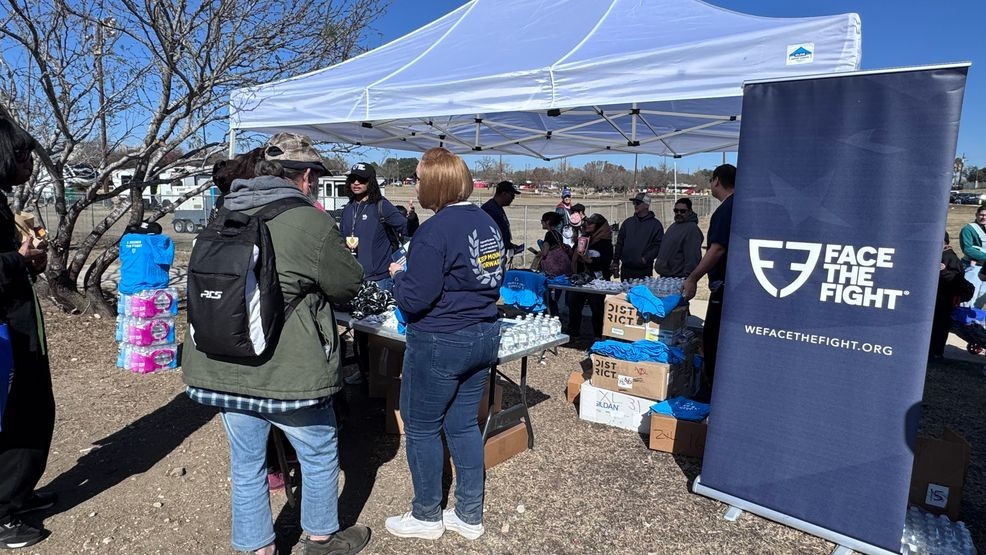
Credit: Face the Fight
Both men said the new VA report shows the massive challenge of preventing veteran suicide.
But both men expressed optimism that progress is around the corner.
“We’re bringing people together, and we’re scaling things that we know work,” Rozek said.
They hope progress accelerates as they funnel investments into the most effective approaches.
Treatment alone will not solve this problem, Ford said.
“We know that there’s no single pathway that leads to suicide,” Ford said. “It is a very complex issue, and it’s often very hard to understand why people make suicide attempts and ultimately die by suicide.”
Social isolation, insomnia, chronic pain, job loss, divorce, financial insecurity, food insecurity, housing insecurity, anxiety and more can all contribute to suicidal thoughts or actions, he said.
Concerns really rise when those problems avalanche in a short period of time.
“We can all play a role in being the eyes and ears, looking out for friends, neighbors, loved ones, especially veterans,” Ford said.
VA said nearly three-quarters of veteran deaths by suicide involved a gun.
That’s why Ford said one of Face the Fight’s focuses is on the safe storage of firearms.
“We’re looking for innovative ways to put time and distance between a veteran in distress and those very lethal means that ultimately could take their life,” he said.
VA said all of its health care facilities provide veterans with same-day emergency mental health care access.
VA said it fielded 1.3 million calls, chats and texts from veterans in need through the Veterans Crisis Line last year, a 39% increase over the previous year.
VA has conducted an outreach campaign since last year that has brought in 33,000 more veterans to VA care.
And VA made $52 million in additional funds available under the Staff Sergeant Parker Gordon Fox Suicide Prevention Grants Program.
If you’re a veteran and you’re struggling, you’re not alone. The Veterans Crisis Line is available 24/7, and calls can be confidential. Dial 988, then press 1, chat online at VeteransCrisisLine.net/Chat, or text 838255.

 National Headline