(TNND) — Alcohol spending as a share of household budgets is hovering near 40-year lows, which could signal shifts to healthier lifestyles or shifts to other forms of substance use.
Either way, the shifts are being driven by younger adults.
And the changes could have big consumer spending consequences over the coming years.
A new Bank of America Institute report dove into the shifts in alcohol spending, which is at its third-lowest level in the past 40 years as a share of total expenditures. About 0.8% of a typical household’s expenses go to alcoholic beverages, according to the Bureau of Labor Statistics.
“We don’t think it’s because prices are up,” Bank of America Institute economist Joe Wadford said. “We think it’s because consumption is down, especially people just drinking around the house.”
Bank of America card data shows that spending at liquor, wine, and beer stores fell 5% year-over-year in January, while spending at bars increased nearly 4%.
A recent BLS report showed spending on alcoholic beverages at home dropped from $316 on average in 2019 to $269 in 2024. That’s about a 15% decrease over the same period when grocery inflation was around 28%.
And the BLS data shows spending on alcoholic beverages away from home increased to $374 on average in 2024 from $263 in 2019.
Wadford said spending at bars could be getting a boost from the sales of nonalcoholic cocktails, food and sodas, though the Bank of America data doesn’t get that granular.
But he said 4 million fewer people aged 21-34 are binge drinking over the past 10 years, pointing to federal data.
And he said Bank of America card data supports the idea that younger Americans may be favoring more active experiences or hobbies. Wadford said spending on fitness activities, like gyms or country clubs, is growing at three times the rate of spending at bars for Generation Z customers.
“When you think about the fact that younger Americans are driving this great moderation or this sober movement, that’s going to have a lot of spending consequences five, 10 years from now, especially when you combine it with the fact that more people are on (weight loss) medication,” Wadford said. “So, it’s happening now. It’s been happening over the past 10 years. But it’s not just a passing fad. It seems like this movement really has legs.”
Other data paints a similar picture of declining alcohol use.
Last summer, Gallup reported the lowest level of alcohol consumption in its tracking that goes back over 80 years.
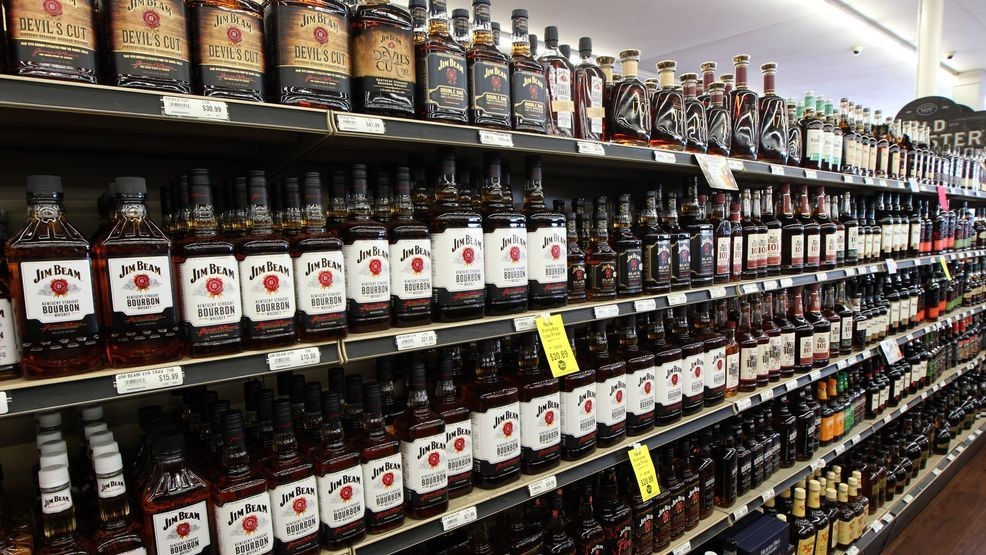
Photo by John Sommers II/Getty Images, file
Dr. Joshua Septimus, a primary care physician at Houston Methodist, said there are likely health-conscious young adults cutting alcohol use amid a growing awareness of the negative health effects of drinking.
“There really is no safe amount of alcohol to consume,” he said.
But Septimus also expressed skepticism that the noticeable decline in alcohol spending and consumption is going to have a big societal health impact.
That’s because he suspects THC consumption is replacing a lot of the alcohol consumption.
He said he’s seeing it in his patient population, even with his state’s comparatively restrictive cannabis laws.
Nearly half of the states have legalized recreational marijuana use, according to the Pew Research Center. A couple of dozen more allow only medical marijuana use.
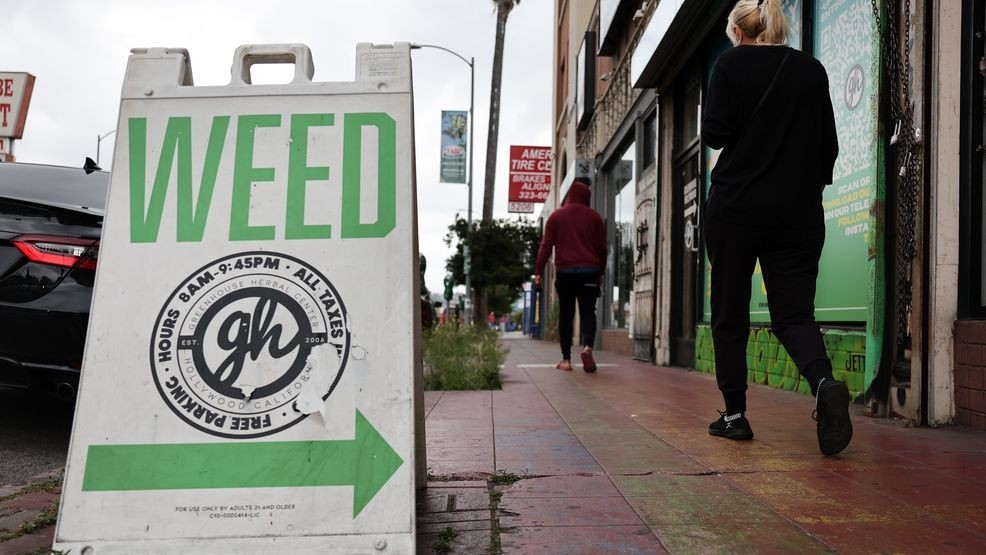
FILE – A sign advertises a cannabis dispensary on May 24, 2024, in Los Angeles. (Photo by Mario Tama/Getty Images)
THC, or tetrahydrocannabinol, is the main psychoactive compound in cannabis.
It’s not necessarily healthier than drinking alcohol, Septimus said. But people think that they’re doing something healthier when they choose cannabis over alcohol, he said.
Among people aged 26 or older, the percentage who used marijuana in the past month increased from 12.3% (or 27.1 million people) in 2021 to 15.1% (or 34.3 million people) in 2024, according to the Substance Abuse and Mental Health Services Administration.
“Humans have been imbibing and smoking mind-altering substances for as long as we’ve kept records,” Septimus said. “And so, I have a hard time believing that just because some experts say that alcohol is not good for you that all mind-altering substance use is going to drop off.”

 National Headline