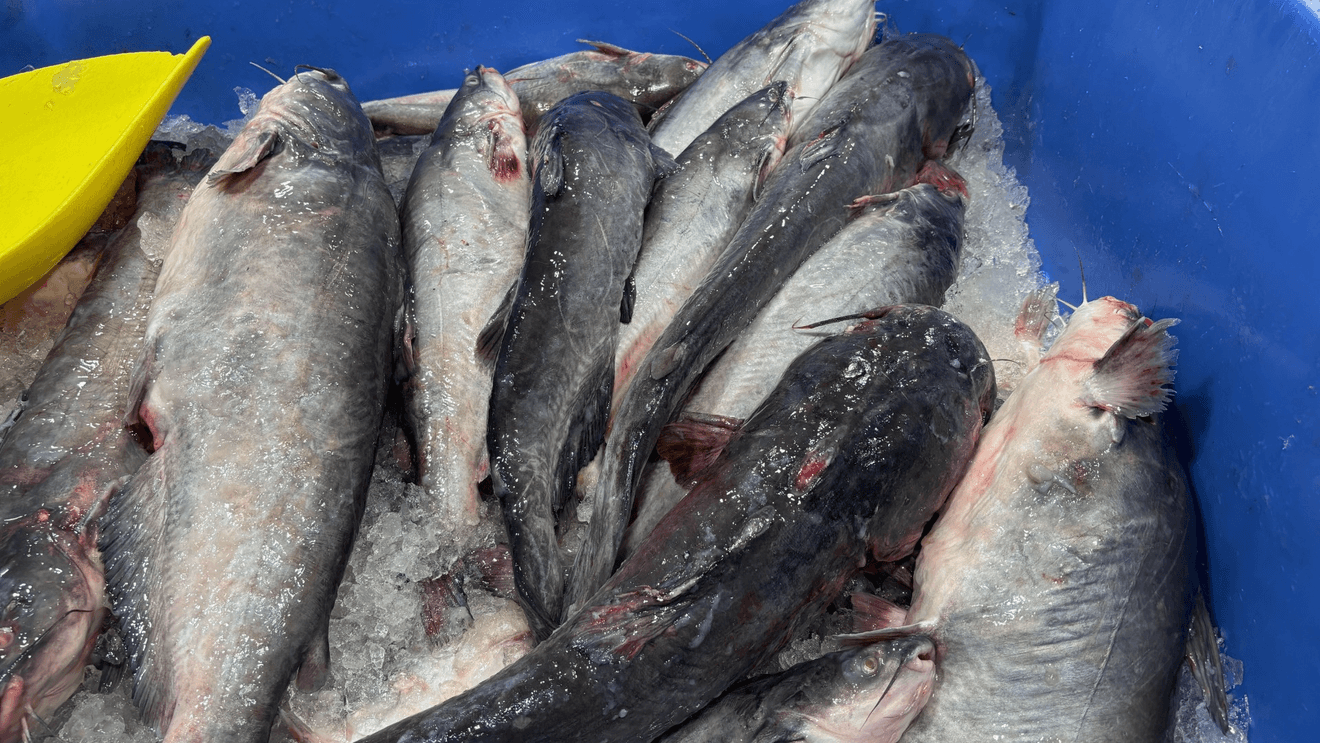
(WBFF) — A new federal pilot program could help remove millions of pounds of invasive blue catfish from local waterways while creating a stable market for watermen.
The U.S. House of Representatives passed the Mitigation Action and Waterman Support (MAWS) Act, sponsored by Rep. Sarah Elfreth, D-Md., and Rep. Rob Wittman, R-Va. Elfreth and Wittman are co-chairs of the Chesapeake Bay Watershed Task Force and serve on the House Natural Resources Committee, which the bill unanimously passed in January.
ALSO READ | ‘We’ve been abandoned’: Some Md. business owners say Gov. Wes Moore left them behind
Introduced last July, the MAWS Act would establish a two-year pilot program in the NOAA Chesapeake Bay Office aimed at building a market for Chesapeake Bay blue catfish in the pet and animal food industry. Under the proposal, NOAA would administer grants to pet and animal food manufacturers to help incentivize watermen to catch blue catfish and to develop transportation, processing and manufacturing structures intended to support a long-term market.
During the two-year pilot, NOAA would collect data on the ecological and economic impacts of the program, then report back to Congress.
“With House passage of the MAWS Act, we are one step closer to creating new opportunities in a growing market for blue catfish, which pose a direct ecological and economic threat to the Chesapeake Bay. While we can all do our part and order blue catfish when we see it on a menu, this is not a problem that we alone can eat our way out of,” Elfreth said. “That’s why we need bipartisan, innovative solutions, like the MAWS Act, that strengthen our local economy and preserve the health of the Bay. I look forward to working with my colleagues in the Senate to get this legislation past the finish line. If we can prove this innovative strategy works in the Chesapeake, my hope is it can utilize similar tools in waterways across the country – like invasive carp in the Mississippi and Great Lakes.”
“The MAWS Act will facilitate a new market for invasive blue catfish – protecting the biodiversity of the Chesapeake Bay,” Wittman said. “I am pleased that the House has passed this legislation, and I look forward to seeing it advance to the Senate. Preserving the health of the Bay remains one of my top priorities, and I am proud to have joined Congresswoman Elfreth in leading this critical legislation.”
“The Chesapeake Bay is the beating heart of Maryland, and invasive Blue Catfish threaten the very ecosystems and communities that the watershed sustains,” Rep. Steny Hoyer said. “I was proud to join my friend Congresswoman Sarah Elfreth on the MAWS Act and help secure passage of this vital legislation to combat Blue Catfish and protect our beloved Bay.”
Supporters of the bill said blue catfish are contributing to ecological biodiversity challenges in the Bay and causing significant economic damage to Maryland and Virginia seafood industries. Although blue catfish are considered safe and nutritious for human consumption, watermen have struggled to sell enough of the fish to keep pace with the rapidly growing population.
The legislation was crafted and amended after more than 100 meetings involving stakeholders including watermen and processors across the Chesapeake Bay watershed, researchers and economists focused on invasive aquatic species, and pet food manufacturers at local and international levels. Elfreth’s team also led four presentations and discussions with the NOAA Chesapeake Bay Invasive Catfish Workgroup, including the Policy Small Group and Commercial Fishing & Processing Small Group.
The bill now goes to the Senate for further consideration.
 Local Story