ANNAPOLIS, Md. (WBFF) — Maryland Gov. Wes Moore signed two bills into law on Tuesday aimed at cracking down on the state’s squatter issues, including a bill that targets alleged online squatting rings and makes the manufacturing or possession of a fraudulent lease a felony.
Moore’s signature comes a year after Spotlight on Maryland launched an investigation into squatting cases across the state, documenting how suspected squatters have used alleged fraudulent leases, civil court delays, and law enforcement uncertainty to occupy homes from Baltimore to Bethesda.
For nearly a year, Maryland homeowners, landlords, and neighbors described the same unsettling pattern regardless of zip code: vacant houses taken over, alleged fake leases presented to police, court cases dragging on for months or years, and property owners left watching from the sidewalk as strangers remained inside homes they did not own.
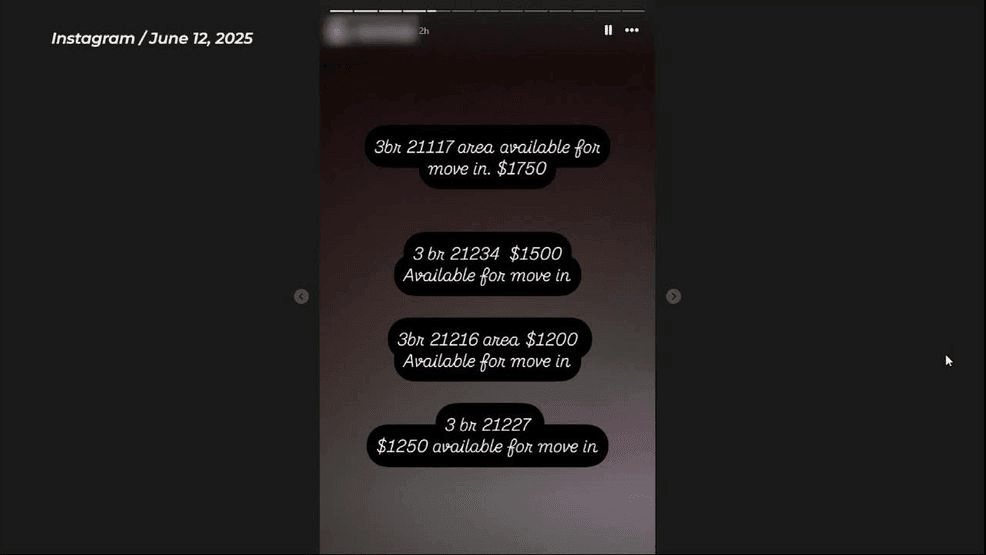
Spotlight on Maryland reviewed several social media accounts on Thursday, June 12, 2025, that continue to advertise ‘last resort’ or ‘squatter homes’ for a one-time fee. (Instagram)
Spotlight on Maryland’s investigation found that homeowners and neighbors often faced a legal maze after unauthorized occupants claimed tenancy rights, while those purportedly profiting from breaking in and selling fake leases benefited.
In one Baltimore incident, University of Maryland School of Medicine professor Ze Wang said he returned from winter break to find strangers unloading belongings into his home and showing police what he said was a fake lease.
Wang said he was displaced for 59 days and later estimated damages at more than $80,000.
In another case, a $2.3 million Bethesda home, miles outside the nation’s capital, became a flashpoint after neighbors said suspected squatters had remained in the house for months while police treated the matter as civil.
Spotlight on Maryland previously reported the case exposed how slow court processes and limited enforcement tools can leave homeowners, banks, and neighborhoods waiting for action, even when ownership is not seriously disputed.
The only way the luxury Montgomery County neighborhood was able to get the squatting family – including Corey Pollard, who is now facing unrelated criminal charges related to a luxury vehicle theft ring – out of the bank-owned property was for a 19-year-old to file trespassing charges with the court commissioner.
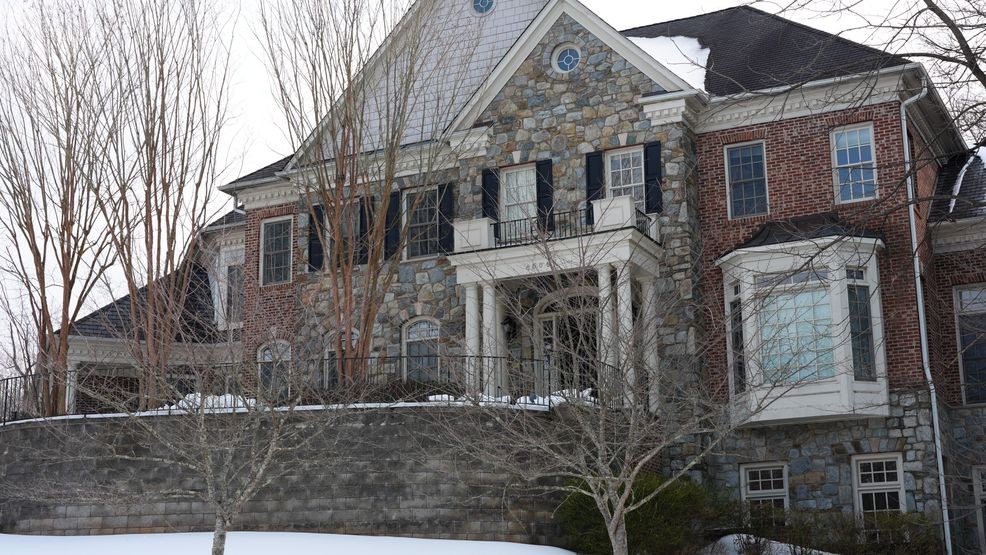
A $2.3 million Bethesda, Md., mansion lies empty on Wednesday, February 11, 2026, after an eviction of squatters Tamieka Goode, Corey Pollard, and associates, nine months after the property was allegedly taken over.{ } (Steve Pierce/Spotlight on Maryland)
The new felony lease law is meant to address one of the central complaints raised repeatedly by property owners: Once someone produces a lease, even if it is obviously fake, officers often say their hands are tied.
State Sen. Johnny Ray Salling, R-Baltimore County, and co-sponsor of anti-squatting legislation, called the new law a necessary step. The bipartisan effort was successfully led by Sen. Ron Watson, D-Prince George’s County.
“The thing is that we got to make people realize that it is a crime when you go and trespass in someone else’s property and do something that’s fraudulent by making a title or lease in a way to say this is my home,” Salling said when asked whether the General Assembly’s action speaks to the severity of the problem.
However, even supporters of the new law told Spotlight on Maryland that the General Assembly and Moore’s work is not finished.
“It’s enough at the moment,” Salling said. “I can’t say it’s enough. We can do more.”
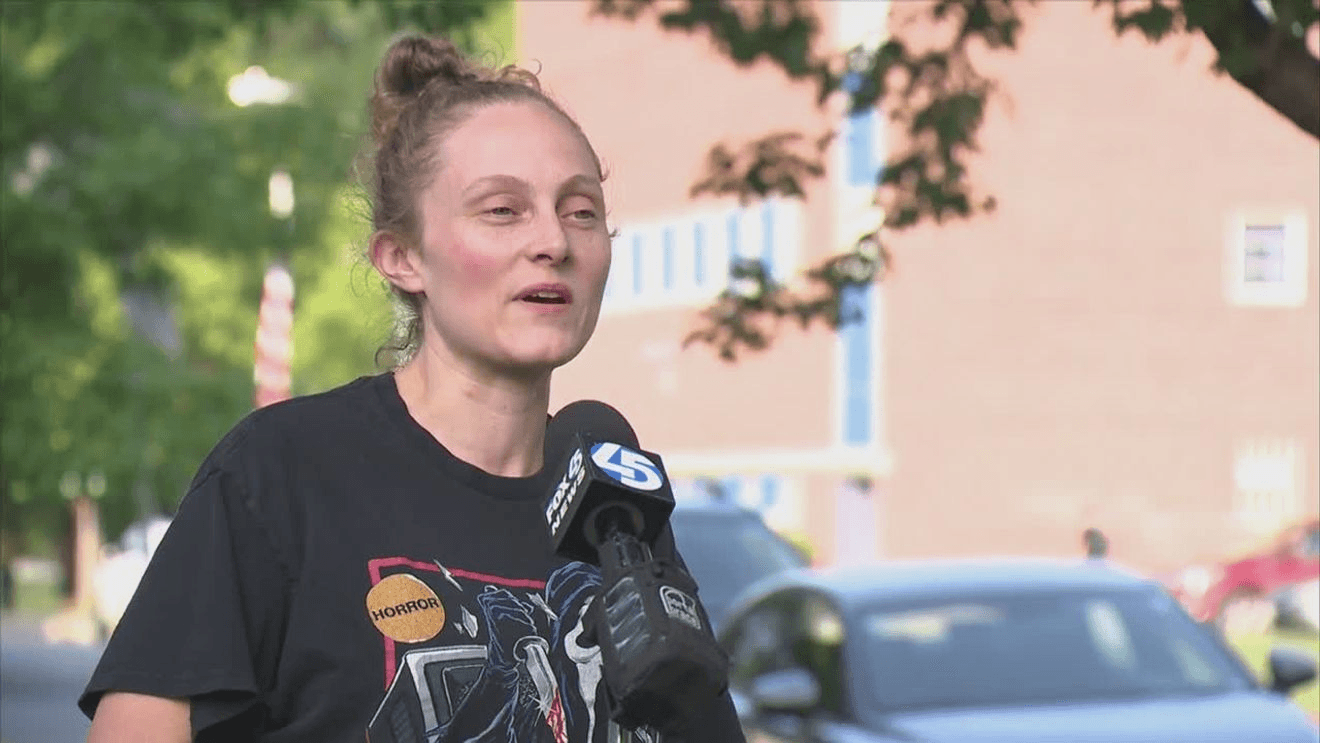
That concern was echoed by Melissa Hargreaves, owner of Columbia-based Peace of Mind Property Management, who said on Thursday that the new felony provision is “a fantastic first step” but will not immediately solve what property owners face when police respond to a disputed-occupancy call.
Hargreaves said her company dealt with one of its Baltimore County properties last year that was connected to an entity called “Bad Bodiez Leasing.” She said the outcome was “nothing.”
“It’s very frustrating because we were able to watch the scammer enter our property illegally, with the intent of meeting a tenant and taking her money,” Hargreaves said. “We physically saw her enter our property, called the police, the police came, saw her in the property, and there was nothing they could do. They told us we couldn’t prove she broke in, and she wasn’t stealing anything.”
I told them she is stealing the entire house,” Hargreaves added.
Maryland police agencies have repeatedly told Spotlight on Maryland that squatting incidents are civil matters, and a spokesperson for the Montgomery County Police Department said earlier this year that individuals can establish residency in a property they have no rights to after 30 days.

Melissa Hargreaves, owner of Peace of Mind Property Management (Steve Pierce/Spotlight on Maryland)
That statement captures the remaining gap in Maryland’s response: the new law may create consequences after prosecutors can prove a fake lease was created or possessed, but property owners say it still may not give police immediate authority to remove someone from a house on the spot.
Further, who files the appropriate charges under the new provision remains unclear.
“Right now, police officers’ hands are tied,” Hargreaves said. “When they show up, when someone is squatting in a property, it’s a civil matter. There is nothing they can do. They still won’t be able to do much with this, but at least when they do get to court, it will be a felony charge.
“There will be some consequences for these bad actors,” Hargreaves continued.
Sen. Chris West, R-Baltimore County, and another co-sponsor of the fraudulent lease bill, said the law should send a message to people who may be running squatting schemes.
You better stop it because if you don’t, you’re going to be committing felonies,” West said. “And now that it’s a felony and not just a misdemeanor, that gets the prosecutor’s attention. They will indict these people. They will try them, convict them, and put them in jail.”
Ian Chen, the 19-year-old Bethesda neighbor who filed criminal charges after he said police did not act in the $2.3 million home case next door, testified in Annapolis in support of the felony lease legislation. Spotlight on Maryland previously reported Chen pushed lawmakers to strengthen penalties after months of frustration in his neighborhood.
During a Zoom interview Wednesday night, Chen said Moore’s signature is meaningful, but not enough.
“I think Gov. Moore, you need to do more to stand up for property owners in this state,” Chen said. “We have hundreds of houses in Baltimore City, in the western panhandle, on the Eastern Shore, right here in my neighborhood that are vacant and susceptible to the very same fraud.”
Spotlight on Maryland asked Moore’s office on Wednesday by email if he believes the bills he signed would adequately address the issue of squatting in the state. His office did not respond.
Eleven months ago, Moore told Spotlight on Maryland he was working “immediately” to address the concerns raised by residents, adding that he was “working with all of the partners.”
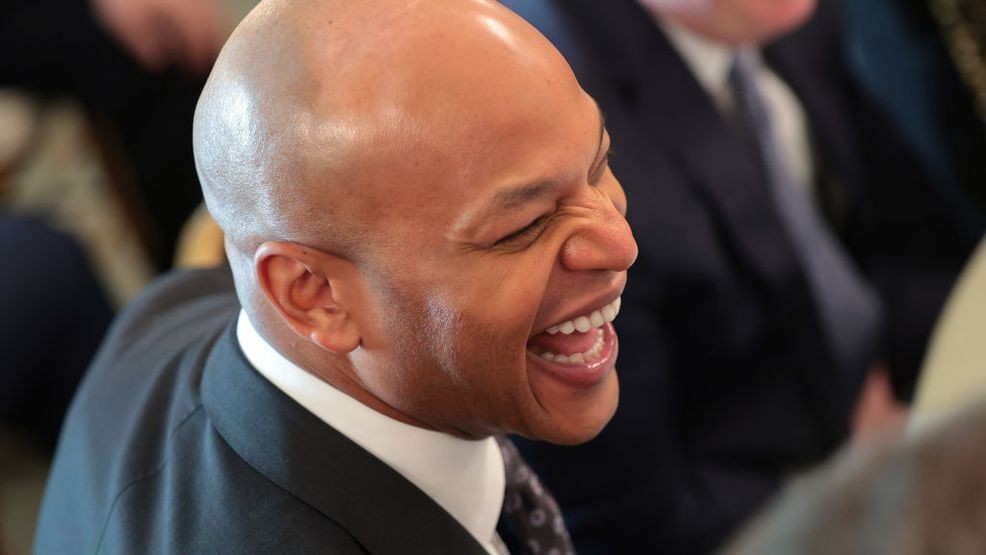
WASHINGTON, DC – FEBRUARY 21: Gov. Wes Moore (D-MD) attends a meeting of governors at the White House on February 21, 2025 in Washington, DC. U.S. President Donald Trump is hosting a bipartisan group of Governors at the White House as part of The National Governors Association winter meetings. (Photo by Win McNamee/Getty Images)
Meanwhile, Chen said the law’s passage is a personal success only insofar as it may protect others.
This isn’t about me,” Chen said. “This is an issue that affects everyone in our state, whether they know it or not. It’s not about one bill or one case. This is about protecting homeowners and property owners for years to come.”
The second bill signed by Moore on Tuesday directs the state to study blockchain-based title verification, a concept supporters argued could give police, courts and property owners faster access to verified ownership records, including at the scene of an emergency call.
For lawmakers who backed the bills, the signing marks a rare bipartisan response to an issue that moved from neighborhood complaints to viral videos to the Maryland State House.
Salling credited public pressure and media coverage with helping move the legislation.
“Thank you, FOX45, and thank the media for bringing this about,” Salling said.
Have you experienced or had direct knowledge of squatting or unauthorized occupancy occurring in Maryland? Do you have any tips related to this story? Send news tips to gmcollins@sbgtv.com or contact Spotlight on Maryland’s hotline at (410) 467-4670.
Follow Gary Collins on X and Instagram. Spotlight on Maryland is a collaboration between FOX45 News, WJLA in Washington, D.C., and The Baltimore Sun.
 Local Story