
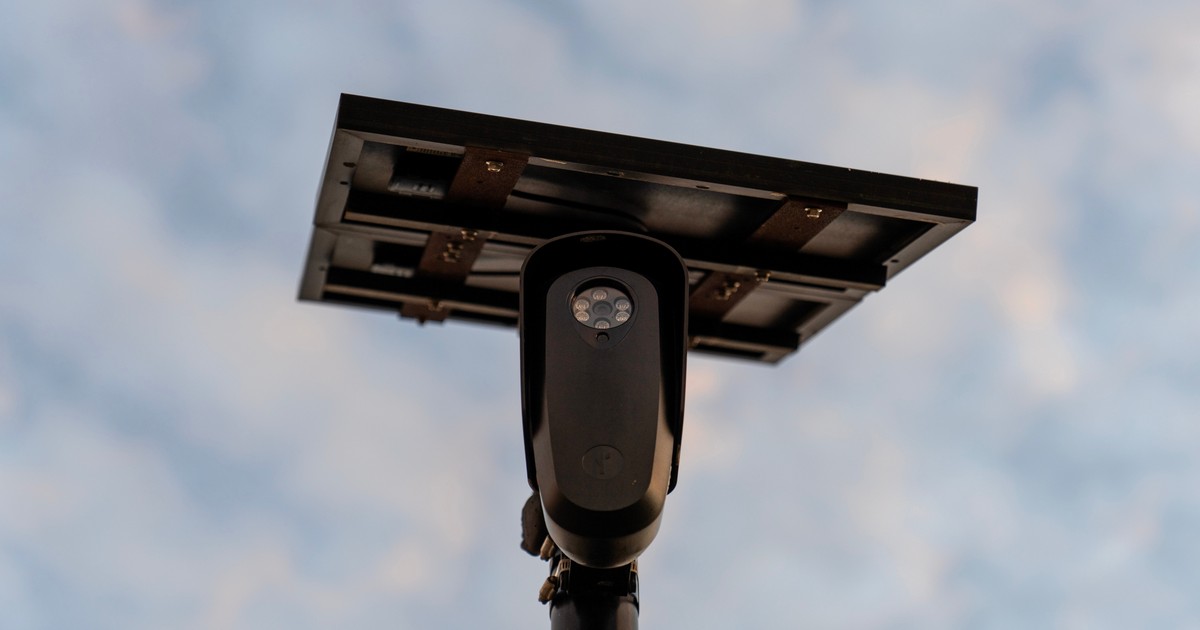
Earlier this week, I wrote a piece steel-manning the case for Flock cameras. Several readers, however, seemed to interpret it as an endorsement of the surveillance system itself. My purpose was simply to showcase the arguments in favor of Flock cameras, because opposition to a policy should offer more than references to George Orwell’s 1984 and vague appeals to privacy rights. I wanted to highlight the real public-safety gains that opponents of Flock cameras must contend with, and help stimulate conversation on how those gains could be outweighed against privacy concerns.
It does appear, however, that Flock CEO Garrett Langley is taking much of the criticism and opposition to his company’s product to heart and is working to earn the public’s trust. And that’s a good thing. Not just because it means society can hold Flock accountable, but because it reinforces a point from my previous piece: free-market forces can help us resist and reform the Flock system.
I’ve learned a lot in nine years of building @Flock_Safety. Some of it from our customers, and some of it from the communities they serve.
Today we’re announcing the changes that came from listening. A new standard for privacy, security, and accountability in public safety…
— Garrett Langley (@glangley) August 13, 2026
“I’ve realized communities need my help,” Langley said.
“They need flock to set the standard for how this kind of technology should be deployed. I think sadly, police abuse has been a problem for longer than people want to talk about.”
As a result, Flock announced that it will shorten its file-storage period from 30 days to seven, as around 90 percent of the crimes Flock has assisted in solving occur within that window. It will also require law enforcement officers, or anyone else accessing the database, to enter a case code before conducting a search.
Recommended
There will, however, be an emergency override feature for more time-sensitive situations, including cases involving a missing child. Even then, those searches will be flagged for later review.
The company is also making its Audit Assistance system mandatory for its law-enforcement customers. The system identifies unusual search activity and flags potentially problematic behavior. When odd search behavior is detected, the user will be locked out of the database while their actions are reviewed by an administrator.
We can still oppose Flock, but I would like to make one observation: as a private company, susceptible to the forces of a free market, it must appeal to the broader public if it wants to turn a profit. It cannot do so if there is widespread opposition to its product. Flock is therefore incentivized to make changes that demonstrate it takes society’s concerns seriously.
It is also important to remember that if residents were unaware these cameras were being installed, the failure lies less with Flock than with the lack of accountability local elected officials and law-enforcement agencies feel toward their constituents. You may oppose Flock, and that is fair. But the company has been operating in communities for years. The more difficult question is this: why have voters continued to support the local officials who authorized its use without demanding transparency, limits, or public consent?
None of this means we must support Flock. But it does challenge opponents to explain, with more than abstract appeals, why its well-documented public-safety benefits are not worth the surveillance risks involved.
This is not a system comparable to the pervasive, state-run surveillance apparatus used in countries such as China. It is a more limited system, one whose safeguards, oversight, and use should be debated honestly rather than dismissed outright.
 National Headline