BALTIMORE (WBFF) — When a child loses a parent, there are survivor benefits that can provide a financial lifeline, but in Maryland, some of that money can instead go toward reimbursing the state for the cost of caring for the child.
It’s a practice often referred to as the “orphan tax,” and Maryland is now one of nine states in the country that have not ended or changed it.
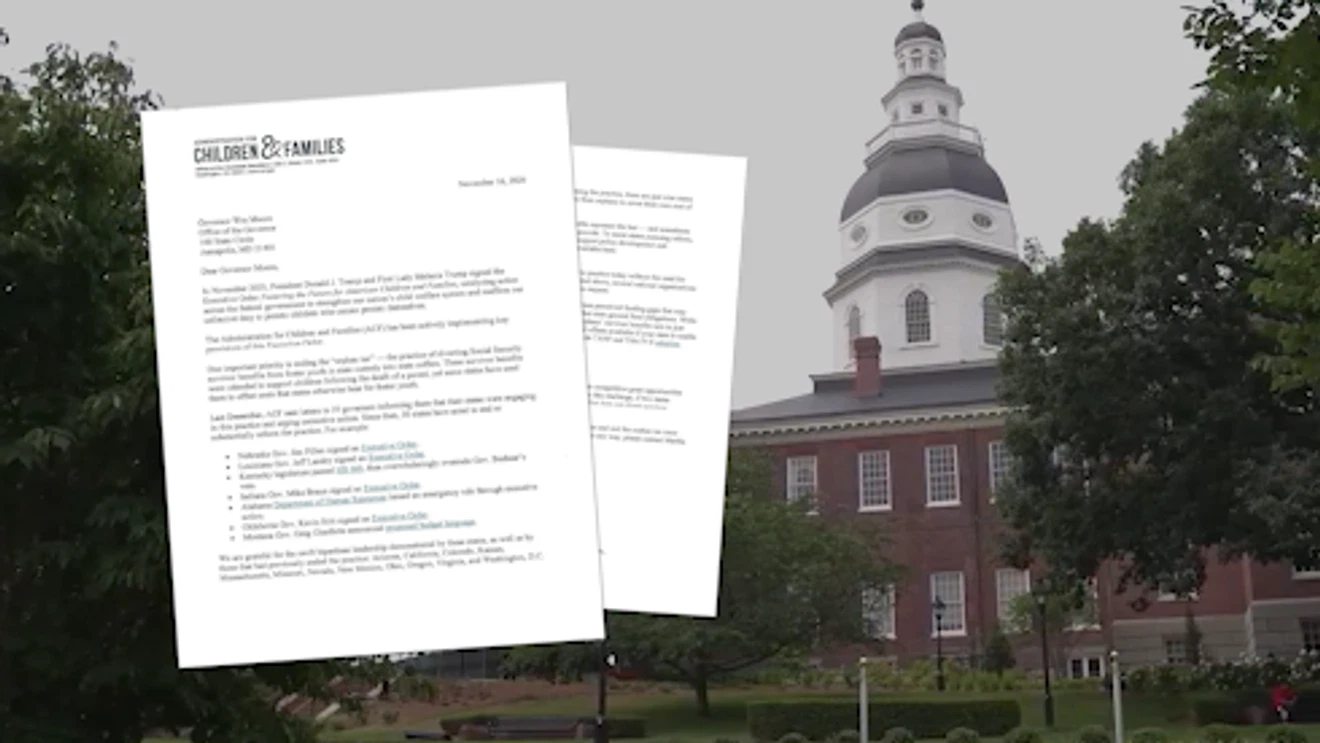
The U.S. Department of Health and Human Services sent a new letter to Gov. Wes Moore this week, urging the state to stop diverting Social Security survivor benefits from children in foster care.
According to HHS, 41 states have needed or substantially reformed the practice, leaving Maryland alongside Connecticut, Florida, Illinois, Minnesota, New York, Pennsylvania, Texas and Wisconsin.
The federal agency says governors don’t need to wait for lawmakers to act, and instead, can end the orphan tax through executive action.
“These children have already lost their parents — diverting their survivor benefits just adds unnecessary hardship to unimaginable grief,” said Alex J. Adams, assistant secretary for the Administration for Children and Families.
“We are calling on every remaining state to stop balancing budgets on the backs of orphans,” Adams added.
The issue isn’t new in Annapolis. During the 2026 legislative session, Maryland lawmakers introduced bills aimed at changing how the state handles federal benefits belonging to children in foster care.
House Bill 768 and Senate Bill 658 would have addressed the state’s handling of those benefits, but the legislation did not receive final approval before the General Assembly adjourned in April. The House version was unanimously approved in the House but failed to make it out of the Senate.
Under Maryland’s existing system, the Department of Human Services can use certain federal benefits received on behalf of foster children to help cover the cost of their care.
That means money intended to support a child after the death of a parent may instead be used to reimburse the government for services provided while the child is in state custody.
While Maryland has requirements in place to preserve portions of certain benefits for older foster children, advocates have pushed for stronger protections to ensure more of that money is available when children leave the system.
HHS says several states, including Nebraska, Louisiana, Indiana and Oklahoma, have ended the practice through executive orders.
FOX45 News reached out to Gov. Moore’s office for a response to the letter.
HHS says the practice accounts for a relatively small portion of state child welfare budgets.
According to the agency, diverting survivor benefits amounts to an estimated 0.22% of a state’s child welfare budget nationally. The agency also announced a new technical assistance center to help states address potential funding gaps if they stop using children’s benefits to offset government expenses.
“Every child deserves the financial security their parents worked hard to provide,” HHS Secretary Robert F. Kennedy Jr. said in a statement. “These benefits are often the last lifeline a parent can leave behind for their child.”
Since December 2025, HHS says 30 states have taken action to end or substantially reform the practice, joining 11 states that had already done so.
This story may be updated.
Follow Political Reporter Mikenzie Frost on X and Facebook. Send tips to mbfrost@sbgtv.com.
This post was originally published on Fox 45 by Sinclair Media Group.
 Local Story