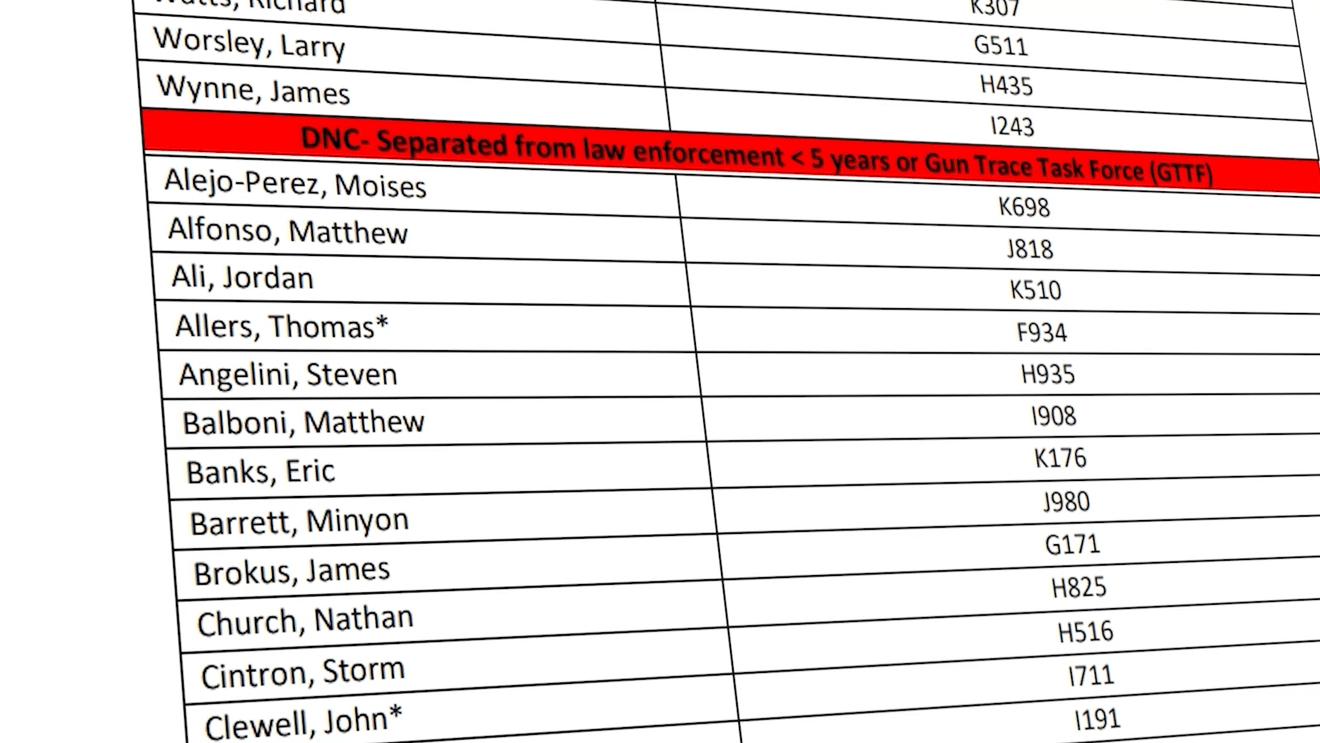
BALTIMORE (WBFF) — In the courtroom, credibility is everything — and now, a list used to help track it is at the center of controversy.
It’s called the “Do Not Call” list, which includes the names of every Baltimore City police officer prosecutors won’t rely on as witnesses due to credibility concerns. While Baltimore is one of the only jurisdictions in the state to make that list publicly available online, the Public Defender’s Office argues their attorneys aren’t receiving timely updates when changes are made to it, causing delays that could impact defendants’ cases.
ALSO READ | Police arrest seven juveniles following crimes in downtown Baltimore
In a statement sent to FOX45 News, District Public Defender Marguerite Lanaux said, “There is a consistent pattern and practice of disclosing information extremely late, sometimes on the day of trials.”
“That couldn’t be more false,” Baltimore City State’s Attorney Ivan Bates said in response. “I don’t know why she would say that. I mean, look, I’m looking at emails.”
In an exclusive interview with FOX45 News, Bates cited several emails from the last year where prosecutors provided public defenders with advanced notice of ‘Do Not Call’ additions.
“You’ll see on February 19 we’ve added officers McDermott and Green,” Bates said, referencing one example. “Here’s another one — March 4th — we added officers Mark Rutkowski, Harrison Brandon, and Welai Grant. So, we’re giving them updated information.”
Bates added that defense attorneys also have access to police files through a designated review process at the courthouse.
Lanaux, however, argues that system is still too burdensome, requiring attorneys to review records in person and take notes by hand.
This is not transparency,” she said. “This is a broken, onerous, and obfuscatory process.”
Bates countered that Baltimore is already going further than most jurisdictions.
“We’re the only jurisdiction in the entire state that does that,” he said.
We’ve provided a portal for them to come and look at it when they want. If they don’t want to exercise it, that’s not our issue.”
On Monday, FOX45 News asked the Public Defender’s Office to provide specific examples of cases where disclosures were delayed or incomplete, but none were provided.
Bates argued the lack of specifics leads him to believe a broader issue may be at play.
“We call it poisoning the potential jury pool,” he said, “We’re winning a number of jury trials. We’re getting some significant sentences, and I think when that’s happening, they want to try to change their trajectory. They want to change the narrative. And so, ‘oh, the police are bad. The state’s attorney is bad. These officers are bad,’ but that’s not what’s happening.”
 Local Story