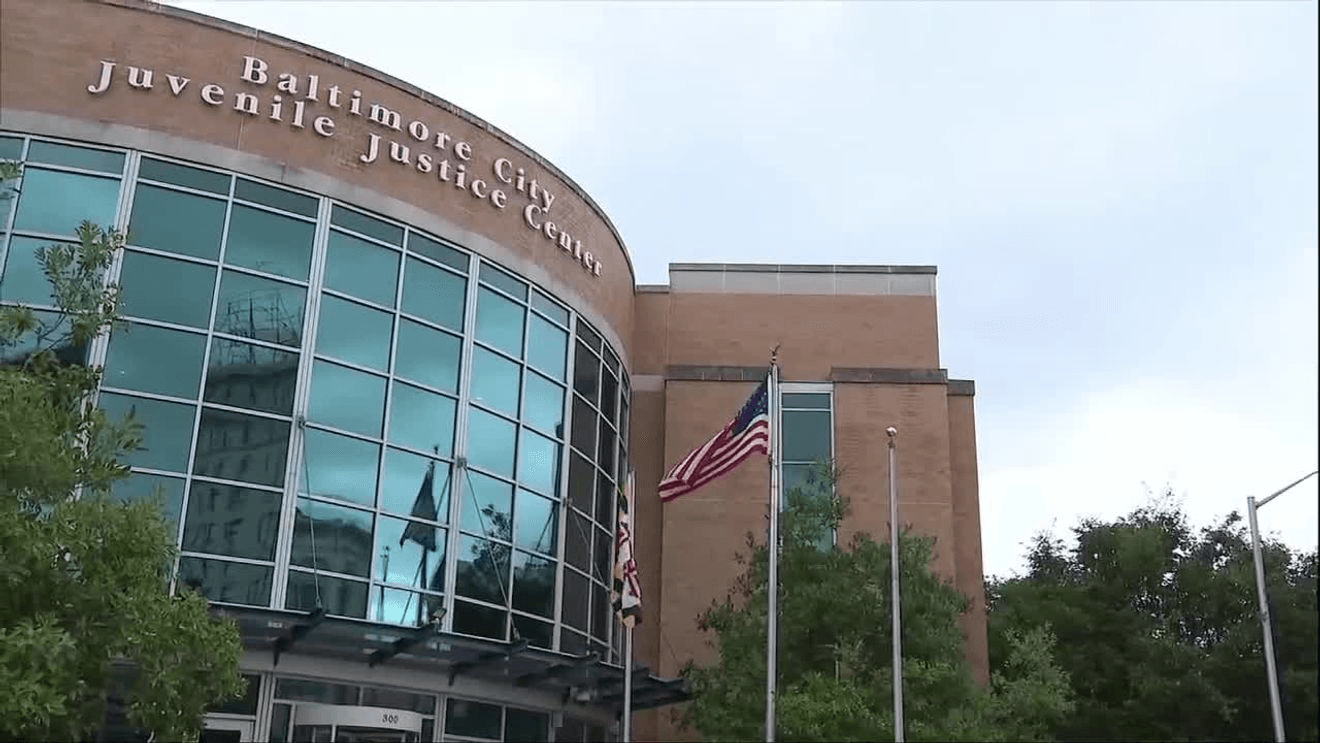
MARYLAND (WBFF) — As concerns over juvenile crime continue across Maryland, new data reviewed by FOX45 News raises questions about how often the agency recommends continued detention for young offenders charged with violent crimes.
During a recent interview with FOX45 News, Department of Juvenile Services Secretary Betsy Fox Tolentino defended the agency’s approach, arguing the department is making progress and working to rebuild public trust through greater transparency.
“It’s our job to try to sort of paint the full picture,” Tolentino said. “We want to make sure the community and our constituents, and our young people and our families have access to all the information, which is why we publish our data. We are building trust and credibility. We are making progress.”
ALSO READ | Dozens of juvenile arrests announced across greater Baltimore since June
Tolentino took over the agency last year after the departure of former DJS Secretary Vincent Schiraldi, whose tenure drew criticism from lawmakers and law enforcement over juvenile justice policies.
One of Tolentino’s first major policy changes involved juveniles already on electronic monitoring. Under the revised policy, if a young person wearing an ankle monitor is arrested again for certain offenses, they are detained initially until their next court hearing, when a judge determines whether they should remain in custody or be released.
A review of Baltimore City-specific DJS data from 2025 shows a drop between the number of juveniles initially detained after arrest and the number of cases where DJS later recommended continued detention at the first court hearing.
Looking at data for specials, or cases where a juvenile was arrested, detained, and placed on pre-trial supervision, there were 22 first-degree assault cases in 2025. Eleven youths were detained at intake, but DJS recommended continued detention for six at the next court hearing. Of the 32 armed robbery cases, 20 juveniles were initially detained, while DJS recommended continued detention in eight cases. For handgun offenses, 28 of 30 were detained immediately after arrest, but DJS recommended continued detention for 10.
The figures highlight the distinction between the initial detention decision made following an arrest and the recommendations DJS later provides to judges, who ultimately decide whether a juvenile remains in custody.
FOX45 News asked Tolentino how the agency determines when continued detention is appropriate and whether those decisions are being made consistently across Maryland.
“We are able to pull all that data and take a look at it, whether it’s a county on the Eastern Shore, Western Maryland or Baltimore City, to see how those decisions are being made and if they’re being made consistently across the state,” Tolentino said.
She said the agency has found consistency in most cases, but acknowledged reviews have also identified opportunities for improvement.
“Yes, we do find a lot of consistency, but when we dig in, sometimes we find areas where we need to improve, and then we address those areas very clearly and intentionally,” Tolentino said.
ALSO READ | Police say juvenile charged with murder committed crimes before and after killing
FOX45 News asked whether those inconsistencies could be contributing to public frustration, particularly when a juvenile accused of a serious crime is released shortly after arrest.
Tolentino rejected the idea that mistakes in the risk assessment tool were driving those outcomes.
“We don’t see errors in the instrument used,” she said.
Instead, Tolentino said concerns raised when she became secretary prompted the agency to closely examine how the tool was being applied.
“There was a lot of feedback when I started the position about a year ago that we don’t think the tool’s working the way it should,” she said. “So, we did the deep dive.”
That review, she said, resulted in changes to DJS policy, not the assessment tool itself.
“We did see an opportunity to make changes, and we made changes early on, not in the tool, but how we were utilizing the tool to make sure that tool and our recommendations aligned with risk,” Tolentino said. “When I started the role, a low-risk and medium-risk young person sort of had the same recommendation. Now they don’t. We changed that so the recommendations follow that as risk increases.”
The data comes as juvenile crime remains a politically charged issue in Maryland, with lawmakers, prosecutors and residents continuing to debate whether the state’s juvenile justice system strikes the right balance between rehabilitation and accountability.
FOX45 News has asked DJS for additional information about the factors considered when recommending detention, how often a judge goes against the agency’s recommendation, and others. The department did not immediately respond.

 Local Story