MARYLAND (WBFF) — In the final days of session, lawmakers in both the Maryland House and Senate are still working to pass a major piece of energy legislation in an attempt to address energy affordability issues.
The Utility RELIEF Act recently passed in the Senate, however it has key differences from the version of the bill the previously passed in the House.
“There are some substantial differences. We’re going to work through them these next five days,” Senate President Bill Ferguson said.
ALSO READ | Ed Hale laments energy issues, costs in Maryland
The nearly 100-page bill, in part, aims to lower energy bills, increase supply and manage data centers. The bill also makes changes to EmPOWER, which is an energy efficiency program, in addition to multi-year rate plans, which impacts how utility companies can recover costs from customers.
“We believe that upwards of 75% of the energy load growth has come from data centers,” Ferguson said. “Maryland was the first in the country last year to set a new tariff, so that those who cause the energy load growth pay for it separately from residential and commercial customers. This year, the Senate and, you know, shout out to Senator Hester, but a number of members on the committee, Senator Watson, spent the interim throughout the year trying to develop this policy. And the House’s version was, at best, a placeholder. The Senate has a fully thought through and detailed plan for how to address data centers.”
“Some of the decisions in, in the House’s plan create significant challenges, and uncertainty for increasing generation in the state of Maryland, which would be hugely problematic for the long term,” Ferguson added, critiquing another aspect of the House’s version of the bill.
However, while lawmakers hash out the details, Maryland PIRG, a consumer group, has pushed back on the Senate’s version of the bill, arguing consumer protections were gutted, rolling back measures related to utility oversight and transparency.
“We’re deeply disappointed the Senate voted to increase gas customer bills in order to incentivize gas utilities’ highly profitable pipeline system expansion,” Emily Scarr, senior advisor at Maryland PIRG, said. “Instead of following the House’s lead to rein in excessive utility profits, the Senate added an unappetizing smorgasbord of bad amendments that reward the utility companies that are driving our high bills.”
In response, Sen. Ferguson said he was “caught off guard” by the group’s remarks. He noted that there is existing tension between sustainability and affordability.
“There is a substantive difference, I think, when it comes to the amendment about new gas line extensions. I mean, the question that we have to ask ourselves is, do we have sufficient supply of energy through electrification right now? And if we don’t, the costs have to be borne by someone and somehow. And so that’s really, I think where the committee landed on the gas line issue was that as new housing developments are proposed, if there is not sufficient infrastructure for full electrification, then the energy’s got to come from something,” Sen. Ferguson said.
But there is an overarching issue that comes to, we know we don’t have enough supply. We know we can’t do it through electrification tomorrow. So what happens in the interim is we’re building electric supply,” he added.
ALSO READ | Lawmakers push back on BGE’s Baltimore Peninsula project
This debate comes amid another year of rising energy bills, which have been growing for a variety of reasons, including increased rates, data center demand, supply concerns due to power plants that have retired or are set to retire, and decisions made by PJM, the regional grid operator. While utilities control some costs that appear on monthly bills, other costs like supply and EmPOWER, are out of their control.
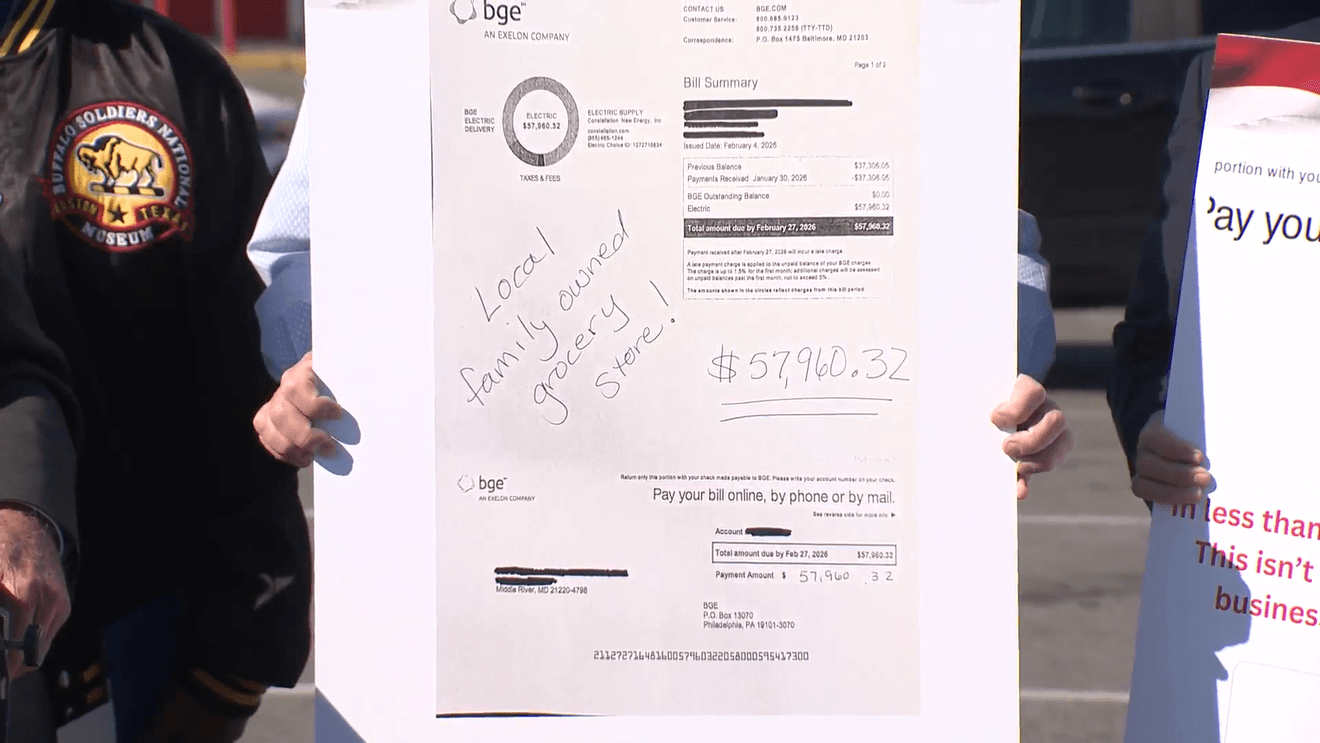
“When you’re a small business owner, anything helps,” Kelly Backert, owner of Kore Barre, said. “I understand that bills do go up and we do plan on that in the winter. We obviously know that that happens and even in the summer, in July, when we need to have that air conditioning pumping a little higher, we understand that. This was just overwhelming.”
“I still think that our citizens are expecting a lot more than $12.50 per month reduction on the utility bill,” Sen. Stephen Hershey said late last week.
“I don’t see this issue going away. To be honest, I think we’re going to have to do something every year until we get it right,” he added.
 Local Story