Money, Riches and Wealth
6:00 pm - 7:00 pm
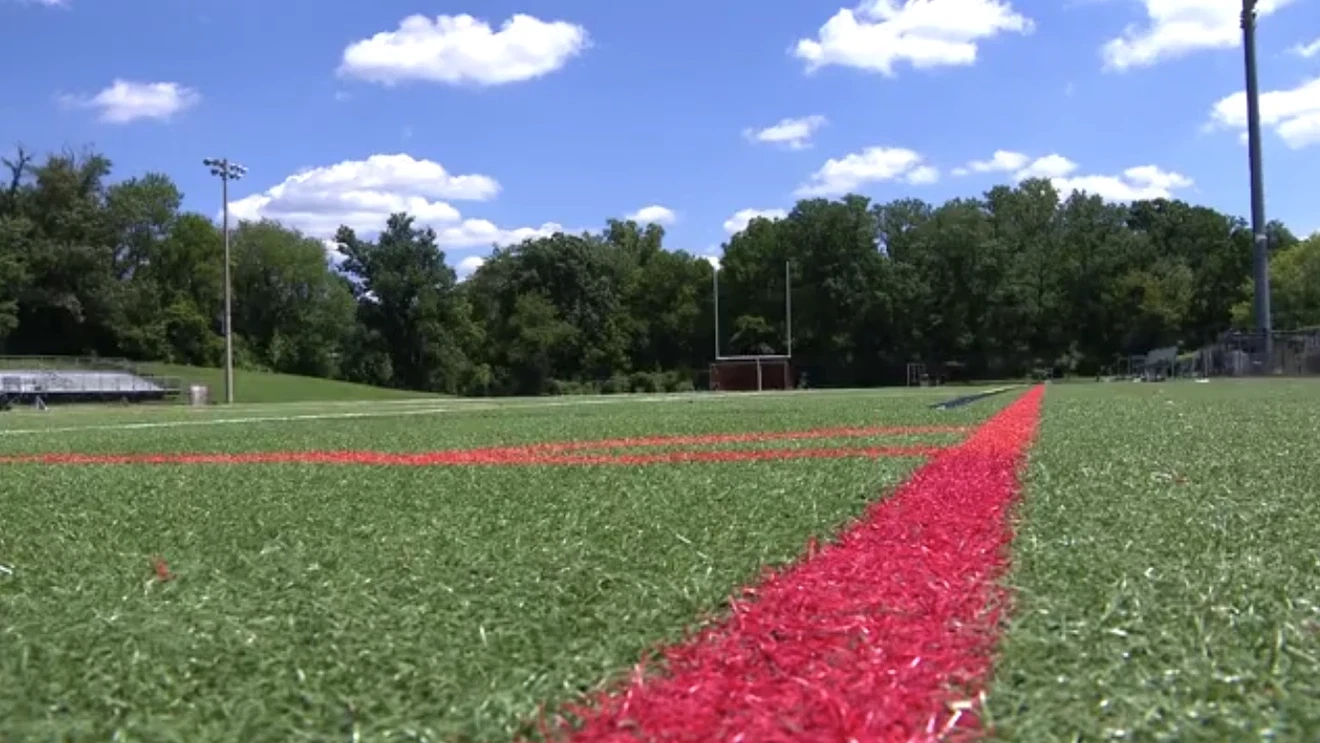
MONTGOMERY COUNTY, Md. (7News) — A long-running debate over artificial turf fields in Montgomery County is intensifying as environmental advocates and County Executive Marc Elrich urge school officials to reconsider plans for additional synthetic athletic fields.
Standing on an artificial turf field in Wheaton, natural grass advocate Kathleen Michels pointed to a thermometer reading that she said demonstrated one of her chief concerns.
“What was it? 85? So this is 120,” Michels said, comparing temperatures on turf and natural grass. “It’s 40 to 50 degrees hotter than the grass in the sun.”
SEE ALSO | Former Prince George’s County police officer sentenced in auto insurance fraud scheme
Michels and fellow advocate Cassie Witkop have spent years campaigning against artificial turf fields, arguing they pose health, environmental and financial concerns.
“It’s toxic. It’s bad for the kids. It’s bad for the budget, and it’s bad for the environment,” Michels said.
Witkop echoed those concerns and said natural grass is the preferred alternative.
“It’s no good for kids. It’s no good for communities and it’s no good for the environment,” Witkop said. “And we need to do something to change it. And we have a solution.”
That solution, she said, is investing in natural grass fields.
The advocates gained support this week from Elrich, who devoted part of his regular Wednesday news briefing to making the case against artificial turf. Elrich assembled a panel that included a University of Maryland turfgrass expert who argued that natural grass can be both durable and less expensive than synthetic fields over time.
Among the speakers was high school soccer player Margot Ashford, who said heat generated by artificial surfaces can make playing conditions unsafe.
“Sometimes when it’s felt decently cool outside, maybe 10 in the morning, and I think it’s a great time to go out and practice, I step onto that turf field and realize it’s not physically safe for me to be on that surface,” Ashford said.
Supporters of artificial turf, however, argue that synthetic fields provide benefits that natural grass cannot match. A coalition of youth sports organizations has formed to advocate for turf fields, saying they can withstand significantly more use by sports teams, community groups and school physical education classes.
In a statement to 7News, a Montgomery County Public Schools spokesperson reaffirmed the school system’s commitment to maintaining “high-quality playing surfaces,” including both natural grass and artificial turf.
The spokesperson said artificial turf’s durability makes it particularly well-suited for heavily used athletic facilities.
Despite those arguments, Elrich said the county should reconsider plans to install additional turf fields.
“This is a place where the money does more harm than good, and we could have done better,” Elrich said.
The debate is expected to continue as county leaders, school officials, athletic groups and environmental advocates weigh the future of Montgomery County’s playing fields.
 Local Story