BALTIMORE, MD (WBFF) — It has been two years since a ship collided with the Francis Scott Key Bridge, resulting in its collapse and the death of six construction workers.
Its impacts are still felt daily by Maryland residents, businesses, and families.
Here’s a look back at the developments since March 2024:
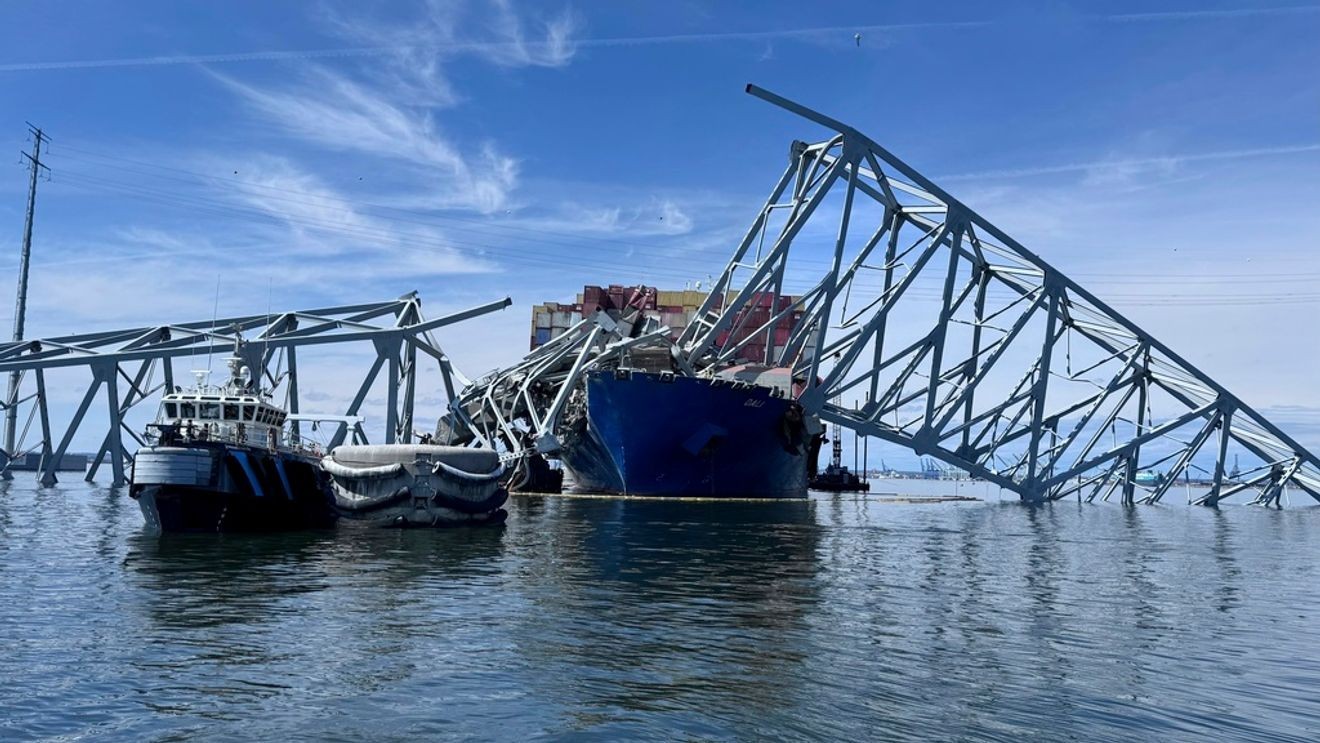
On March 26, 2024, the ship Dali was traveling out of the Baltimore Harbor when it experienced a loss of electrical power and propulsion and struck the southern pier supporting the central truss spans of the Key Bridge, which then collapsed, the National Transportation Safety Board (NTSB) said.
The impact took place at 1:29 a.m., and by the time the sun rose that day, the impact of the collapse could be seen in stunning videos and photos.
The immediate aftermath of the collapse included a search for missing construction crew members who were working at the time of the collapse.
It took over a month to locate their bodies, and as a result of the collapse, six construction workers died.
The cleanup of the wreckage began just days after the collapse, and a limited access channel was opened on May 9, 2024, that allowed recreational vessels to pass through.
Controlled demolition was used to break apart segments of the bridge, and the Dali was re-floated and moved back to port on May 20, 2024.
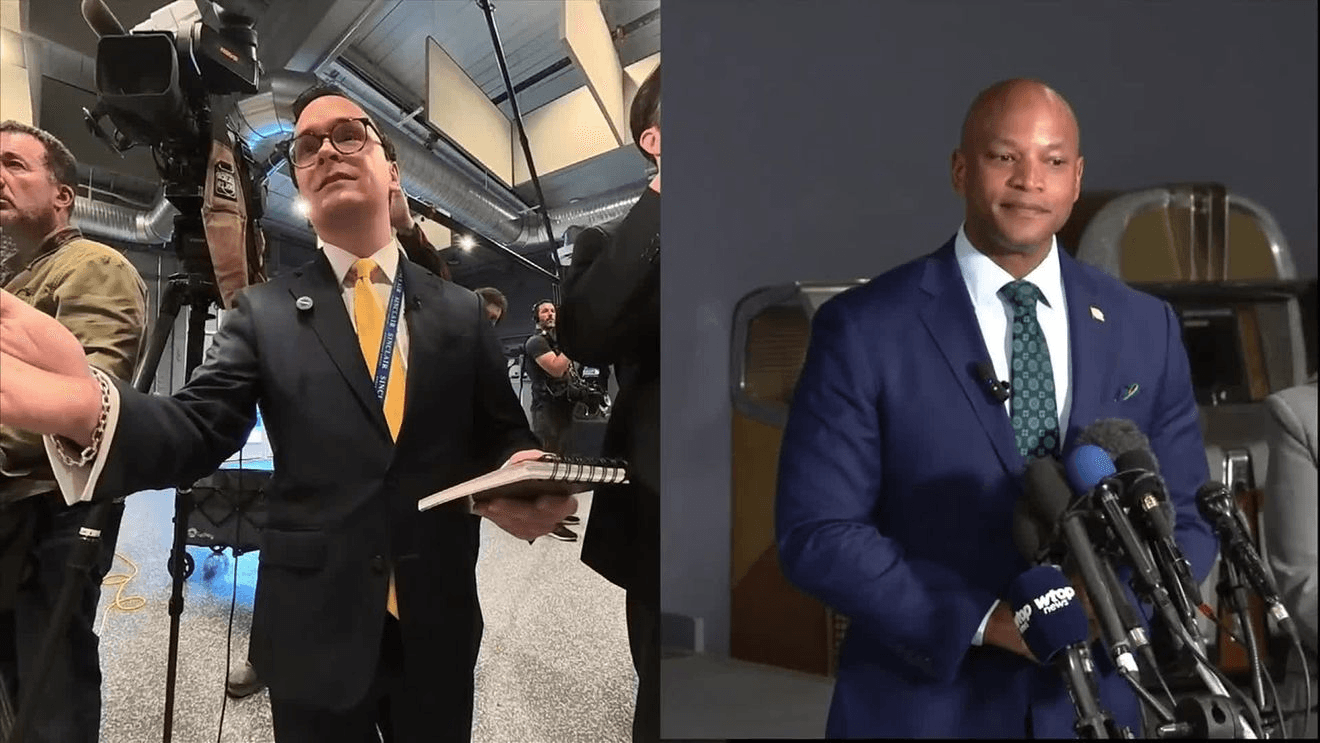
In Feb. 2025, Maryland Gov. Wes Moore and the Maryland Transportation Authority unveiled a new design concept for the new Francis Scott Key Bridge.
At that February press conference, Moore explained that the new cable-stayed bridge will use “the most advanced industry standards and best materials available,” as when the Key Bridge was originally constructed in the 1970s.
Some preconstruction work on the new bridge is already underway, and the project is expected to be completed by Oct. 2028.
“We are going to continue to work together to cement Baltimore as a maritime hub for the East Coast, and the nation,” Moore said.
Kiewit Infrastructure Co. was selected to complete the design and construction on the Key Bridge replacement.
The reconstruction project was expected to cost over $2 billion to complete.
NTSB announces investigation findings
Just a week before the one year anniversary of the collapse, the NTSB announced an update into its investigation about Dali’s collision with the Key Bridge.
The NTSB said that the MDTA’s lack of conducting risk evaluations via established standards contributed to allowing the collapse of the Key Bridge to occur.
NTSB Chairman Jennifer Homendy said that had the MDTA conducted an assessment of the bridge based on recent vessel traffic, the organization would’ve been aware that the bridge was above the AASHTO (American Association of State Highway and Transportation Officials) threshold for risk of catastrophic collapse when the Dali collision occurred.
The NTSB said that the Key Bridge was almost 30 times above the acceptable risk or threshold for critical bridges.
After the NTSB announced its findings, the MDTA and Gov. Wes Moore responded in statements and interviews.
The MDTA said via a press release that the department maintains the Key Bridge collapse was “the sole fault of the DALI and the gross negligence of her owners,” and that a risk assessment evaluation of the Bay Bridge is underway.
The MDTA says as requested, it will provide an update to the NTSB within 30 days, which will include any action they intend to take based on its evaluation of the pier protection system, operational changes, and vessel transit procedures for the Bay Bridge.
Additionally, the MDTA went on to say that over the past 50 years, hundreds of thousands of vessels traveled under the Key Bridge without incident and that the safety of highways and bridges is always a top priority for the department.
Moore even joined FOX News Sunday to echo the sentiments.
“If you look at the Key Bridge, the Key Bridge has passed every single federal assessment for over thirty years, so the federal highway administration and federal government claim and continue to state that the Key Bridge was not the issue, and I’ll speak with the former transportation secretary about it,” Moore said during his interview. “The issue was that we had a ship the size of three football fields, when you have a ship that size moving at that speed, and what he told me was there wasn’t a bridge in the country that could’ve taken that impact, and so when you look at the reckless behavior of the Dali that’s the sole reason for it.”
In December 2025, the NTSB released its final report on the collision of the Dali and the Key Bridge.
The NTSB found that “due to a loose signal wire connection to a terminal block stemming from the improper installation of wire-label banding, resulting in the vessel’s loss of propulsion and steering close to the bridge.”
During the announcement, it was revealed that a single wire had caused the initial outage, which triggered a series of failures that ultimately led to the bridge’s collapse.
Following the first blackout, a second blackout occurred due to insufficient fuel pressure.
The NTSB stated that crew members had been misusing a flushing pump intended for cleaning purposes to supply fuel to the Dali’s diesel generators. Investigators labeled this an “operational oversight” because that pump is not designed to restore fuel pressure on its own after a power outage.
Investigators also discovered that the Dali’s high-voltage breakers were set to manual mode rather than automatic.
An NTSB official noted that this “would have shortened the initial underway blackout from 58 seconds to 10 seconds, providing more time for the crew to attempt to recover critical systems.”
This additional time would have also allowed the crew to warn the construction workers who were filling potholes on the bridge.
The NTSB claimed the crew had exchanged cell phone information with the Maryland Transportation Authority (MDTA) officers. However, amid the chaos, authorities did not make any calls.
The NTSB found the six workers who lost their lives were ultimately left without warning and without any chance to escape.
Reopening the Francis Key Bridge is expected to take longer and cost double the original estimates.
According to the MDTA, reconstruction of the new Key Bridge likely won’t be done until the end of 2030 and instead of costing between $1.7 billion and $1.9 billion, construction could top $5 billion.
Original estimates, produced early in the emergency, were made without an engineering firm working with the state, according to MDTA Executive Director Bruce Gartner.
MDTA leaders said the revised projections reflect rapidly rising construction costs, advanced engineering requirements, and a federally mandated pier protection system designed to prevent another catastrophic ship strike like the one that destroyed the bridge in March 2024.
The redesigned bridge will feature a 1,665-foot main span – longer than initially envisioned – to safely accommodate today’s larger commercial vessels and meet updated national engineering standards.
The taller towers and expanded pier protection structures add substantial costs.
Officials noted that the protective fenders alone will be larger than a football field.
Both local and federal lawmakers have questioned why the project will take so long, and cost so much, and two years after the collapse, there has been little progress on a new bridge.
 Local Story