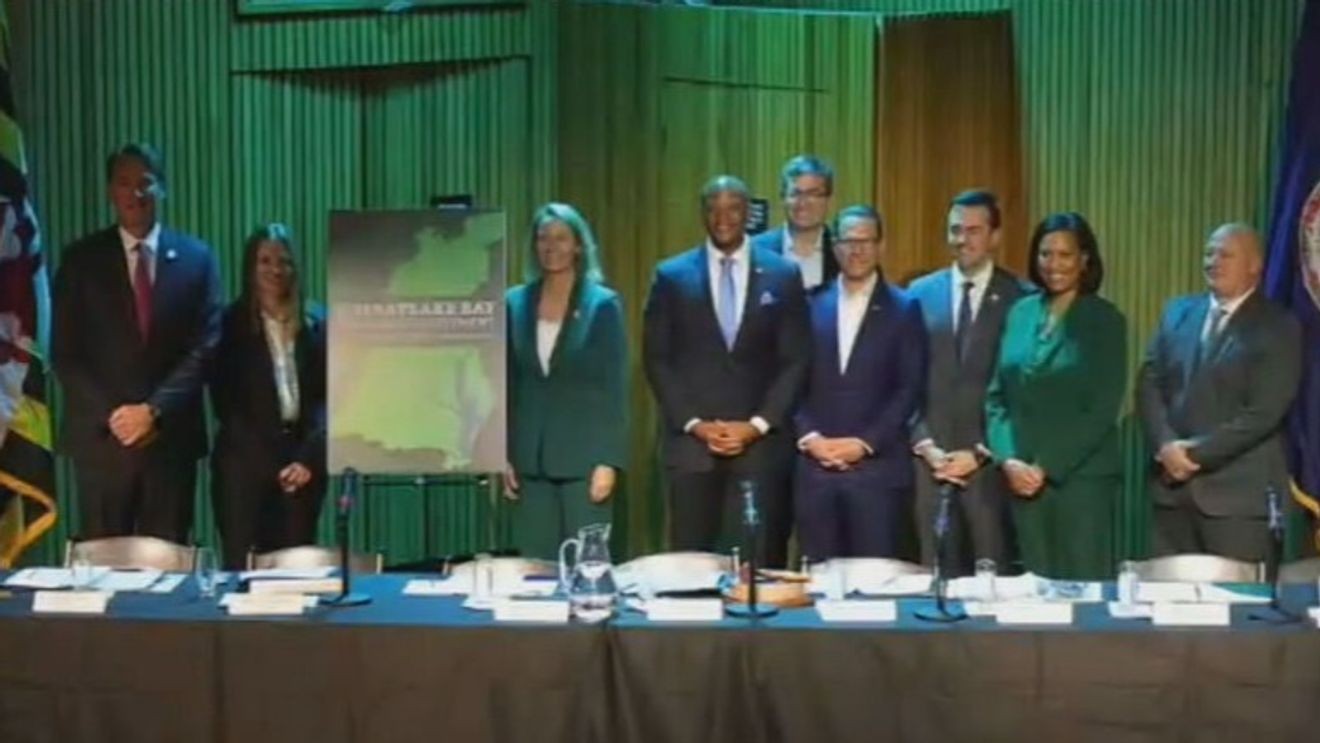
MARYLAND (WBFF) — Governor Wes Moore, along with the Executive Council of the Chesapeake Bay Program, has approved the revised Chesapeake Bay Watershed Agreement.
Hosted at the National Aquarium on Dec. 2, the agreement aims to improve the health of the Chesapeake Bay, increase access to natural areas, and support those who rely on the bay.
Officials said that in Maryland alone, the bay generates $3.2 billion and supports 58,000 jobs annually in tourism, in addition to providing 3,300 jobs in the seafood industry, which generates $600 million each year.
“The revised Chesapeake Bay Watershed Agreement will make our rivers and streams cleaner. It will bolster Maryland’s seafood, tourism, and recreational businesses. Most importantly, it will ensure we protect the precious heirloom that is the Chesapeake Bay so we can pass it down to the next generations in a better condition than we received it,” said Gov. Moore, via a press release.
ALSO READ | Largest female sturgeon recorded in Chesapeake Bay survey tagged, released
After over two years of collaboration with scientific advisors, community representatives, and advocates for the Chesapeake Bay, representatives from the six states within the Chesapeake Bay watershed, along with the Chesapeake Bay Commission and Washington, D.C., reached an agreement.
This process included a public feedback period, resulting in significant changes to the draft agreement and strengthening the environmental goals and outcomes outlined in the document.
The revised agreement commits to reducing nitrogen, phosphorus, and sediment pollution in the bay by 2040 and sets goals for thriving habitats, fisheries, wildlife, healthy landscapes, and engaged communities.
Initiatives also include oyster and freshwater mussel restoration, protection of waterbirds, preservation of wetlands, increased public access, and development of an environmental workforce.
Additionally, the agreement aligns with Maryland’s new strategy for bay restoration, focusing on shallow waterways such as streams, rivers, and coastlines, where people have the most interaction with the watershed and where targeted actions can have significant impacts.
ALSO READ | Multistate Chesapeake Bay deal on track despite questionable funding future
“Maryland fought to strengthen this agreement and we’re proud of what the partners signed onto today. The agreement ensures that this important partnership continues to improve the health of the Chesapeake Bay and its surrounding watershed for the next 15 years,” said Maryland Department of Natural Resources Secretary Josh Kurtz.
Since 2000, Maryland has invested $15.9 billion in Bay restoration, surpassing many of its goals in the 2014 agreement, which includes conserving nearly 2 million acres of land, completing the largest oyster restoration project in the world, and restoring over 2,500 miles of river to migrating fish.
The deadline for the revised agreement’s plans is set for completion by 2040, with a midpoint check-in planned for 2033, aligning with 50 years of the partnership’s efforts to restore the Chesapeake Bay.
 Local Story