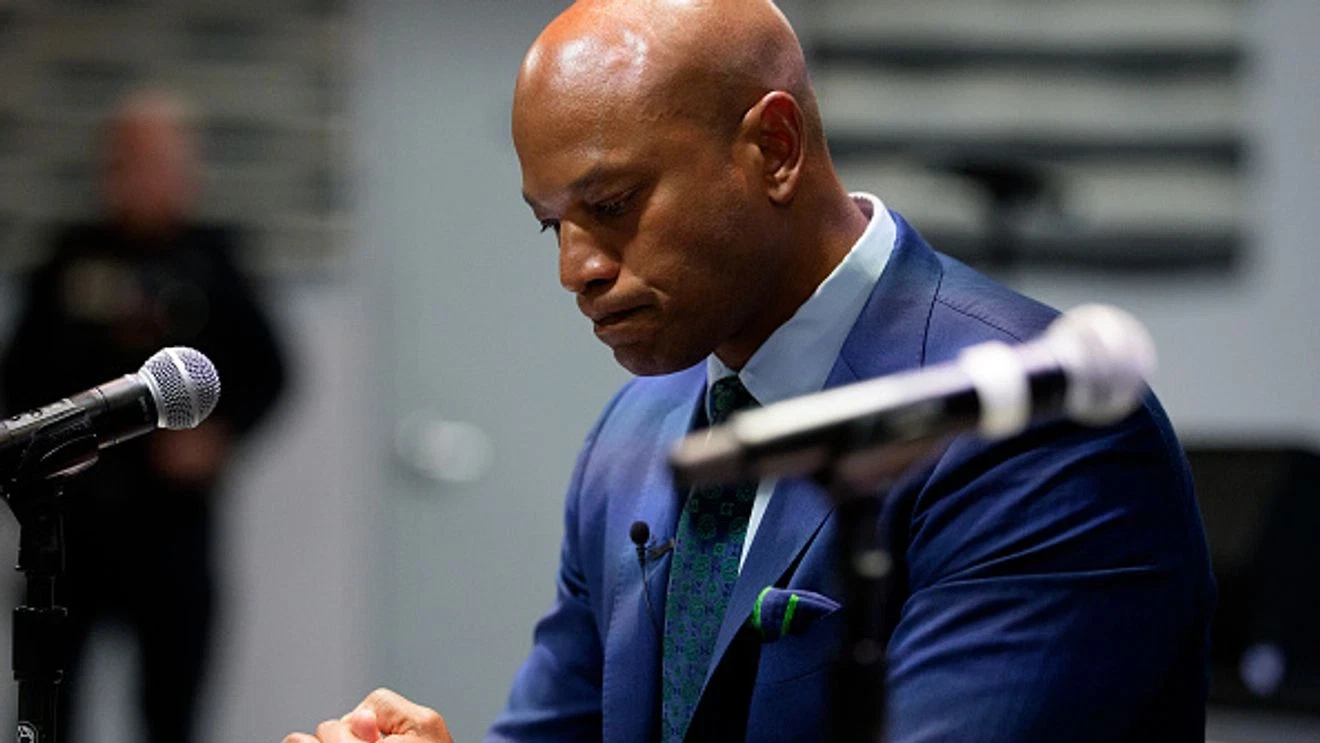
ADAMSTOWN, Md. — Maryland Gov. Wes Moore is striking an evolving tone on the state’s data center boom just two years after his administration helped clear regulatory hurdles for the industry and months after he tried to block a state study examining its potential consequences.
Data centers do not get to write the rules,” Moore said during a recent appearance on “The Root” podcast. “They do not get to override local opinion. We have to make sure that the power belongs to the people.”
The comments arrive as communities across Maryland grapple with the enormous electricity demands, land-use and infrastructure needs tied to a rapidly expanding industry that Moore once aggressively courted as part of his vision to make the state a technology leader.
That tension is increasingly evident in Frederick County, where one of Maryland’s largest data center developments is already taking shape, and local officials have temporarily halted new applications.
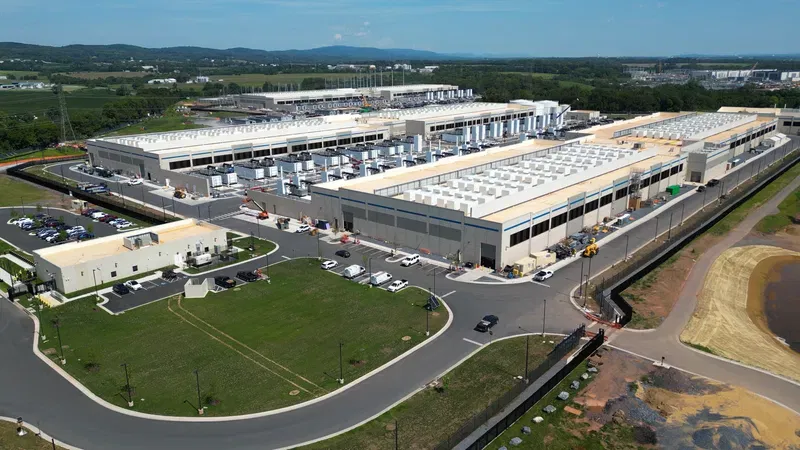
The construction site on Thursday, August 27, 2026, for a new four-building Amazon Web Services facility totaling 777,000 square feet in Adamstown, Md., within Quantum Frederick Park. (Steve Pierce/Spotlight on Maryland)
At the Quantum Frederick campus near Adamstown, Amazon Web Services is developing more than 777,000 square feet of data center space across four buildings.
Permits also cover 99 emergency generators capable of producing more than 258 megawatts of backup power.
If that amount of electricity were generated continuously for a full year, it would roughly equal the annual electricity consumption of more than 200,000 Maryland homes.
The generators are intended primarily for backup and testing, rather than the project’s ordinary source of electricity, but their capacity underscores the immense scale of the infrastructure being built.
David Turner, communications director and senior advisor for Moore, declined to comment for this story or provide insight into the governor’s policies affecting more than 6 million Marylanders.
ALSO READ | Maryland Government House or White House? Questions spike as Wes Moore shifts strategy
Citing a defamation lawsuit Moore is facing in his private capacity, Turner said that Spotlight on Maryland’s questions about why the governor changed tone, whether it was the result of polling or public opinion, whether the governor believes data center development in Maryland should continue, and how data center development can occur when the state is a net importer of energy “must be sent to legal review.”
“We’ll get back to you once that’s finished,” Turner wrote.
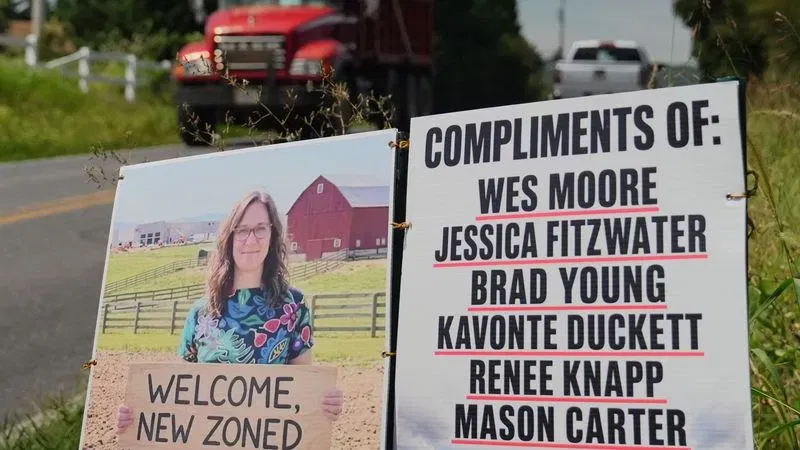
Yard signs denouncing a new Amazon Web Services data center facility under construction in Adamstown, Md., on Thursday, August 27, 2026. (Steve Pierce/Spotlight on Maryland)
The private lawsuit has been filed by David Smith, the executive chairman of Sinclair, Inc., the parent company of Spotlight on Maryland and the majority owner of The Baltimore Sun.
ALSO READ | Md. agencies restrict answers to news outlets, citing private lawsuit against Wes Moore
Amazon did not immediately respond to a request for comment on Tuesday.
This data center development is the kind of project Maryland’s state government, namely Moore, once appeared determined to attract.
During his second State of the State address before a joint session of the Maryland General Assembly in February 2024, the governor announced that technology and data center infrastructure were central to his economic policy.
“We will invest in industries of the future with funding for life sciences, biotech, data centers, and cyber,” Moore said.
In May 2024, Moore signed the Critical Infrastructure Streamlining Act, legislation designed to ease regulatory barriers for backup generators used by data centers. His administration said the changes would help Maryland compete with neighboring states for projects.
This bill is going to supercharge the data center industry in Maryland so we can unleash more economic potential and create more good-paying union jobs,” said Moore during the signing.
Moore continued to promote the broader technology sector the following year.
Speaking at a Columbia technology event in August 2025, the governor said Maryland needed to “center the industries of the future” and highlighted his administration’s goal of making the state a national leader in quantum computing.
“I am very bullish on the future of AI and the future of cyber,” Moore said.
Even in August 2025, political resistance was already building.
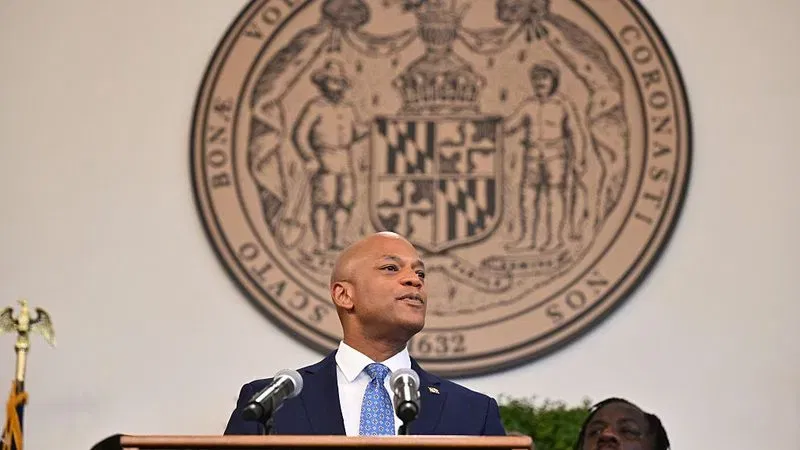
ANNAPOLIS, MD – AUGUST 05: Maryland Gov. Wes Moore speaks during a press conference at the Maryland State House on August 05, 2025 in Annapolis, Maryland. Moore announced that beginning in 2027 the Preakness Stakes will be held three weeks after the Kentucky Derby and will return to Pimlico Race Course in Baltimore. (Photo by Jamie Sabau/Getty Images)
In May 2025, Moore vetoed legislation directing Maryland to study the environmental, energy, and economic effects of data center development.
Lawmakers rejected the decision during a December special session.
The Maryland Senate voted 44-0 to override the veto. The House then voted 109-21, forcing the study into law despite Moore’s objections.
ALSO READ | Gov. Wes Moore dodges question on energy bills as state faces sharp increase
As electricity affordability and grid capacity become increasingly pressing political concerns, the governor is emphasizing that communities should have greater say over where data centers are built.
A shift in Moore’s rhetoric appeared to be underway in spring of this year. He addressed rising consumer energy bills during a news conference in April, a hot topic for Marylanders throughout his administration.
Nonetheless, he still left open the possibility that the state’s nascent data center industry could flourish.
Maryland doesn’t need to choose between affordability and innovation, because we can, and we should lead in both,” Moore said.
The shift has drawn scrutiny from officials who question whether Maryland can pursue aggressive data center growth while remaining dependent on electricity generated outside the state.
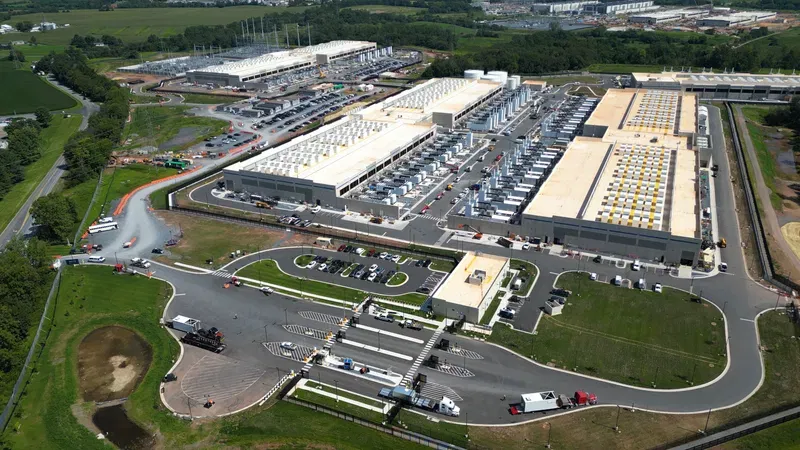
The construction site on Thursday, August 27, 2026, for a new four-building Amazon Web Services facility totaling 777,000 square feet in Adamstown, Md., within Quantum Frederick Park. (Steve Pierce/Spotlight on Maryland)
“The first big need for data centers is energy,” Harford County Executive Bob Cassilly, a Republican, told Spotlight on Maryland. “It’s all about energy.”
ALSO READ | What is the plan to power Maryland’s energy demands?
Cassilly said that Maryland eventually has to reconcile its economic-development ambitions with its energy policies.
Maryland can choose to be an energy-generating state and play in the data center world,” Cassilly said, “or we can just continue where we’re going and be an energy-purchasing state, and in which case, we have no business playing in the data center world.”
Asked whether Moore had reversed course, Cassilly stopped short of issuing a blanket declaration.
“If what he meant by that is building big data centers, that would be a flop,” he said, referring to Moore’s earlier promises to grow Maryland’s technology sector.
Frederick County, led by Democratic County Executive Jessica Fitzwater, announced this summer that it would halt the acceptance and processing of new data center applications through Dec. 31 while officials await additional analysis.
Projects already approved, however, may continue.
That includes the massive development near Adamstown, where construction vehicles now traverse a landscape that residents know will look very different once the work is complete.
ALSO READ | Is Maryland heading towards an ‘energy cliff’ due to Wes Moore’s green energy agenda?
Mary, who lives nearby and asked that her last name not be published for fear of backlash, said she worries less about the political language surrounding data centers than about what the projects could ultimately mean for her household.
I was wondering if our taxes will go up or the electricity,” she said. “They’re going to use a lot of electricity and water, and it is concerning because we just really don’t know what it’s going to bring.”
Her uncertainty captures the broader dilemma now confronting Maryland.

Mary, of Adamstown, Md., who asked not to be identified by her last name, said on Thursday, August 27, 2026, that she is concerned about the rapid development of data centers in her community. (Steve Pierce/Spotlight on Maryland)
The state has already opened the door to an industry promising investment, technology jobs and economic growth. Massive projects are moving forward. Yet policymakers are also studying whether those developments could impose significant costs on the power grid, the environment and surrounding communities.
For Moore, that leaves a record increasingly divided between the data center industry Maryland worked to attract and the caution he is now urging as the industry’s footprint becomes harder to ignore.
ALSO READ | Moore expected to veto bipartisan data center bill, federal court access decision pending
A Gallup News poll published in May found that 71% of those surveyed opposed the construction of data centers in their local communities. The poll also reported that among the seven in 10 Americans who oppose data center construction, more than 48% strongly oppose.
That same poll said that 75% of Democrats and 64% of Republicans oppose building data centers locally to where they live.
AdImpact found that more than $31 million has been spent on political ads mentioning data centers as the midterm elections progress.
Do you have any tips or information related to this story? Send news tips to gmcollins@sbgtv.com or contact Spotlight on Maryland’s hotline at (410) 467-4670.
Follow Gary Collins on X and Instagram. Spotlight on Maryland is a collaboration between FOX45 News, WJLA in Washington, D.C., and The Baltimore Sun.
 Local Story