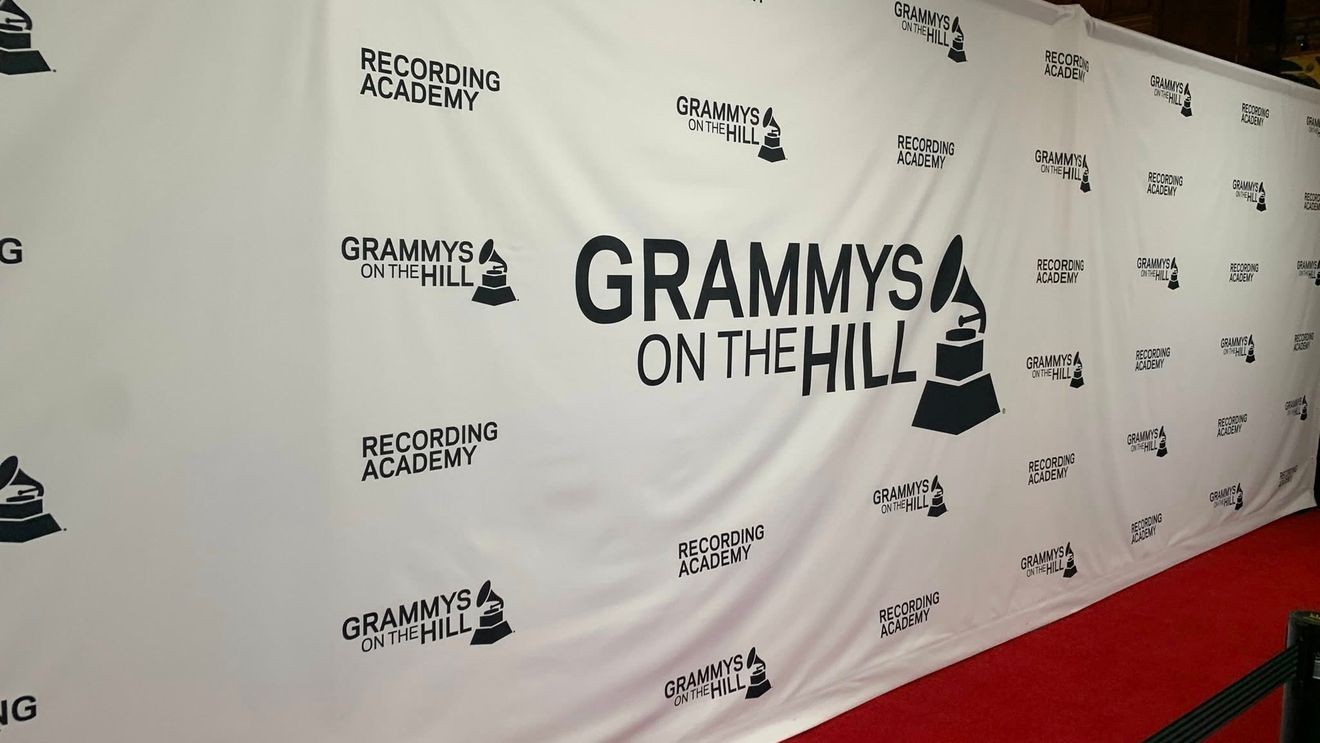
Washington, D.C., turned into a three-day backstage pass for music and policy this week as the Recording Academy marked the 25th anniversary of GRAMMYS On The Hill, bringing artists and lawmakers together to talk about one of the industry’s biggest plot twists: artificial intelligence.
The initiative, held April 21-23, wrapped Thursday, April 23, after a week of advocacy, celebration and conversation focused on “the people and policies dedicated to protecting human creativity as artificial intelligence shifts the music landscape.”
“GRAMMYS On The Hill represents the core of the Recording Academy’s year-round work to advocate for music people and ensure their rights are safeguarded in our culture,” Recording Academy CEO Harvey Mason jr. said. “As we mark 25 years of GRAMMYS On The Hill, we are reminded that music creators must remain at the center of every conversation shaping the future of the industry, especially as AI and other emerging technologies continue to transform it.”
The week’s marquee celebration came Tuesday, April 21, when more than 200 Recording Academy members, industry leaders and members of Congress gathered at The Hamilton Live in downtown Washington for the GRAMMYS On The Hill Awards. The dinner honored Sen. Chris Coons, D-Del., and Rep. María Elvira Salazar, R-Fla., for bipartisan work aimed at protecting musicians as AI reshapes the music industry. That includes their support of the Nurture Originals, Foster Art, and Keep Entertainment Safe (NO FAKES) Act, legislation that would establish federal protections against unauthorized AI-generated replicas of a person’s voice and likeness. The night also featured performances commemorating 250 years of American music.
“Musicians are magic makers, finding the perfect harmony for every moment from our sorrows to our joys,” Coons said. “That work—that magic—deserves to be protected. Today, too many artists have had their intellectual property, likenesses and livelihoods stolen by online pirates and AI artists. I’m proud to be spearheading efforts in Congress to safeguard your ideas and creativity because what you do cannot be replaced. As a Senator, I’ve had the opportunity to travel all over the world and have seen how American music helps people see us, understand us, and believe in our American dream. You connect us to the world, and you inspire the world. That’s what I’m going to keep fighting for. Thank you for this honor.”
Salazar also tied the moment to the fast-changing tech landscape.
“I’m truly honored to be recognized by the Recording Academy, a distinction that underscores the vital role music creators play in shaping our culture and economy,” Salazar said. “At a time of rapid technological change, protecting the voices, rights and livelihoods of artists is more important than ever. I remain committed to advancing policies like NO FAKES Act to ensure creators are respected, their work is protected, and their likeness is never exploited.”
The celebration rolled into Advocacy Day on Wednesday, April 22, when artists, songwriters, producers and other music advocates headed to Capitol Hill to meet with lawmakers and discuss “the impact of artificial intelligence on the music community.” The Academy said it is pushing for policies that ensure human creators are protected, credited and fairly compensated.
GRAMMY-winning and GRAMMY-nominated artists including Durand Bernarr, Grace Potter, Israel Houghton, Maggie Rose and Molly Tuttle met with lawmakers including Sens. Alex Padilla, D-Calif., Bernie Sanders, I-Vt., and Lisa Blunt Rochester, D-Del., along with Reps. Darrell Issa, R-Calif., Erin Houchin, R-Ind., Jason Smith, R-Mo.,
GRAMMYS On The Hill concluded Thursday, April 23, with the third annual Future Forum, a conference bringing together music creators, industry leaders and policymakers for discussions on major issues shaping the industry.
The Recording Academy noted that, since its inception, GRAMMYS On The Hill has helped drive major legislative wins for the music industry, including the Music Modernization Act in 2018 and the PEACE Through Music Diplomacy Act in 2022, with its Washington-based advocacy team continuing year-round work at the local, state and federal levels.
 Local Story