DUNDALK, Md. (WBFF) — A high-stakes reset of the Francis Scott Key Bridge rebuild is raising fresh doubts about when – and at what cost – the project will be completed, after Maryland officials abruptly cut ties with a major contractor and declined to provide details about what went wrong.
The decision to drop Kiewit Infrastructure Co. from Phase 2 of the multibillion-dollar rebuild marks a critical turning point for a project once touted by Gov. Wes Moore as the “fastest-moving large infrastructure project in the United States.”

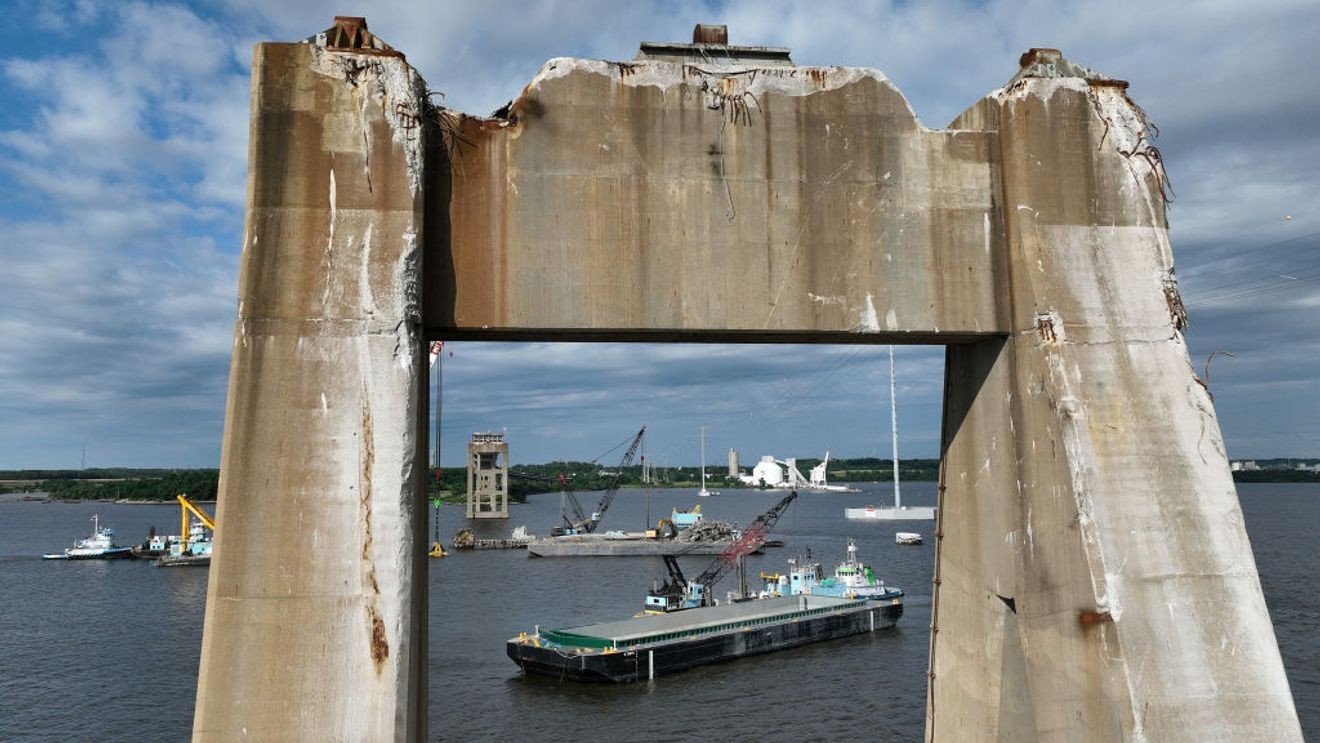
BALTIMORE, MARYLAND – JUNE 11: In an aerial view, the remains of the Francis Scott Key Bridge are seen as salvage crews continue to work to clean up the wreckage after the bridge collapsed in the Patapsco River on June 11, 2024 in Baltimore, Maryland. Baltimore’s Fort McHenry Federal Channel has fully opened for shipping traffic months after the cargo ship Dali collided with the bridge, causing it to collapse. (Photo by Kevin Dietsch/Getty Images)
Now, with projected costs climbing from $1.8 billion to at least $5.2 billion, a completion date slipping from 2028 to as late as 2030, and officials offering limited transparency on the next steps, both lawmakers and residents say confidence in the state’s handling of the rebuild is eroding.
This also comes as Moore and the Maryland General Assembly are facing multibillion-dollar deficits during the next handful of years, with a $3 billion deficit estimated in the next fiscal year.
RELATED | Key Bridge contract canceled: Gov. Wes Moore’s ‘fastest moving’ claim tested
State leaders would not confirm to Spotlight on Maryland how much the costs for the rebuild had increased further when pressed on Wednesday for answers.
“We couldn’t come to terms with the contractor,” said Bruce Gartner, executive director of the Maryland Transportation Authority, pointing to differences between the company’s proposal and independent cost estimates commissioned by the state.
But when pressed for specifics on what drove those differences, Gartner offered little detail.
“That’s really a question of how Kiewit wanted to perform this work versus what we thought would be needed,” he said, later adding, “I don’t have specifics for you.”
State Senator Johnny Ray Salling, R-Baltimore County, whose district includes communities directly impacted by the bridge collapse, said even those inside government are still searching for answers.
“We don’t know the timeline now,” Salling said. “We see that the main contractor has been told we’re not going to use you now.”
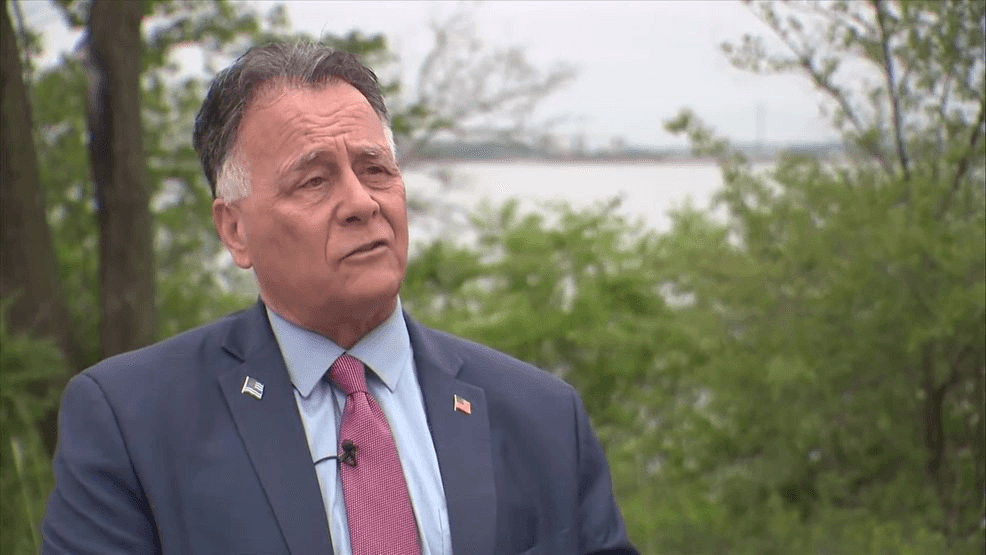
Maryland State Sen. Johnny Ray Salling, R-Baltimore County (Kenny Christopher/WBFF)
He also raised questions about how quickly the state can identify new contractors and whether local companies will be included in the next phase of work.
Where are we going to get our main contractors and subcontractors?” Salling asked. “Where are we going to go from here?”
Salling, a member of the Senate Transportation Subcommittee, said he believes delays after the shipping channel was cleared may be a key factor behind the rising costs.
“The costs ballooned, I believe, because of the timeline,” Salling said. “There was a lapse.”
For residents and business owners in communities surrounding the bridge, those delays are already being felt in tangible ways.
At Costas Inn in Dundalk, just over a mile from the bridge site, third-generation manager Maria Henriquez said the loss of the bridge has reshaped daily routines and cut into business.
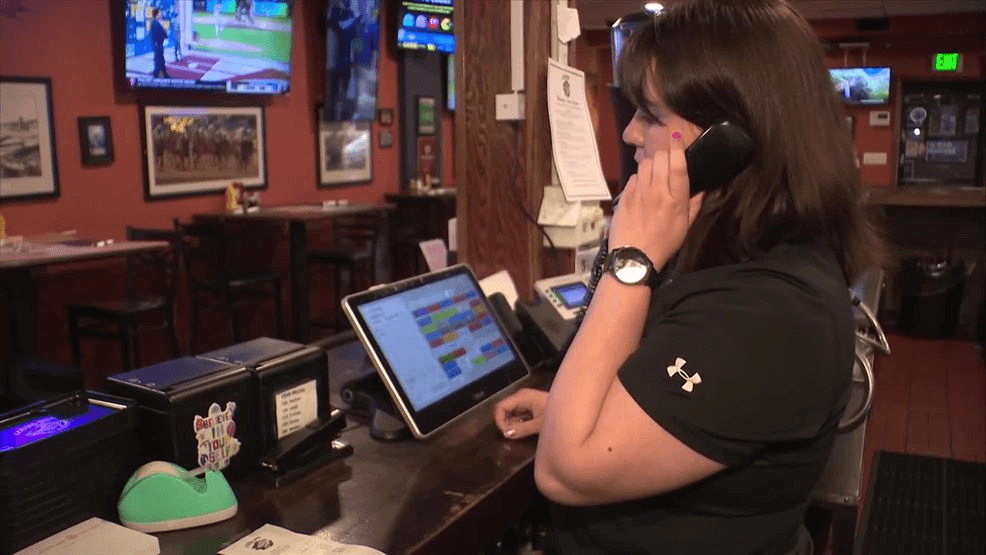
Maria Henriquez, a third-generation restaurant manager at Costas Inn in Dundalk, Md., told Spotlight on Maryland on Wednesday, April 29, 2026, that the absence of a completed Francis Scott Key Bridge has impacted her business by more than 30%. (Kenny Christopher/WBFF)
A commute that once took about 20 minutes now takes nearly twice as long. Customer traffic, she said, has dropped significantly.
“I would say business is down 30%,” Henriquez said. “It affects people. They used to come right over the bridge.”
Henriquez, who lives in Pasadena, said the prolonged absence of the bridge has made both personal and professional life more difficult.
I just hope we can get this project started and finished quickly,” Henriquez said.
Frustration is also growing among residents who expected to see more visible progress by now.
ALSO READ | Trump administration warns Moore on Key Bridge costs, ‘unconstitutional’ DEI practices
“They should have been well on their way to building it by now,” one local resident, who asked not to be named, said. “It’s really messed up.”
A UMBC Institute of Politics poll showed that 76% of Baltimore City residents surveyed said the loss of the Key Bridge has had “a great deal” or “some” impact on their life.
The latest developments stand in contrast to earlier messaging from Moore, who previously described the rebuild as “the fastest-moving large infrastructure project in the United States.”
As the project’s scope and cost have evolved, so too has the funding structure.
In the immediate aftermath of the collapse, federal funding through the Federal Highway Administration’s Emergency Relief Program was expected to cover much of the rebuilding effort. As estimates increased, state and federal officials began working toward a cost-sharing agreement.
Both the state and federal government assert key details remain unresolved.

BALTIMORE, MARYLAND – JUNE 11: In an aerial view, a construction barge moves past other salvage crews as they continue to clean up the wreckage from the collapse of the Francis Scott Key Bridge in the Patapsco River on June 11, 2024 in Baltimore, Maryland. Baltimore’s Fort McHenry Federal Channel has fully opened for shipping traffic months after the cargo ship Dali collided with the bridge, causing it to collapse. (Photo by Kevin Dietsch/Getty Images)
Gartner said the final financial impact on Maryland taxpayers will depend in part on ongoing legal and insurance negotiations tied to the cargo ship Dali, which struck the bridge.
“The biggest thing we are waiting on is that agreement in principle for the attorney general and the owners of the Dali,” Gartner said.
Until those negotiations are finalized, the total cost burden and how it will be divided may remain unclear.
ALSO READ | USDOT Secretary Duffy: Gov. Wes Moore ‘not a good steward’ of Key Bridge funds
When asked about the criticism Spotlight on Maryland heard on Wednesday regarding residents’ views of the state’s handling of the project, Gartner defended the state’s approach.
“I think we are being very transparent,” Gartner said, pointing to the complexity of large-scale infrastructure projects and the evolving nature of cost estimates.
Still, public confidence appears to be slipping.
The recent UMBC poll found that 44% of Baltimore City residents are either “not at all” or only “a little” confident the bridge will be rebuilt by 2030.
Send news tips about this story or others to gmcollins@sbgtv.com or contact Spotlight on Maryland’s hotline at (410) 467-4670.
Follow Gary Collins on X and Instagram. Spotlight on Maryland is a collaboration between FOX45 News, WJLA in Washington, D.C., and The Baltimore Sun.
 Local Story