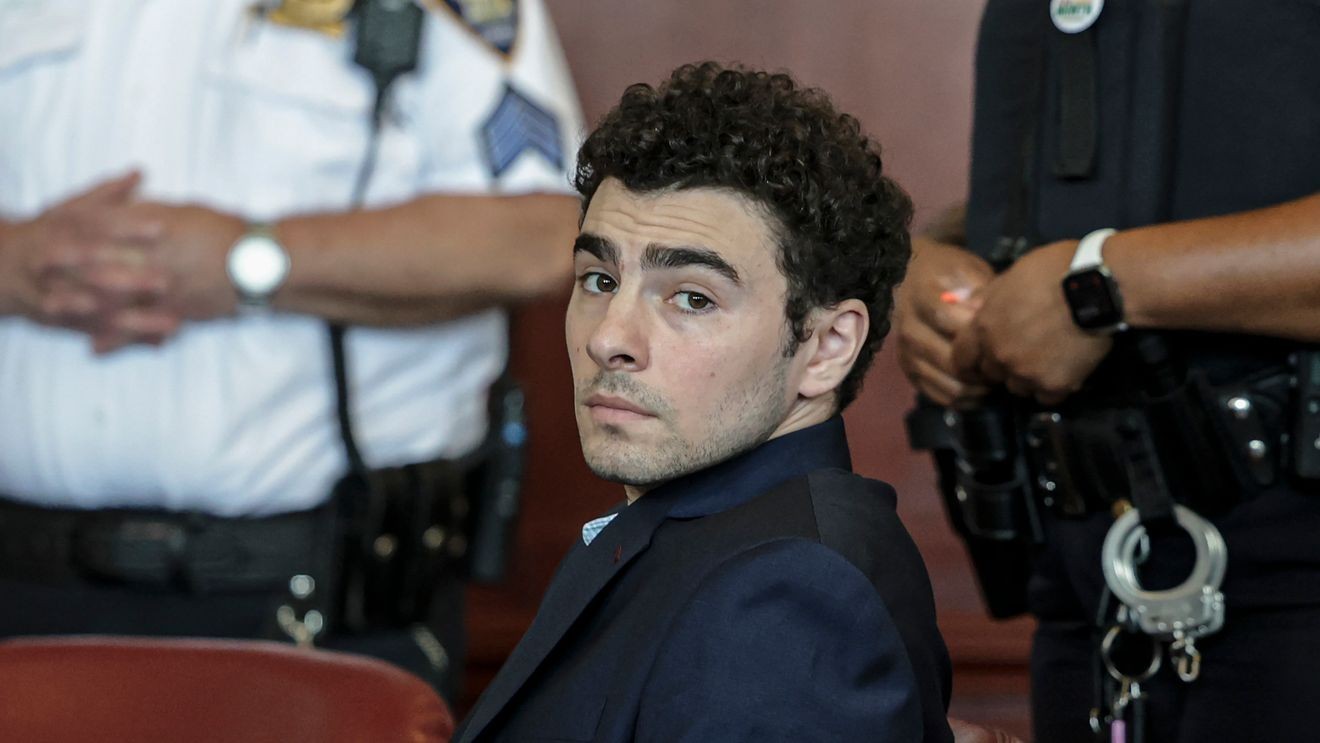
WASHINGTON (TNND) — A judge’s decision to allow key evidence in Luigi Mangione’s state murder case is being viewed as a significant boost for prosecutors, even after some evidence was initially suppressed.
Neama Rahmani, a former federal prosecutor and president of West Coast Trial Lawyers, told The National News Desk the ruling ultimately favors the state. “I agree, it’s certainly a win for the prosecution,” Rahmani said. (TNND)
Neama Rahmani, a former federal prosecutor and president of West Coast Trial Lawyers, told The National News Desk the ruling ultimately favors the state. “I agree, it’s certainly a win for the prosecution,” Rahmani said.
Rahmani said the judge suppressed some evidence connected to an initial search at a McDonald’s in Pennsylvania, but still allowed the same items to be used after Mangione was arrested and the evidence was recovered through an inventory search. “So we’re talking about the gun, the manifesto and all the evidence that implicates Mangione in this murder,” Rahmani said. “It’s all going to come in, and it’s going to come in a little bit later than prosecutors wanted, but it’s still going to come in nonetheless.”
The ruling also tracks with a previous federal decision involving backpack evidence, Rahmani said, with both courts reaching “essentially the same result” even though each judge must make an independent constitutional analysis.
Rahmani said the legal fight centers on the Fourth Amendment and whether investigators needed a warrant once they had the backpack. “And the question is, did they need a warrant once they had that backpack?” he said. “And it wasn’t a danger at that McDonald’s. And at least a state court judge said they did.”
Rahmani said the state case now carries higher stakes. “Well, I think certainly now the state case is the more serious case because of course, we know that a lot of the charges were dismissed in the federal case, including that potential for the death penalty,” he said.
He also said the defense has already notched victories, including knocking out the terrorism charge in the state case, which he said: “would have made it first degree murder.” In the federal case, Rahmani said the defense’s strongest argument was aimed at removing the death penalty by challenging whether the crime fit within a “crime of violence.”
Still, Rahmani said the case will likely come down to identity and the evidence jurors will see. “But at the end of the day, this is a case about who did it,” he said. “And the video is going to come in. The weapon is going to come in the defendant’s statements after Miranda. And of course, having that murder weapon in his backpack, the jurors are going to see that. So this is going to be a very tough case to defend.”

 Local Story