ANNAPOLIS, Md. (WBFF) — Maryland lawmakers returned to Annapolis Monday for a special legislative session dominated by one issue: congressional redistricting.
While no new congressional map is being debated this week, lawmakers are considering a proposed constitutional amendment that would change the rules governing how future congressional district boundaries are drawn.
Democratic leaders say the measure would let Maryland voters decide the rules for future congressional redistricting in response to recent court decisions affecting the Voting Rights Act. If approved by three-fifths of both chambers during the special session, the measure would then go before Maryland voters on the November ballot.
“We saw states like Tennessee, Louisiana, and South Carolina act with haste to attempt to eliminate majority-minority congressional districts. These acts changed the calculus. And that’s why we’re here,” Senate President Bill Ferguson said. “”If we want a future legislature to have meaningful options, we must address this issue first, and we have to make sure that Marylanders have a say in that process.”
Republicans, however, argue the special session is politically motivated and comes at the expense of the affordability challenges facing Maryland families.
“This sham special session is all about Governor Moore’s presidential and political ambitions. It is not about what’s best for Maryland,” Del. Jesse Pippy said.
House Minority Leader Jason Buckel said Republicans plan to try and force votes on affordability-related amendments, including proposals dealing with taxes and the state’s cost of living.
“We’re going ask the General Assembly to go on the record to talk about gas taxes, to talk about the affordability crisis, to talk about how Maryland’s policies, there’s no doubt, make things more difficult for Maryland’s families,” Buckel said.
Republicans argue the proposal could ultimately pave the way for Democrats to redraw Maryland’s congressional map in future years, allowing the party to preserve or expand its advantage in the state’s congressional delegation. Democrats dispute that characterization, saying this week’s legislation only establishes the rules and does not create a new map.
Teeing up the political pressure, as lawmakers gaveled into the special session, House Speaker Joseline Pena-Melnyk welcomed members back to Annapolis with a reminder that “the whole world is watching.”
Even if voters ultimately approve the amendment, Ferguson said it remains unclear whether lawmakers would immediately pursue new congressional maps.
When asked by FOX45 News whether a new map could be debated during the 2027 legislative session if the amendment passes, Ferguson said the answer is still uncertain.
“A key part of this special session is to give Marylanders a voice in this broader conversation,” he said.
We are taking this one step in a time. And we’ll see where we are through November, Senate President Ferguson said.
But when asked by FOX45 News why lawmakers would wait until the 2027 regular session to address affordability instead of taking action now, Ferguson said the legislature is still evaluating what actions the state can realistically take.
“We are studying these issues to figure out what in Maryland we can do, but we also recognize as a single state in a union, we only have so many levers to pull in order to lower costs when we exist within this federal environment,” Ferguson said, adding he expects several meetings over the next two days “talking about what exactly we can do to protect Marylanders.”
Senate Minority Leader Steve Hershey rejected that explanation.
“He has every opportunity to address those issues in the two days that we’re going to be down here now, but they choose not to,” Hershey said. “They can talk as much as they want about these issues, but they’re choosing not to address them.”
Del. Buckel warned middle-class Marylanders are already struggling, and many people can’t wait.
“By the time 2028 comes around, there’s gonna be a lot of middle-class families in this state that have either lost their house, lost their ability to save for their kid to go to college, or gotten up and said, ‘I’ve had enough,’ and moved,” he said.
Del. Pippy, the House Minority Whip, argued gerrymandering from any party is wrong.
“Gerrymandering is wrong. It’s wrong in Texas, it’s wrong in Ohio, it is wrong in North Carolina, it is wrong when Republicans do it, and it’s wrong when Democrats do it,” Pippy said. “But the truth of the matter is, in this state, although the Democrat majority just said they’re doing this in response to national politics, they’ve been gerrymander Republicans out of office for decades.”
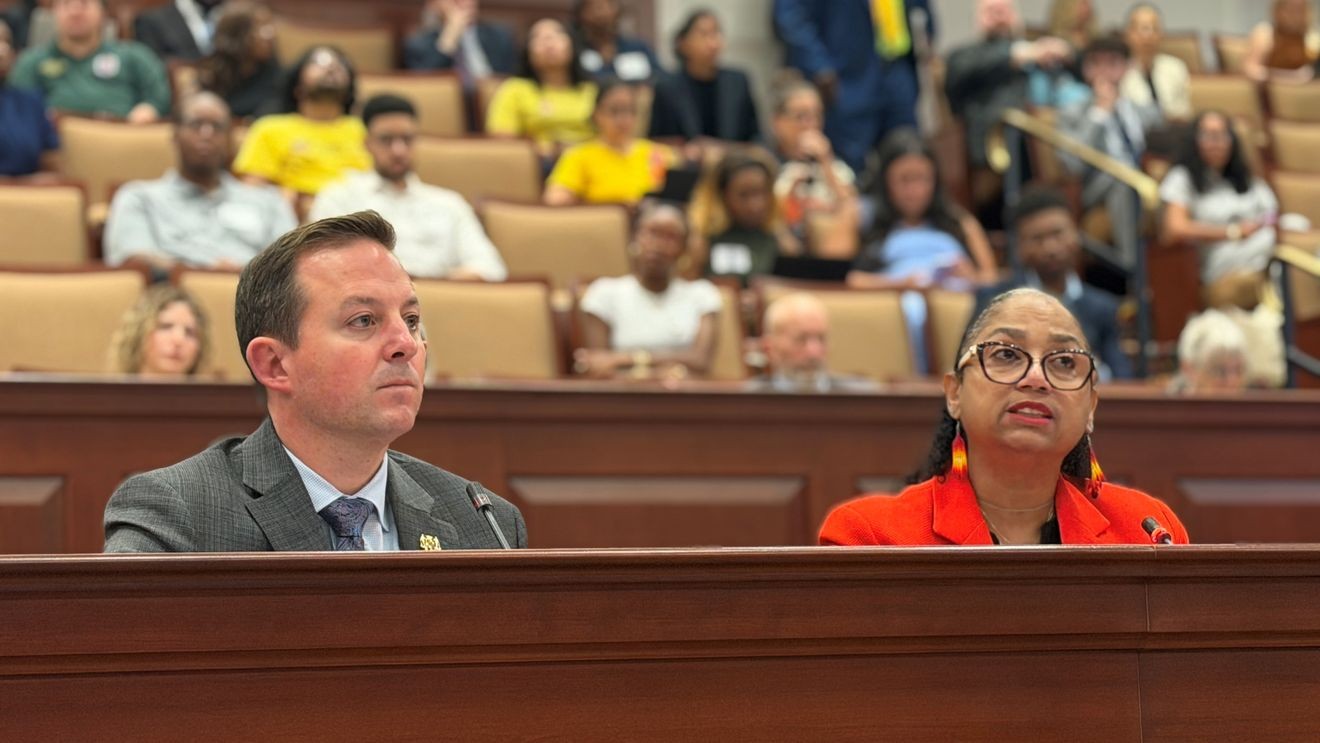
The committee hearing quickly turned contentious as lawmakers debated whether the proposal provides enough clarity about how future maps would actually be drawn.
At one point, Del. Brian Chisholm questioned supporters about the lack of specifics.
“How are we going to bring clarity? How are you going to draw the map?”
Del. Joseline Peña-Melnyk responded simply: “We are not talking about maps today.”
Public interest in the proposal was significant. More than 100 people signed up to offer testimony, both written and oral testimony. However, the majority of people signed up to testify in opposition of the plan.
The House was scheduled to debate the plan throughout the evening Monday. Republicans indicated they plan to try and filibuster, as well as introduce several amendments centered on affordability, taxes and other cost-of-living issues.
“We’re gonna try to take up as much time as we possibly can and make the Democrats stand up for what they want,” Hershey said. “If we can send them home early without getting the results that they want, then that’s our number one goal.”
The special session is expected to continue through Wednesday, though lawmakers could wrap up Tuesday night.
Follow Political Reporter Mikenzie Frost on X and Facebook. Send tips to mbfrost@sbgtv.com.

 Local Story