The Scott Jennings Show
8:00 pm - 10:00 pm
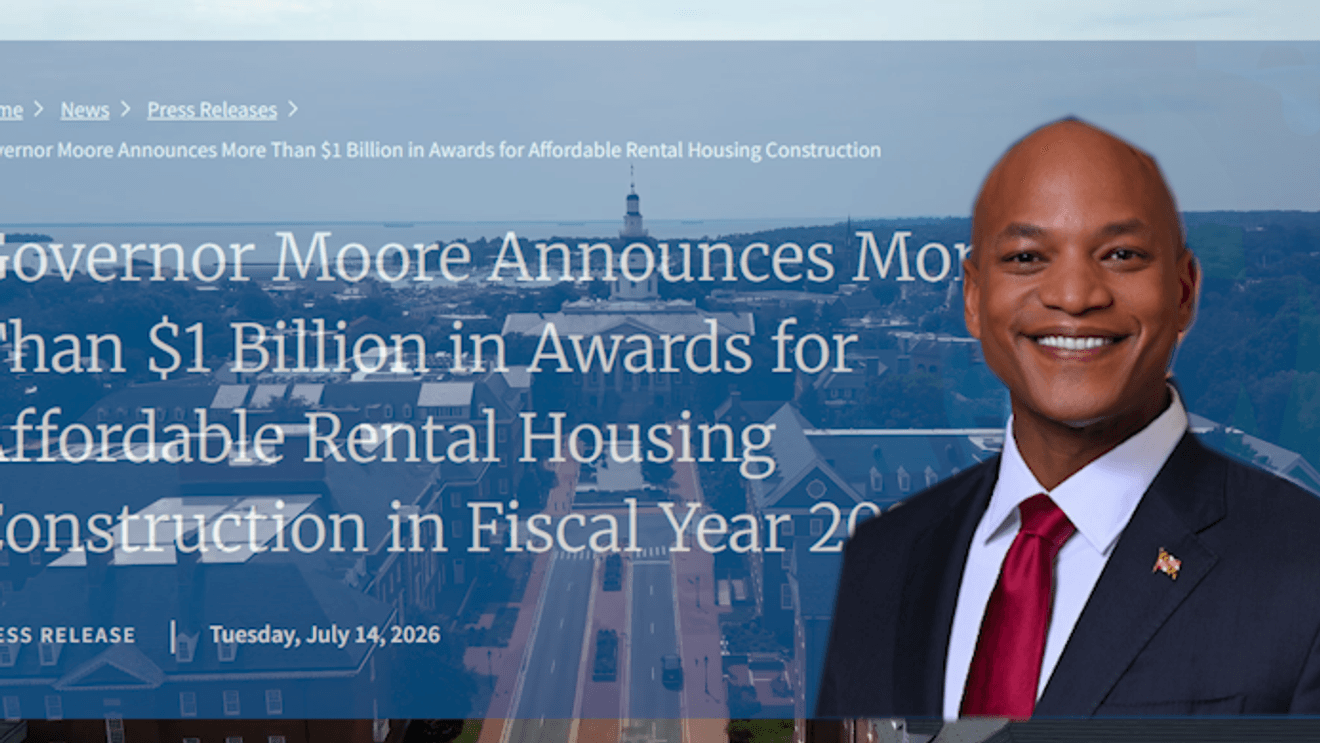
MARYLAND (WBFF) — A Maryland state senator is demanding a detailed accounting of the state’s affordable housing investments after the Moore Administration announced approximately $4.4 billion in financing has helped create or preserve nearly 10,000 affordable rental units in recent years.
Sen. J.B. Jennings, R-Baltimore and Harford counties, sent a four-page letter to Maryland Department of Housing and Community Development Secretary Jake Day requesting extensive records detailing where the money came from, who received it, how projects were selected and what safeguards exist to protect taxpayers.
ALSO READ | More than $1B awarded to affordable housing construction in Maryland in 2026
The letter follows Gov. Wes Moore‘s July 14 announcement that the state provided more than $1 billion in financing during Fiscal Year 2026 to create or preserve 3,025 affordable rental units. The administration also announced roughly $4.4 billion had been invested between Fiscal Years 2024 and 2026 to support 9,981 units.
“I kind of sat there for a minute and thought about the math in my head and said, ‘It’s a little expensive’,” Sen. Jennings told FOX45 News during an interview.
Jennings said dividing the reported investment by the number of housing units equates to roughly $442,000 per unit, a figure he believes warrants further explanation.
“I just think that price at $442,000 is extremely high. And that’s kind of what started this,” he said.
The Maryland Department of Housing and Community Development disputes both Jennings’ calculation and his characterization of the state’s investment.
In a statement to FOX45 News, the department said Jennings’ estimate is based on an oversimplified calculation and argued the $4.4 billion includes multiple financing sources, not just taxpayer dollars. According to DHCD, only about 5% of the total came from State General Funds, while the remaining 95% consists of private capital and Community Development Administration bond proceeds that are repaid to the department. Officials said the financing structure leverages 19 private investment dollars for every taxpayer dollar invested.
The department said the 9,981 housing units were financed through a combination of bond proceeds, Federal Low-Income Housing Tax Credits, HOME funds, the National Housing Trust Fund, HUD operating subsidies and state rental housing programs.
“This seems to be an Election Year attempt to spin much-needed investment to address high housing costs into a headline to support a false narrative about government spending,” the agency said via statement to FOX45 News.
However, Jennings said he wanted to know more information about how the state is spending money, and that’s why he’s asking for additional documentation.
“Myself as a legislator, it’s a fiduciary responsibility to make sure that we spend the taxpayers’ money prudently,” he said. “I read a press release, I look at the numbers…I do the math and say, ‘Wait a minute, this doesn’t seem right.’ Now I’m asking for further information because we want to make sure we’re using the money properly.”
In his letter, Jennings requests project-level information for every development included in the state’s announcement, including project locations, developers, property owners, financing sources, development costs and developer fees. He also wants contracts, financing agreements, audits and underwriting records.
In his letter, Jennings requests project-level information for every development included in the state’s announcement, including project locations, developers, property owners, financing sources, development costs and developer fees. He also seeks contracts, financing agreements, audits and underwriting records.
Among the questions Jennings wants answered are whether some developments received multiple forms of public assistance, whether lower-cost alternatives such as rehabilitating vacant properties were considered before financing new construction, whether any projects exceeded their budgets, and what happens to publicly financed properties once affordability restrictions expire.
Jennings also raised concerns about nonprofit organizations that receive state housing funding. In his letter, he notes that some nonprofit recipients control thousands of rental units and asks why organizations with substantial property holdings and established revenue streams continue to receive significant public financing.
He wants records showing how much of the $4.4 billion went to repeat recipients, whether the same organizations control multiple subsidized properties and what safeguards exist to ensure taxpayers receive a long-term public benefit after affordability restrictions expire.
“We had amendments on the floor in the Senate looking at making sure nonprofits are in complete compliance and up to date with all their information,” Jennings said. “Some of them aren’t, but they’re still getting taxpayer money. We want to make sure this money is being used properly. $4.4 billion is a lot of money.”
The department responded that many of those answers are already publicly available on its website and said the Moore Administration has spent the past three years addressing housing affordability by increasing housing construction and reducing regulations that drive up costs.
“Most of what the Senator objects to in his letter is the fact that building housing is expensive,” the department said. “We couldn’t agree more.”
While Jennings questions the state’s spending approach, he said he agrees Maryland needs more affordable housing.
“Absolutely, I believe that we need more affordable housing,” Jennings said. “A young couple can’t afford today’s housing prices.”
But he questioned whether the state should play such a large role in financing housing development.
“For the state to get involved and actually build the houses and contract it, I think is wrong. That’s not what state government should be for,” he said.
Jennings requested the department provide a written response and supporting records within 14 days. He said the information the department provides will determine whether additional legislative action is needed.
Follow Political Reporter Mikenzie Frost on X and Facebook. Send tips to mbfrost@sbgtv.com.
 Local Story