BALTIMORE (WBFF) — Two weeks after a $274.5 million overhaul of a taxpayer-funded program for people with disabilities, Marylanders who depend on the service say they can no longer reliably get to work or medical appointments.
Chris Danielsen, who is blind, recently booked a ride to work that never arrived, forcing him to find another way to get there. Days later, he said, drivers called to tell him they were waiting for him.
It either wouldn’t come [my ride], or I wouldn’t know whether it was coming or not,” Danielsen told Spotlight on Maryland.
His frustration stems from a Nov. 9 redesign of Maryland’s Call-a-Ride program, which provides subsidized, on-demand transportation for people with disabilities. Riders who previously booked directly with transportation companies must now use a centralized phone system or a mobile app.

The Maryland Transit Administration office on St. Paul Street in Baltimore on Friday, November 15, 2026. (Steve Pierce/Spotlight on Maryland)
A Spotlight on Maryland review of state procurement records shows the rollout followed years of contracting problems involving protests, flawed evaluations, staffing shortages and millions of dollars in retroactive spending authority.
In August, Maryland’s Board of Public Works approved a five-year, $274.5 million contract to manage and deliver Call-a-Ride services. The winner, Baltimore-based MJ Management Services LLC, was the same company that administered the previous contract.
MJ Management directed questions to the Maryland Transit Administration (MTA).
MTA spokesman TJ Smith told Spotlight the agency has taken immediate action and that “fixing the issues on this app-based service is our top priority.”
Danielsen, second vice president of the National Federation of the Blind of Maryland, said he has compiled a list of users who have complained that the transition has led to missed pickups, scheduling errors and difficulty reaching dispatchers.
For a program that provided more than 1.4 million rides in fiscal 2025, the consequences of those failures extend beyond inconvenience. Some passengers rely on the service to get to dialysis and other time-sensitive medical appointments, he said.
“People are in potentially life-threatening situations,” Danielsen said, explaining the potential consequences of missed appointments.
Call-a-Ride provides a critical link to daily life.
Customers typically pay $3 per trip, while the state covers up to $40. Those rides help people get to work, medical visits and buy groceries.
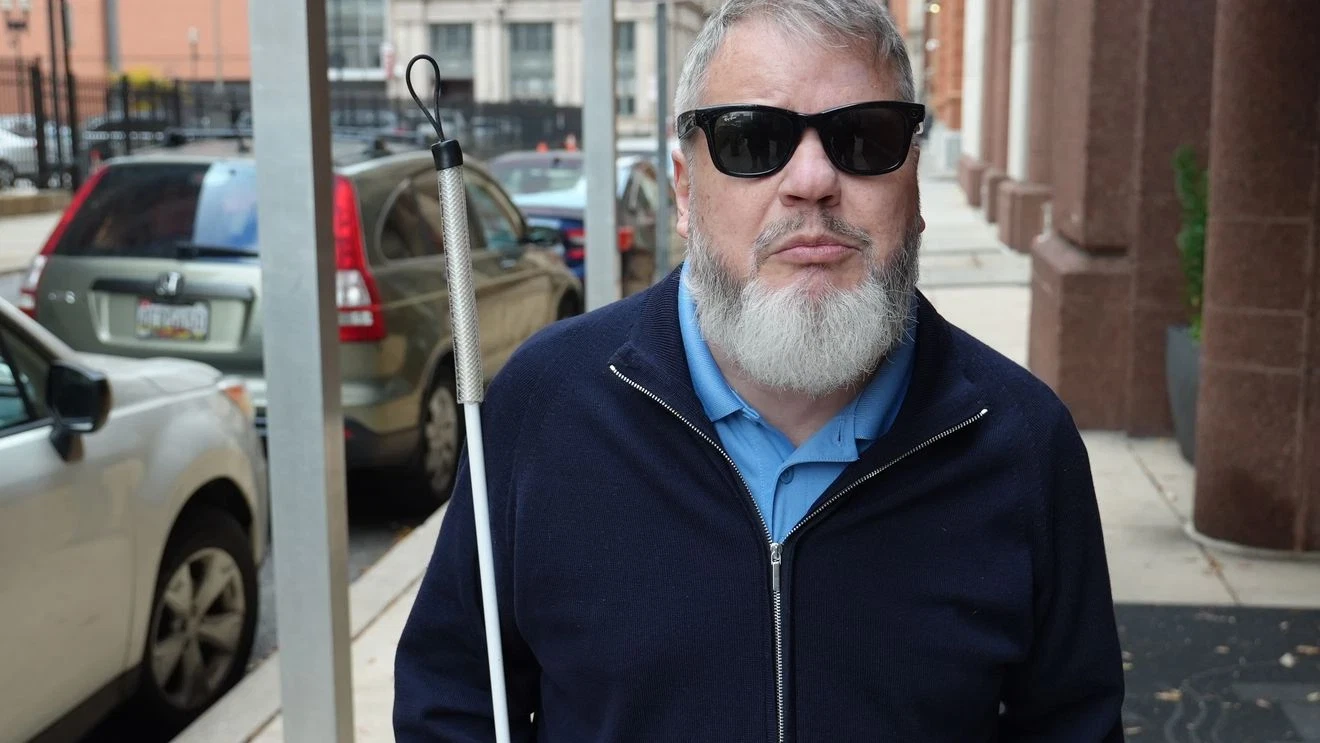
Danielsen demonstrated the new app to Spotlight on Maryland outside of his downtown Baltimore apartment.

Chris Danielsen of Baltimore told Spotlight on Maryland on Friday, November 15, 2026, that the new mobility app issued by the Maryland Department of Transportation has been a disaster for him and other members of the blind community. (Steve Pierce/Spotlight on Maryland)
He said its round-trip feature schedules return pickups immediately after drop-off, regardless of the requested time. He now books one-way rides.
Danielsen also said the new system frequently fails to provide driver and vehicle details, raising concerns about passengers getting into the wrong cars.
“That system was not ready for prime time,” Danielsen said. “They launched it anyway.”
State records trace the replacement contract to August 2022, when the MTA solicited bids in hopes of awarding a contract in spring 2023. That did not happen.
Following bid protests, the MTA acknowledged defects in its evaluations and restarted the process. A procurement officer’s departure in 2024 and staffing shortages stalled the review.
ALSO READ | Wes Moore’s team weighed moving Aruna Miller, elevating Jake Day, sources say
A 2025 cybersecurity attack interrupted access to procurement documents. Officials later discovered calculation errors that understated projected contract costs.
Another protest delayed final approval until August 2026.
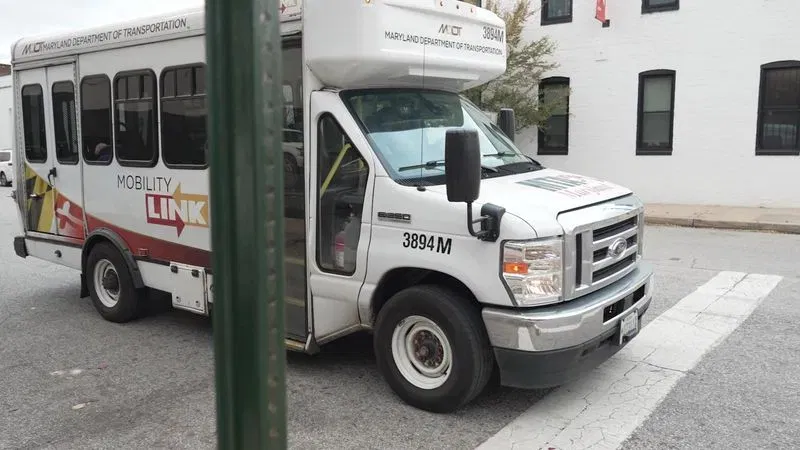
A mobility vehicle administered by the Maryland Department of Transportation. (Steve Pierce/Spotlight on Maryland)
The bid’s financial history also raises additional questions.
In October 2025, the Board of Public Works approved a $95.1 million contract modification, state records show, including $42.25 million in retroactive authority for services provided after the previous spending authorization was exhausted.
Spotlight on Maryland reached out to the MTA on Tuesday asking:
“MTA took immediate action to rectify issues by Call-a-Ride riders and engaged directly with impacted communities, working with our vendor MJM Innovations to push the changes Marylanders need in the service,” Smith said in an email.
He added that the MTA met in person with the National Federation of the Blind and “are in regular contact with our other disability advocates.”
This feedback is helping drive necessary improvements to the app and service for every rider, including those who rely on accessibility features,” Smith said.
The agency said it has decreased phone wait times, made trips more reliable, corrected fares, and added protections for wheelchair users.
ALSO READ | Second indictment follows years of warnings about unlicensed senior homes
During a Nov. 18 meeting with disability advocates, MTA Administrator Tony Bridges acknowledged their concerns and pledged improvements, according to releases on the agency’s website.
Meanwhile, the state’s own Call-a-Ride policycontains a caveat: Vehicle availability, wait times and pickups are not guaranteed.
The program is classified as a supplemental service, separate from federally mandated ADA paratransit.
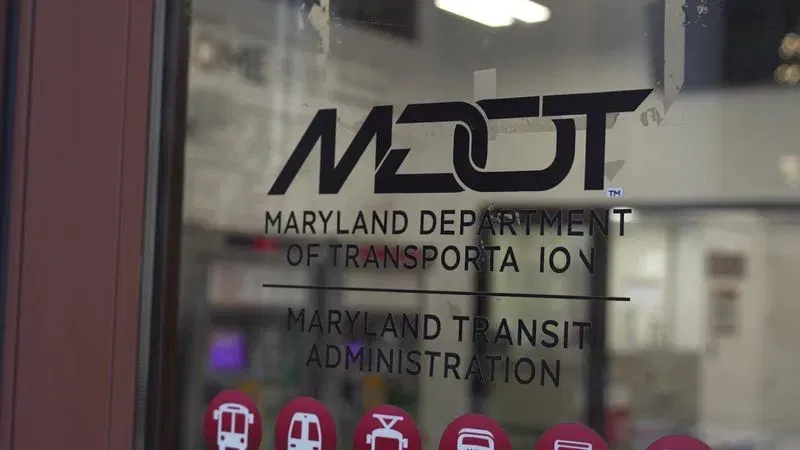
An agency window sign for the Maryland Department of Transportation on Friday, November 15, 2026. (Steve Pierce/Spotlight on Maryland)
Under its rules, a missed pickup classified as a no-show can reduce a customer’s monthly allotment of 62 trips. Repeated violations can lead to suspension.
ALSO READ | Promises made, promises kept? Moore’s Red Line seen as dream ahead of election
It’s the same fear Danielsen repeated multiple times to Spotlight on Maryland about his own usage.
Danielsen said he wants Maryland to restore the previous booking system until the replacement functions reliably. It is not immediately clear if MTA’s contract with the current provider permits this.
“Just because we’re people with disabilities doesn’t mean that we don’t deserve to be treated equally, to be treated respectfully,” Danielsen said.
Do you have any tips or information related to this story? Send news tips to gmcollins@sbgtv.com or contact Spotlight on Maryland’s hotline at (410) 467-4670.
Follow Gary Collins on X and Instagram. Spotlight on Maryland is a collaboration between FOX45 News, WJLA in Washington, D.C., and The Baltimore Sun.
This post was originally published on Fox 45 by Sinclair Media Group.
 Local Story