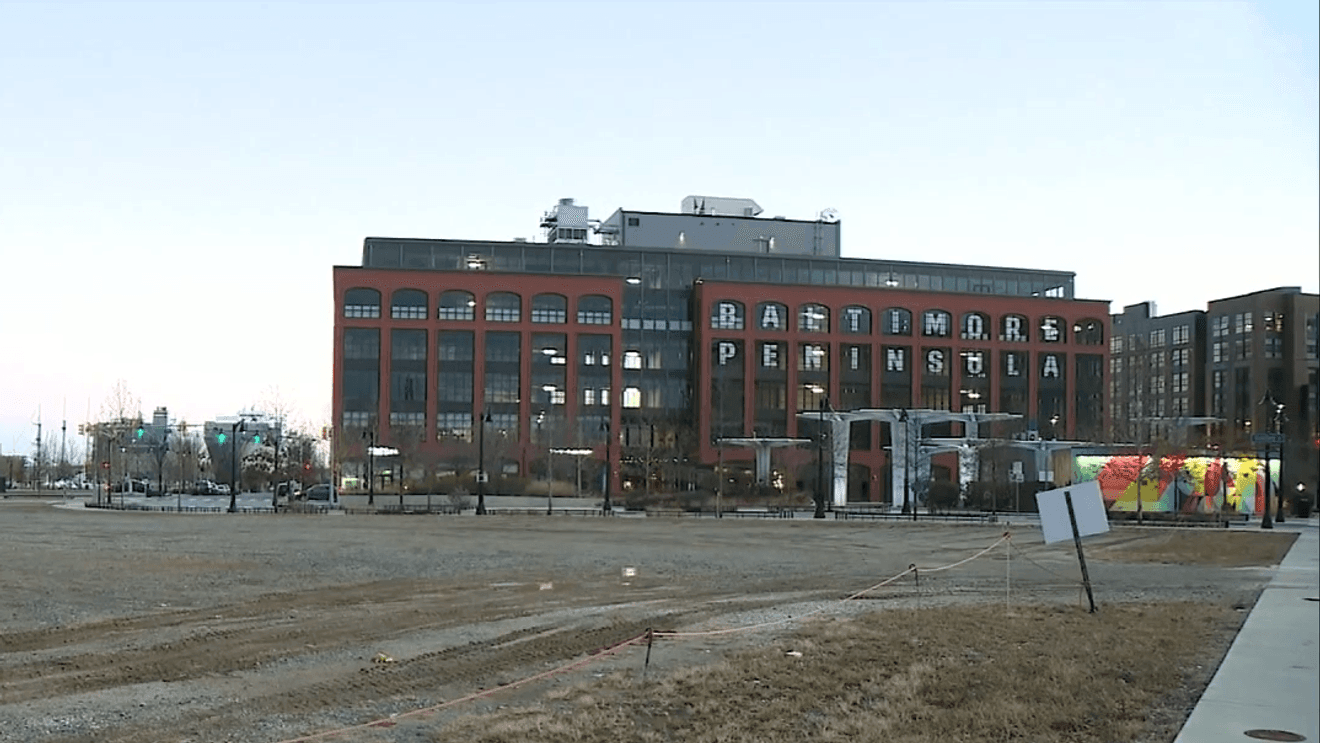
MARYLAND (WBFF) — Senate President Bill Ferguson, along with other lawmakers in the Senate Education, Energy, and the Environment Committee held an oversight hearing Friday, pressing officials with from Exelon and Baltimore Gas and Electric on additional information pertaining to the controversial Baltimore Peninsula Project, as well as regulatory processes that are in place for similar projects.
After pushback from lawmakers earlier this week, the project was temporarily paused. A decision that does “not change the underlying reliability needs in this part of the city, but it is a deliberate step that allows us to deepen engagement with local residents and community leaders, incorporate any updated development plans from Baltimore Peninsula’s new ownership, and thoughtfully review recommendations raised by Senate President Ferguson,” according to the BGE spokesperson.
ALSO READ | BGE pausing Baltimore Peninsula project after pushback from lawmakers
“I think that’s why this pause is so important, is it gives the opportunity for us to engage and provide additional transparency and regulatory impact so that we can make sure that we’re getting the best dollar value for each dollar that’s spent by a utility,” Senate President Bill Ferguson said in a press conference Friday.
Concerns about the Baltimore Peninsula project have largely been related to the ballooning cost, transparency and the potential disruption of historic neighborhoods. While acknowledging the need for upgrades, Senator Ferguson has expressed concern about the supplemental approval process, which is a process allows utilities to seek federal approval for underground transmission lines rather than the CPCN process with the state.
“How do we ensure that we are getting the best possible deal for rate payers? When there is an outside federal approval, these projects are not competitively bid. They’re done by the utility independently and the rate of equity return that is expended and returned to the utility is higher than it would be if it goes through the traditional CPCN process,” Ferguson said.
During the hearing, officials with BGE argued they have been transparent, publicly filing documents for years, which have included cost estimates and project information.
“So I wanted to make sure that it was clear that there is a very robust, open, transparent, transparent process here in Maryland for review of work that we do here. And it is done through that multiyear plan process,” said John Frain, the Vice President of Strategy and Regulatory Affairs for BGE.
“It’s hard to hear that there was transparency in it,” Senate President Bill Ferguson said. “Certainly there were filings and public filings. There’s no doubt about that. It’s just, I think that there has been, an overwhelming outcry of not understanding exactly the scope of these projects.”
ALSO READ | BGE CEO addresses Baltimore Peninsula project and proposal to generate energy
Michael Argentino, the Principal Project Manager of the Port Covington Transmission Project for BGE said it will “enhance reliability for 45,000 existing customers throughout south Baltimore,” supporting both completed and planned development. He said examples of “critical customers” include the University of Maryland Medical Center, UM Baltimore Campus, Fort McHenry Tunnel, MTA, Federal Reserve, and Baltimore City Police Department.
“This project does more than accommodate load growth. It addresses reliability and environmental risks from critical transmission and distribution infrastructure that dates back to the 1950s. Replacing aging equipment also reduces future maintenance expenses,” Argentino said.
Argentino said the project includes retiring an oil-filled transmission line that connects the Westport substation to Greene Street, installing a new underground transmission line from the Greene Street substation to Port Covington, and replacing an aging substation.
Additionally, BGE officials argued the increased cost of the project was related to site selection and land constraints. engineering and design changes, the increased cost of labor and materials, even federal tariffs.

 Local Story