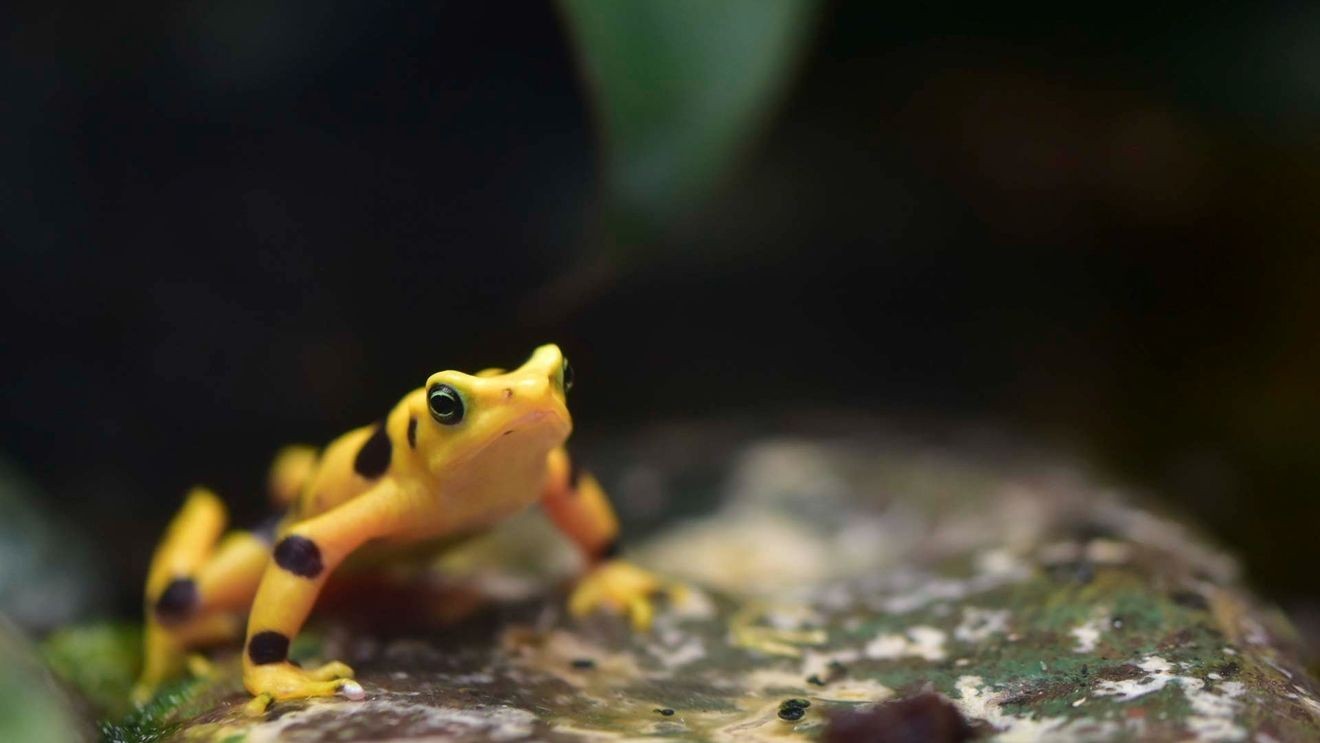
BALTIMORE (WBFF) — After more than two decades of conservation efforts, critically endangered Panamanian golden frogs are one step closer to returning to the wild.
Conservationists in El Valle de Antón, Panama, have moved captive-bred Panamanian golden frogs from indoor habitats into carefully monitored outdoor enclosures as part of a groundbreaking research project designed to prepare the species for eventual release.
The frogs, which have not been seen in the wild for more than 20 years, are being studied from the tadpole stage through their development into juvenile frogs.
ALSO READ | How the lighthearted social media trend of ‘teen takeovers’ took a serious turn
Researchers are comparing the growth and health of two species—Atelopus zeteki and Atelopus varius—raised in semi-natural outdoor conditions versus controlled indoor environments.
Scientists say the research will provide critical information as conservation teams work toward the historic goal of reintroducing captive-bred frogs into their native habitat.
This is the first time since the early 2000s that golden frogs have been allowed to experience the natural elements of El Valle,” said Heid Ross, Project Manager at the EVACC Foundation, via press release. “We’re carefully monitoring how variables like temperature, rainfall, and UV exposure affect their development – information that could be vital for reintroduction efforts.
The Panamanian golden frog population was nearly wiped out by chytrid fungus, a deadly disease that has devastated amphibian populations worldwide.
ALSO READ | Glen Burnie man faces attempted murder, arson charges after house fire
Before the species disappeared from the wild, conservationists rescued a small number of frogs to establish captive breeding programs.
The study is led by the EVACC Foundation with support from several conservation partners, including the Maryland Zoo, Fort Worth Zoo, Detroit Zoo, Zoo Atlanta, Seneca Park Zoo, and Project Golden Frog, part of the Association of Zoos and Aquariums’ Species Survival Plan.
It is incredibly exciting to see the efforts we have made over the past two decades to keep this species healthy in both North America and Panama now moving closer to a day when they are back in the wild in the El Valle de Anton region,” said Ellen Bronson, the senior director of Animal Health, Conservation, and Research at the Maryland Zoo, via press release.
Conservationists say the milestone marks the latest step in a decades-long effort that has included emergency rescue operations, captive breeding, disease management, habitat protection and public education.
They say returning Panamanian golden frog tadpoles to outdoor settings represents a significant sign of progress and hope for the endangered amphibian species.

 Local Story