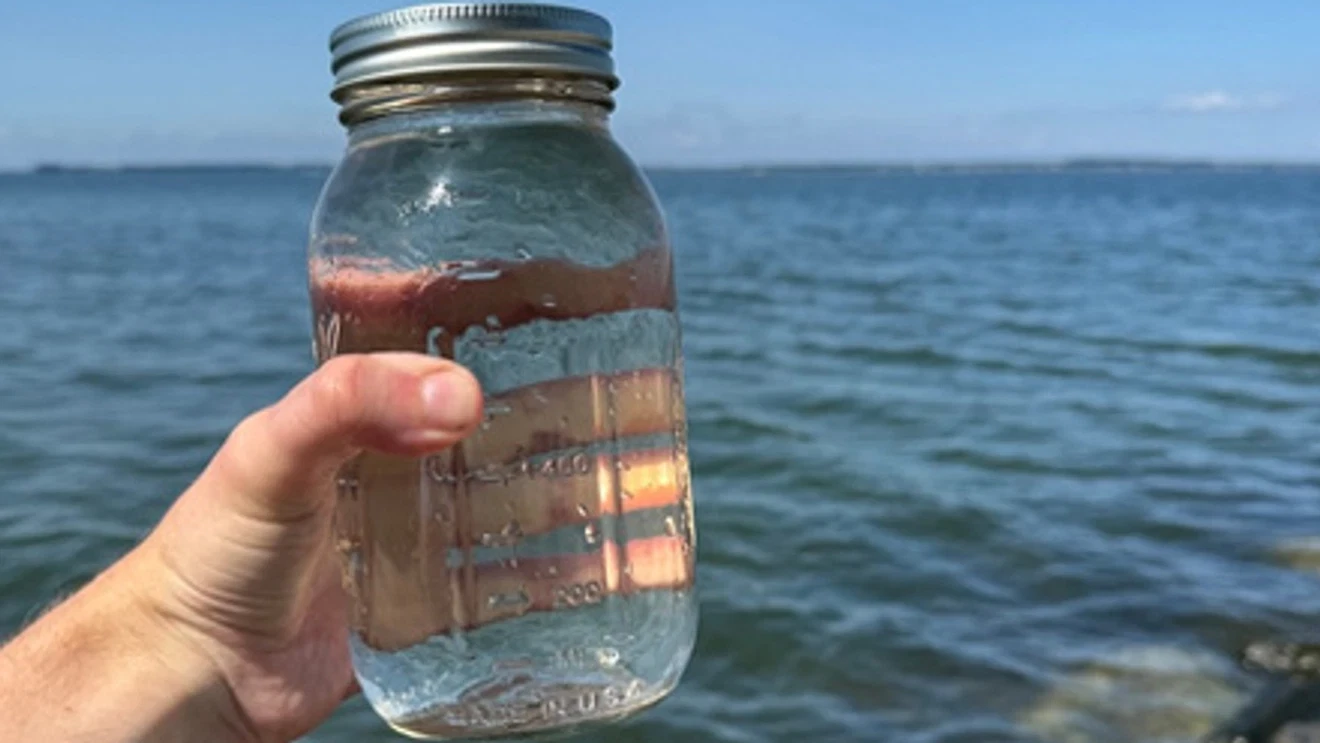
PENNSYLVANIA (WHP) — A study was released on Tuesday by the nonprofit, PennEnviornment Research and Policy Center, that found pervasive microplastic contamination across the Chesapeake Bay watershed.
The nonprofit’s report said that microplastics were in every water sample taken from lakes, rivers and bayfront locations in the Chesapeake Bay watershed. The samples tested reportedly included dozens of waterways across multiple states, one of which was Pennsylvania.
The Susquehanna River is the Bay’s largest tributary, sourcing 50% of the fresh water that flows into the Bay, according to the National Park Service.
Faran Savitz, the zero waste advocate at PennEnvironment Research & Policy Center, said the following:
The results of this study should set off alarms for all Pennsylvanians who love the Bay, and the Susquehanna River that feeds into it, and want to protect and restore it. Microplastics throughout the Chesapeake Bay and its tributaries make it clear we can no longer ignore the increasingly common specter of plastic pollution.
The Chesapeake Bay watershed provides drinking water to around 13 million people and is a home to thousands of animal species, the press release said.
“We can’t always see microplastics with the naked eye, but that doesn’t mean we should ignore them. They still can hurt our environment and our public health,” Stephanie Wein, Clean Water Advocate for PennEnvironment Research & Policy Center, said. “We need our policymakers to treat microplastics as a danger to the environment, and turn off the tap of plastic pollution.”
Wein unveiled the report at a news conference at the state Capitol, and the samples were studied at the Academy of Natural Sciences in Philadelphia, according to the nonprofit.
This post was originally published on Fox 45 by Sinclair Media Group.

 Local Story