WASHINGTON (7News) — The repairs to the deteriorating sewage pipeline that ultimately collapsed and flooded the Potomac River with hundreds of millions of gallons of raw sewage could have been fixed years ago, but red tape delayed the construction, according to a new Washington Post report.
That report revealed that D.C. Water planned to repair corroding parts of the major sewage pipeline, the Potomac Interceptor, in 2018 and had requested that the National Park Service fast-track approval of their plans.
However, the National Park Service delayed construction to conduct environmental impact studies because the work would require cutting down trees, potentially affecting a blue wildflower and an endangered bat species.
Betsy Nicholas is the president of the Potomac Riverkeeper Network, and told 7News these new details are frustrating because it appears the sewage spill – one of the worst in American history – should have been avoided.
“In terms of looking at the impacts on species, this catastrophic spill is going to be much more detrimental to the species than anything they could have gained from a more thorough review,” Nicholas said. “It’s frustrating, for sure, and eye-opening, in terms of the overall de-prioritization that has developed throughout the country – it’s not just in this situation – for maintaining our old infrastructure. This is a 60-year-old pipe. The thought that there could be problems with it seems really reasonable. And here we have DC Water looking into that and raising alarm bells that there were problems with it, trying to get it fixed, and it just got stuck in the slowly churning wheels of federal government approval processes.”
The Washington Post report also found the necessary environmental study had not been completed by the time the portion of the Potomac Interceptor had collapsed on Jan. 19 of this year.
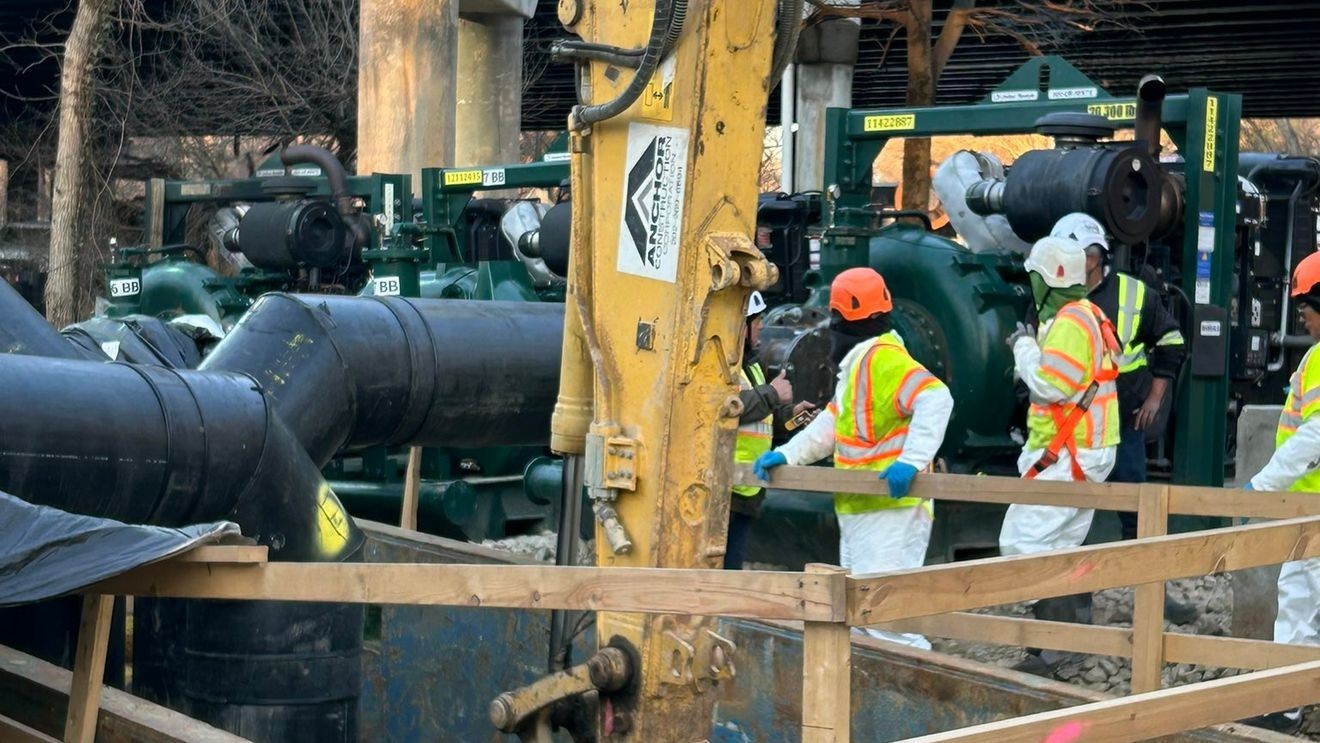
That rupture poured more than 240 million gallons of raw sewage into the river.
The Potomac Riverkeeper Network is a nonprofit organization dedicated to protecting the health of the Potomac River and its wildlife.
Nicholas told 7News that the environmental assessments the National Park Service conducts are crucial, but the delays likely caused more problems than they solved.
“It absolutely makes sense to study, look at the best way to do this kind of maintenance. It’s a huge pipe, and it’s buried underground. You’re going to have to disturb the land, disturb possibly trees, vegetation in order to fix, maintain that pipeline. Looking at how to do that in an ecologically sensitive manner is a good thing, but it should not take six years or more to do that,” Nicholas said. “There’s huge public health implications of allowing this kind of failure to progress. But on just a super practical level, an economic level here, it is five-to-10 times more expensive to go and clean this up after the fact than it would be to prevent it in the first place.”
A D.C. Water spokesperson provided the following statement:
Performing work on federal land requires close coordination with the lead regulatory agency, which in this case is the National Park Service. In 2018, DC Water requested a categorical exclusion to rehabilitate the Potomac Interceptor in C&O Canal National Historical Park. However, NPS determined in 2021 that an Environmental Assessment was needed due to the extent of the environmental impacts. DC Water submitted its proposal the following year and has been working through the process prescribed by NPS.
It’s important to note that during this process DC Water continued to monitor and assess the condition of the pipe. As discussed in DC Water’s March 3, 2026 memorandum, “Potomac Interceptor Break Downstream of Manhole 17 Review of Inspection Reports,” the pipe assessments did not indicate an imminent structural failure or the need for emergency action. When we identified serious concerns about the potential for failure in another section upstream of the collapse site, NPS provided an exemption to rehabilitate an 800-foot section which was completed in January.
7News On Your Side is also reaching out to the National Park Service, but they have not responded as of publication.
In the meantime, Nicholas told 7News that officials should consider how to adjust the environmental assessment process to prevent future delays and catastrophes.
“In terms of doing the reviews, it’s really important. The problem here is they were saddled on the National Parks system. That is a historically underfunded agency,” Nicholas said. “If we think about this in the bigger picture of, yes, we can say it’s absolutely unreasonable and inappropriate, irresponsible it didn’t get completed in the one year timeline that was required and, in fact, two, three, four, five years later it still wasn’t completed. But how is the agency supposed to do something when they don’t have the personnel to do it?”
 Local Story