WASHINGTON (7News) — The president of the Potomac Riverkeeper Network (PRKN) said on Wednesday that she still has many concerns about DC Water’s handling of a massive sewage spill in January.
“This crisis is far from over,” said a statement sent out by the PRKN. “The public deserves a response grounded in science, urgency, and accountability—not delay or deflection.”
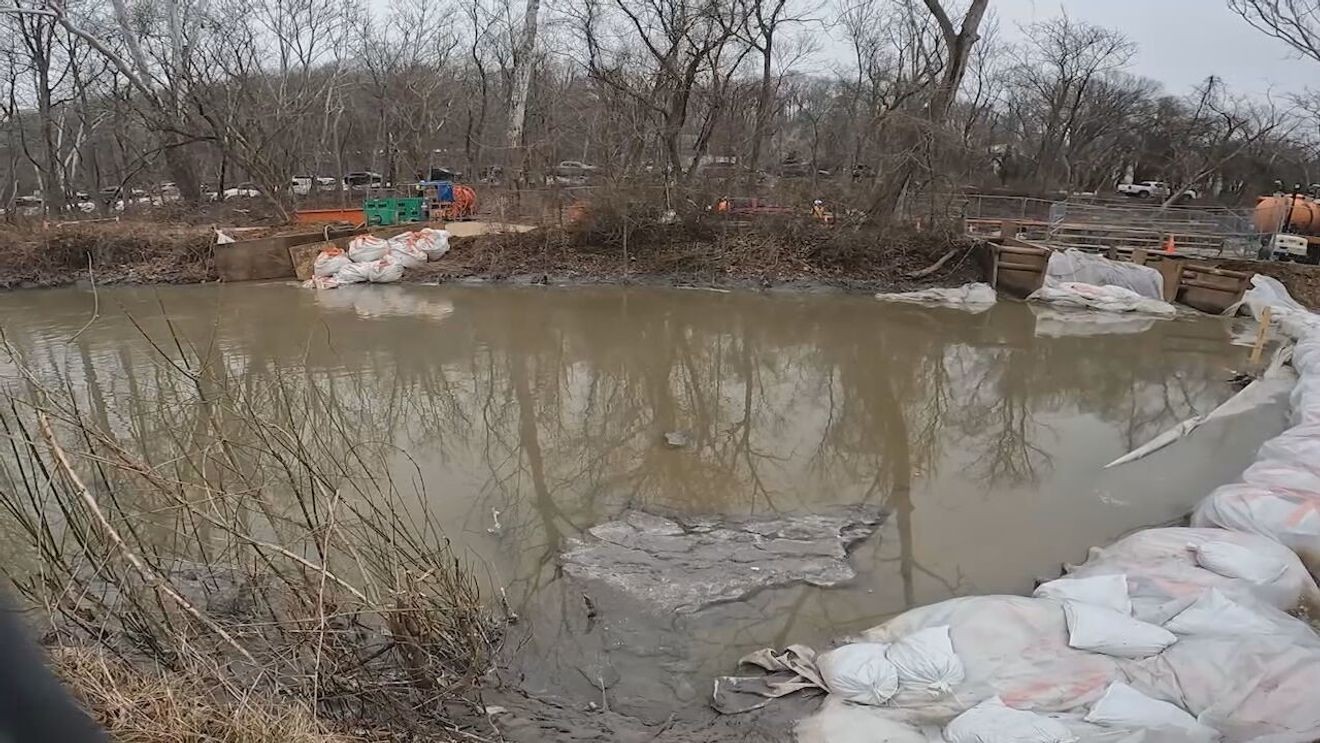
On Jan. 19, a section of pipe that is part of the 54-mile Potomac Interceptor sewage line collapsed near the Clara Barton Parkway in Cabin John, Maryland, just north of DC.
RELATED COVERAGE | Potomac Riverkeeper Network questions DC Water’s ‘problematic’ plan to clean sewage spill
Before DC Water could get the spill under control by using the C & O Canal as a bypass around the damaged pipe, an estimated 240 million gallons of sewage spilled into the Potomac River.
At a DC Council committee hearing on Monday, DC Water officials said that after spending $10 million to fix the pipe–work, expected to finish later this month, they plan to spend an additional $5-10 million on cleanup work. But the Potomac Riverkeeper Network says the cleanup plan released this week doesn’t go nearly far enough.
“The impact to the river has been much greater than just the site where the rupture occurred,” said Betsy Nicholas, president of the PRKN. “I also want to know that – even if they don’t have all the details yet – that part of the longer-term restoration plan actually includes restoring the impacted areas of the river, and anything that depends on the river, such as fish populations, oysters, crabs, etc.”
Nicholas says that although E. coli levels have improved a lot since the initial period after the spill, she’s concerned they could worsen again as the weather gets warmer. She says that because the river was frozen when the spill initially happened, some bacteria likely settled on the bottom.
“A lot of the solids that also contain bacteria are sitting at the bottom of the river near and around the site, so we need to see sampling and monitoring of the sediment at the bottom of the river, not just the water itself,” Nicholas said. “We get our biggest storms usually in the summer months, so that’s where we have the most likelihood of churning up all the bacteria and solids that are on the bottom of the river.”
The Potomac Riverkeeper Network also called for more testing locations. DC Water recently said it added two new locations to test for E. Coli near the site of the sewage spill, but the PRKN would also like to see testing sites further downriver. Currently, DC Water is testing at eight locations between Old Angler’s Inn north of the spill and National Harbor to the south.
The Potomac Riverkeeper Network also said they’re concerned that they and other advocacy groups, along with the public, didn’t get to have a say in the cleanup plan released by DC Water this week.
DC Water released a statement Wednesday afternoon in response to the Potomac Riverkeeper Network’s concerns:
“Since the January 19 collapse, DC Water has prioritized protecting the Potomac River and surrounding environment while advancing remediation and restoration efforts as quickly and responsibly as possible. This operational work has been carried out using industry best practices and in coordination with federal, state, and local regulatory partners responsible for environmental oversight.
During this response, DC Water has engaged with a wide range of stakeholders, including community members, environmental organizations, and regional partners, through public meetings and ongoing outreach to share updates, hear concerns, and answer questions.
We respect the role of environmental advocates and remain committed to transparency as restoration work progresses.”

 Local Story