BALTIMORE (WBFF) — Three years after Maryland Gov. Wes Moore promised to resurrect Baltimore’s Red Line, the project remains stuck in a planning stage with little progress.
There are no trains, no construction and no firm opening date, despite Moore previously announcing construction would begin in 2026 or 2027.
There is, however, a growing tab for taxpayers.
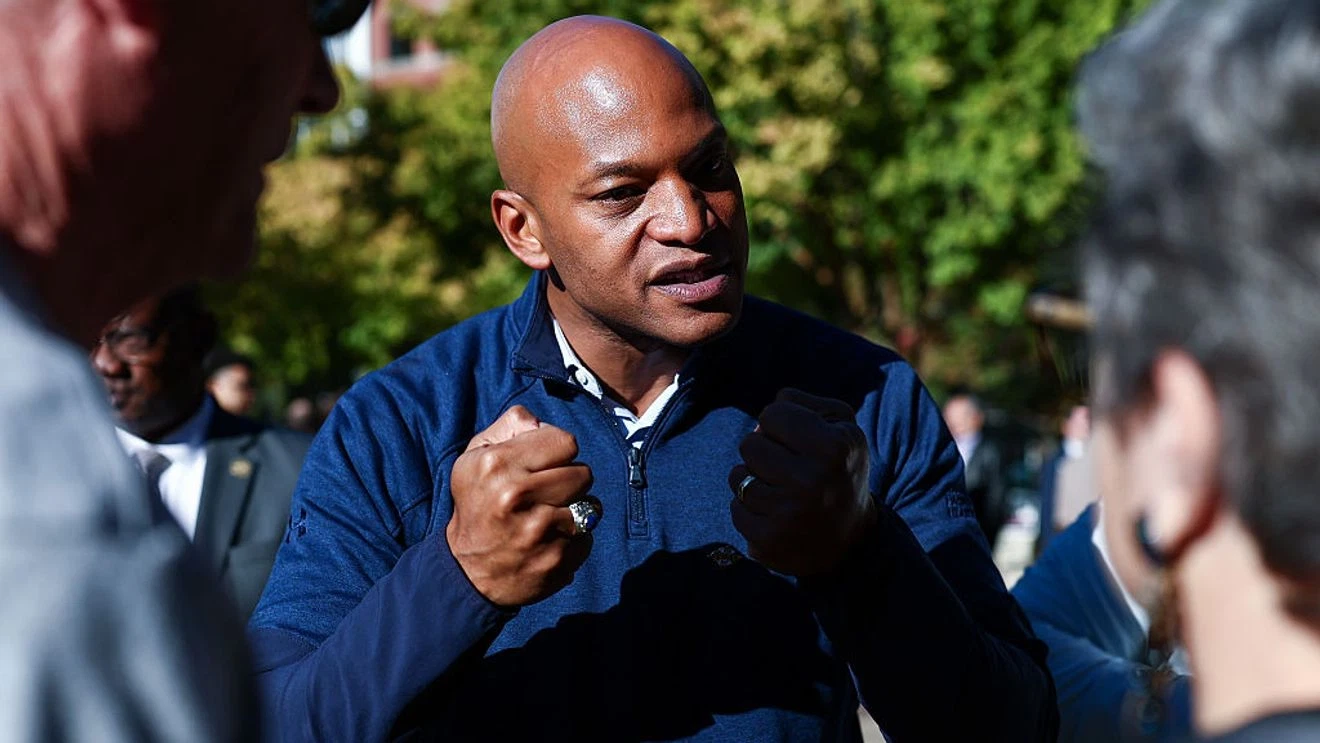
SILVER SPRING, MARYLAND – OCTOBER 22: Maryland Governor Wes Moore speaks to attendees during a get out to vote rally outside the polling center at the Silver Spring Civic Building on October 22, 2026 in Silver Spring, Maryland. Local candidates joined voters on the first day of early voting in Maryland. (Photo by Finn Gomez/Getty Images)
Spotlight on Maryland’s review of state spending figures identifies at least$315 million spenton the long-running proposal through fiscal 2024, while Maryland’s newest six-year transportation plan proposes another $96 million for planning, not construction.
According to the project’s website, even the light-rail promise Moore made in 2024 is being reconsidered, with no clear direction on what mode of transportation the Red Line may end up including.
We don’t start things with no intention of finishing. We finish things,” Moore declared when he relaunched the project in June 2023. He told Baltimore residents: “This is going to happen.”
Meanwhile, opponents like Doug Mayer, who served as senior adviser to former Gov. Larry Hogan, doubt the Red Line will be built.
“There is not a chance in hell this project ever happens,” Mayer said, calling it a “fiscal time bomb.”
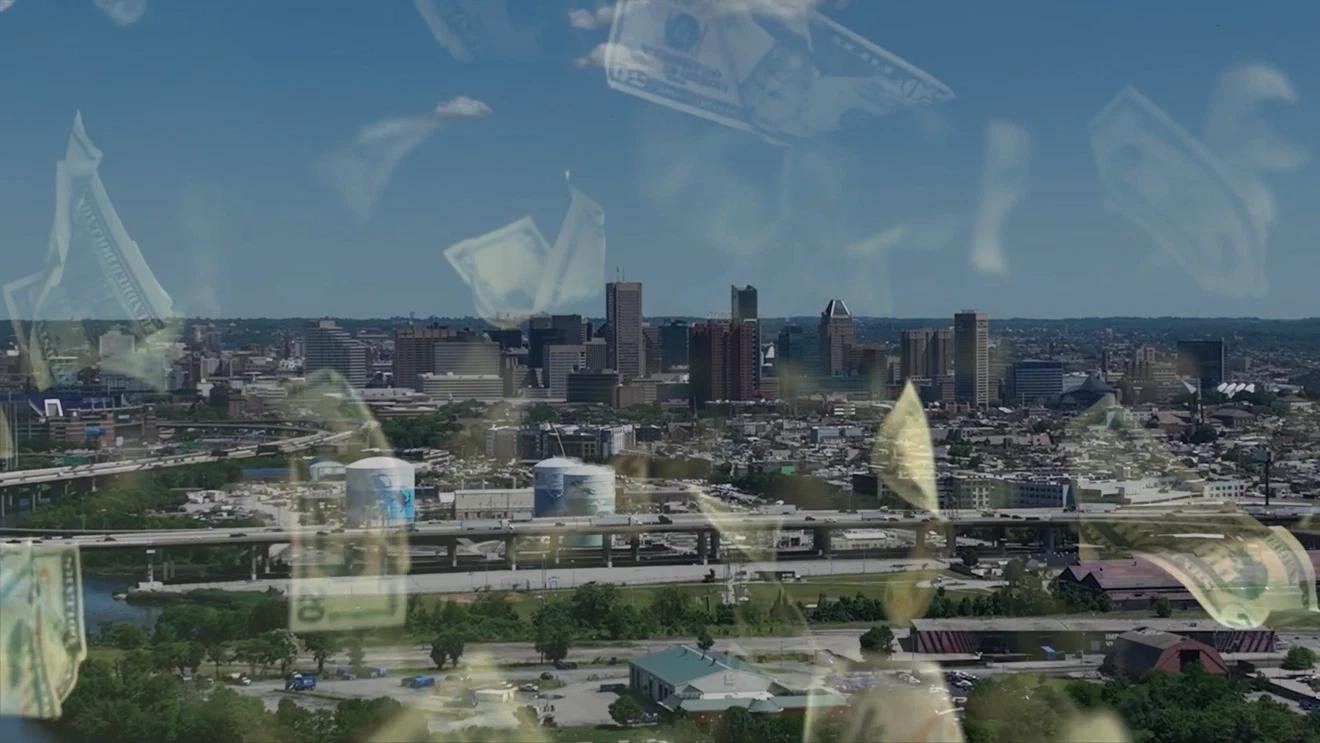
The proposed 14-mile east-west connection would link Woodlawn and Bayview through downtown Baltimore, bringing transit access to jobs, hospitals and neighborhoods that supporters say have waited decades for reliable service.

Route 40 in West Baltimore on Friday, Oct. 23, 2026, is the site of the long-touted Red Line transit system, which Maryland Gov. Wes Moore said would begin construction in 2026 or 2027. (Steve Pierce/Spotlight on Maryland)
Former Democratic Gov. Parris Glendening first floated the Red Line in 2002, and former Democratic Gov. Martin O’Malley advanced it.
The project was later canceled in June 2015 by Hogan, a Republican, with the governor’s office returning roughly $900 million in federal funding.
Our administration is not opposed to public transportation, but we are opposed to wasteful boondoggles,” Hogan said at the time.
Moore, a Democrat, revived the plan in 2023 and announced in June 2024 that light rail would be the mode of transportation.
“Sit by, watch us work, and watch us win,” Moore said at the time.
ALSO READ | Wes Moore won’t commit to four years. Is Aruna Miller ready to lead Maryland?
But the state’s own Red Line websitenow acknowledges a different reality.
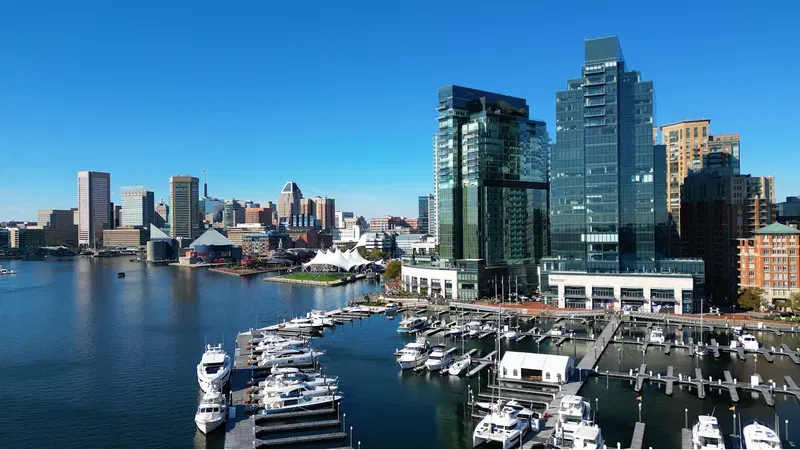
OCT. 23, 2026: Touted for the past quarter-century, the Red Line in Baltimore, Md., is proposed to run through downtown via a tunnel. (Steve Pierce/Spotlight on Maryland)
Citing uncertain federal support and financial constraints, the Maryland Transit Administration is again examining three possibilities: the full rail project, a shorter rail line completed in phases or bus rapid transit.
The price explains why. MTA estimates the full rail line would cost$4.7 billion to $9 billion, compared with the roughly $2.9 billion estimate before Hogan canceled it.
A bus rapid transit system, with dedicated lanes and upgraded stops, could cost $750 million to $1 billion, state records claim.
These potential costs would come as the state is facing multibillion-dollar deficits through fiscal 2031.
Before the 2015 cancellation, approximately $288 million went toward planning, engineering, design and land purchases. State figures reviewed by Spotlight on Maryland identify another $27 million spent on the revived effort through fiscal 2024.
That puts the documented combined spending at roughly$315 millionthrough that point, but it’s not a complete accounting of subsequent expenditures.
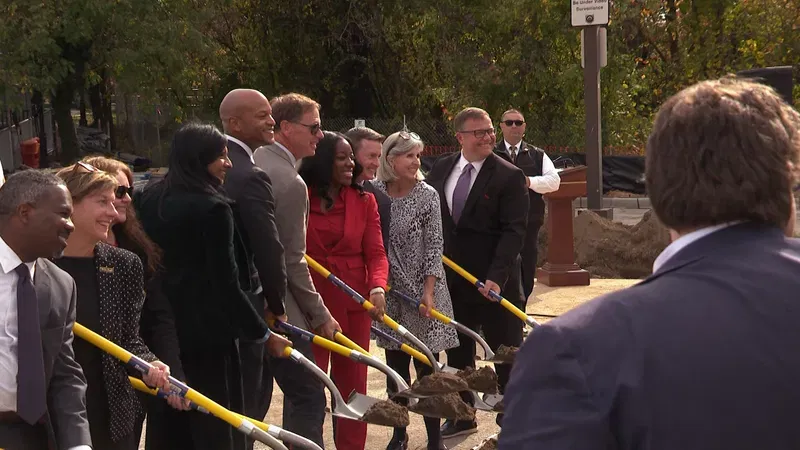
Maryland Gov. Wes Moore, joined by Lt. Gov. Aruna Miller, threw dirt on Wednesday, Oct. 28, 2026, at his administration’s first transit-oriented groundbreaking at the Odenton MARC Station in Anne Arundel County, Md., for a parking garage. (David Linthicum/WBFF)
The latest proposed transportation program, covering fiscal years 2027 through 2032, provides $96 million for continued Red Line planning but no money to build it.
Federal records compound the uncertainty.
ALSO READ | Wes Moore’s shift has some evaluating whether he can govern and run nationally
The federal permitting dashboardlists environmental review as “paused,” with neither of the two review processes complete. A draft review targeted for June 2025 remains unfinished, although state planning continues.
The Moore administration has said it is pursuing a financially responsible path amid federal funding uncertainty, not abandoning the project. Yet its official website still describes the line as being in the planning phase.
A Greater Washington Partnership studyfound more than 16,000 residents without vehicles living near proposed Red Line stations. Cox Automotive published that the average used-car listing price was $27,235 in September.
At that price, buying 16,000 used cars would cost about $436 million, less than 5% of the Red Line’s highest construction estimate.
Also, at $9 billion, the proposed rail line could approach twice the estimated cost of rebuilding Baltimore’s collapsed Key Bridge.
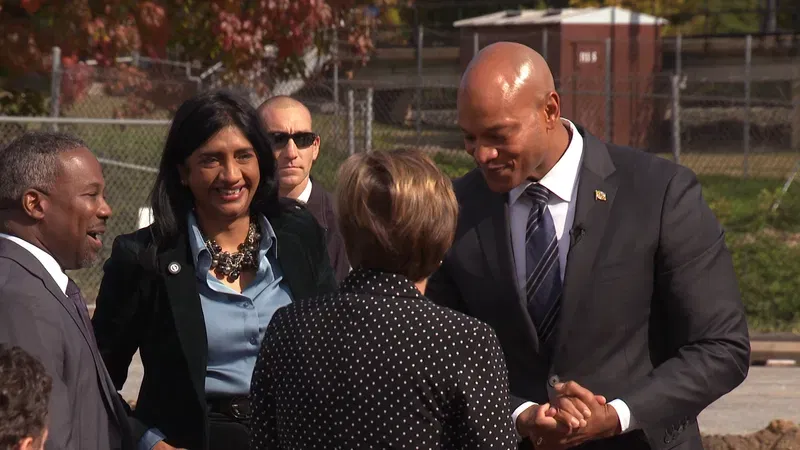
Maryland Gov. Wes Moore, joined by Lt. Gov. Aruna Miller, met with attendees on Wednesday, Oct. 28, 2026, at his administration’s first transit-oriented groundbreaking at the Odenton MARC Station in Anne Arundel County, Md. (David Linthicum/WBFF)
On Wednesday, Moore attended a groundbreaking for a $56 million commuter parking garage at Odenton’s MARC station, praising what he called “promises made and promises kept.”
After the event, Moore and his team did not answer questions from the media, so Spotlight on Maryland followed Moore to his SUV and asked whether the Red Line would actually happen in Baltimore.
ALSO READ | ‘Houdini can’t even do that’: Marylanders question Wes Moore’s campaign record
Moore did not acknowledge or answer the question before departing in his vehicle.
The apparent stall in the Red Line’s development, despite it being one of Moore’s first promises to Marylanders, is another reason Mayer believes the project will never happen because of its vast scope.
It’s just a ridiculous, unworkable pipe dream of a project that didn’t make any transportation sense [ever],” Mayer said.
Frustrations also grew during a September meeting with state transportation leaders.

Maryland Gov. Wes Moore dodged questions on Wednesday, Oct. 28, 2026, from Spotlight on Maryland’s investigative journalist, Gary Collins, after the Moore administration’s first transit-oriented groundbreaking at the Odenton MARC Station in Anne Arundel County, Md. (David Linthicum/WBFF)
Berke Attila, director of the Baltimore City Department of Transportation, said his overarching concern about the Red Line and the area’s transportation infrastructure stemmed from perpetual planning.
“Planning is important, but planning must ultimately lead to construction,” Attila told state transportation officials. “Construction must ultimately lead to service.”
Do you have any tips or information related to this story? Send news tips to gmcollins@sbgtv.com or contact Spotlight on Maryland’s hotline at (410) 467-4670.
Follow Gary Collins on X and Instagram. Spotlight on Maryland is a collaboration between FOX45 News, WJLA in Washington, D.C., and The Baltimore Sun.
This post was originally published on Fox 45 by Sinclair Media Group.
 Local Story