WASHINGTON (7News) — Almost exactly one month after sewage began cascading into the Potomac River, health and environmental agencies throughout the DMV are warning people and pets to stay away from the water.
On Jan. 19, a six-foot-wide concrete pipeline carrying sewage collapsed near I-495 and Clara Barton Parkway, pouring pollution into the Potomac.
To this point, officials estimate almost 250 million gallons of sewage have contaminated the water.
Now, health and environmental officials are officially releasing advisories for people and pets to avoid the river.
Prince George’s and Montgomery counties sent out warnings in January. D.C. announced their advisory on Thursday. On Friday, Virginia posted their message.
“It’s a big concern. Certainly, not great for tourism, for anyone wanting to do stuff on the water,” said Gail Riegel, who lives in Virginia. “I think about the maritime, the fish, all of the natural habitats, how that’s going to be impacted. It just seems like so many steps backwards.”
Among the sewage clouding the water, tests have revealed dangerous levels of E. coli and Staph bacteria that could be life-threatening.
During a Zoom conference with lawmakers and other health officials, DC Water Chief Operating Officer and Executive Vice President Matt Brown reiterated the warning to stay on dry land.
“The EPA and public health recommendation is swimming is not recommended when E. coli levels are above 410 [MPN/100mL]. The levels near the drainage channel continue to exceed that,” Brown said.
DC Water’s tests found E. Coli levels at almost 2,000 times higher than safe standards at times since the spill began in January.
The University of Maryland, however, found much higher levels: up to 10,000 times higher in the days immediately after the collapse.
“It’s horrifying. Are there any safe levels for those for anybody? No,” said Rosemary Esty, another Virginia resident. “We’re not going to be out there on the water.”
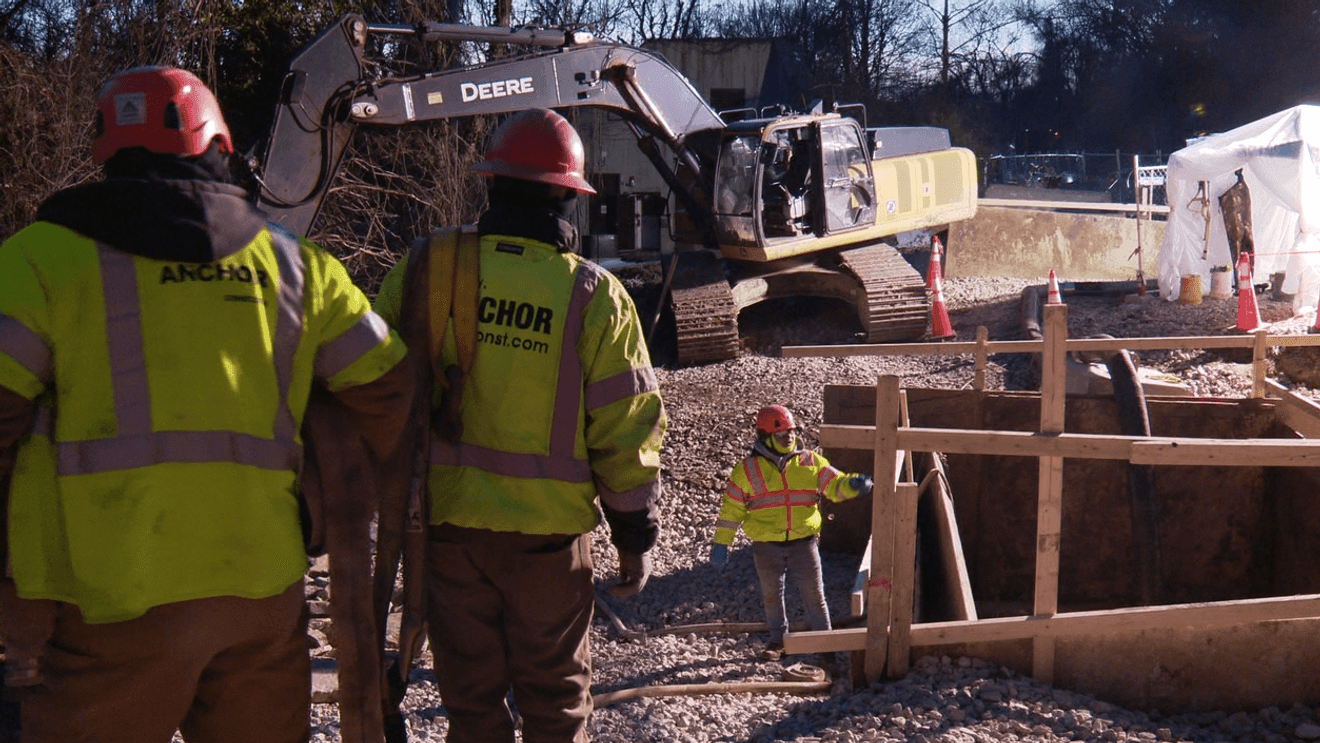
Currently, crews are working to repair the collapsed pipe. While doing this, they have also built pumps to divert the sewage away from the river.
However, an unexpected culprit caused issues earlier in the week.
“You may have heard about the clogging of our pumps as a result of flushable wipes. This is a good opportunity to ask constituents to not flush what, even, are labeled as flushable wipes,” Brown said.
Crews were able to unclog the pumps without more sewage getting into the Potomac.
According to John Lisle, DC Water spokesman, an interim fix is expected to take four to six weeks to complete. This will address the overflows at the current site.
A nine-month project mentioned by officials is part of a larger “slip-lining program” to update the old infrastructure.
They also have to plan a cleanup.
“We want to do the cleanup as soon as we can. It will likely be done in phases, so that we can minimize impacts,” Brown said.
While crews continue working around the clock, residents told 7News they are heeding warnings to stay out of the river.
“No, not getting in that water,” Riegel said. “If you know there’s sewage in the water, why would you go in it?”

 Local Story