BALTIMORE (WBFF) — A new era is about to begin for Baltimore City Public Schools. Dr. Jermaine Dawson will officially become the district’s next CEO in two weeks.
Project Baltimore recently sat down with Dr. Dawson to discuss his employment contract, academic standards and the growing challenges facing Maryland public schools.
Dr. Dawson, on July 1, will become CEO – his first ever job as a superintendent. A role he’s assuming as public education nationwide is going through significant changes and challenges.
“In Maryland, the amount of students enrolled in charter schools since 2010 has more than doubled.” Project Baltimore’s Chris Papst told Dawson. “The amount of homeschoolers in Maryland has more than doubled in the past decade. In your view, why are more families choosing to leave the traditional public education setting?”
“I can’t speak directly to know what the intent of parents are. But what I can say as a parent is that parents – they’re really saying they want choice,” Dawson replied.
ALSO READ | Baltimore City Schools’ next CEO sets goals for Maryland’s lowest performing district
School choice is the idea that parents can chose where to send their children to school – instead of being forced into a school based on where they live. It’s an idea Dawson says he supports.
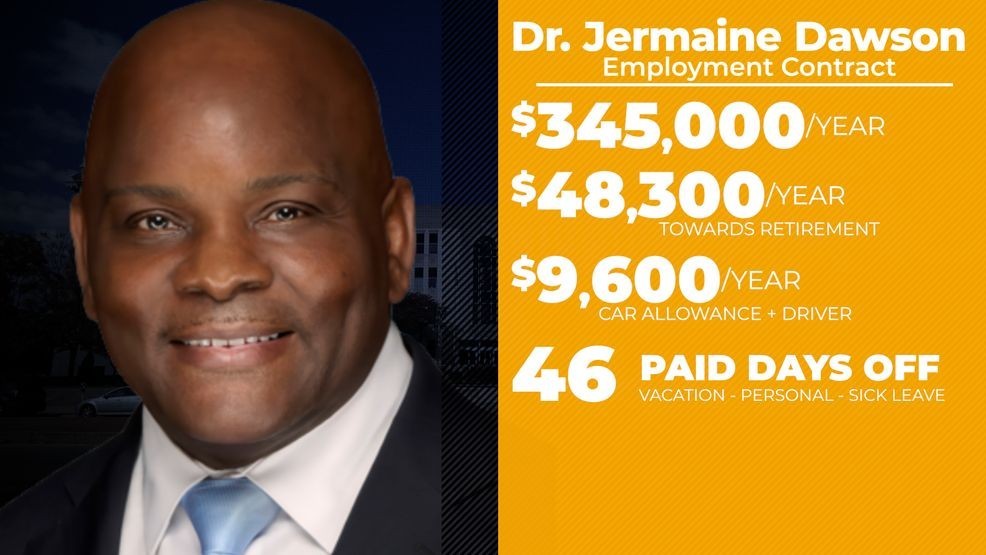
Dr. Jermaine Dawson’s employment contract with Baltimore City Public Schools’ (WBFF)
“I believe that parents should have choice, I think choice is actually good. It gives you an opportunity to be competitive,” Dawson said. “What I want to do is to be able to strengthen our public schools and our charter schools so that it can be, continue to be, a place of choice for our parents in the future.”
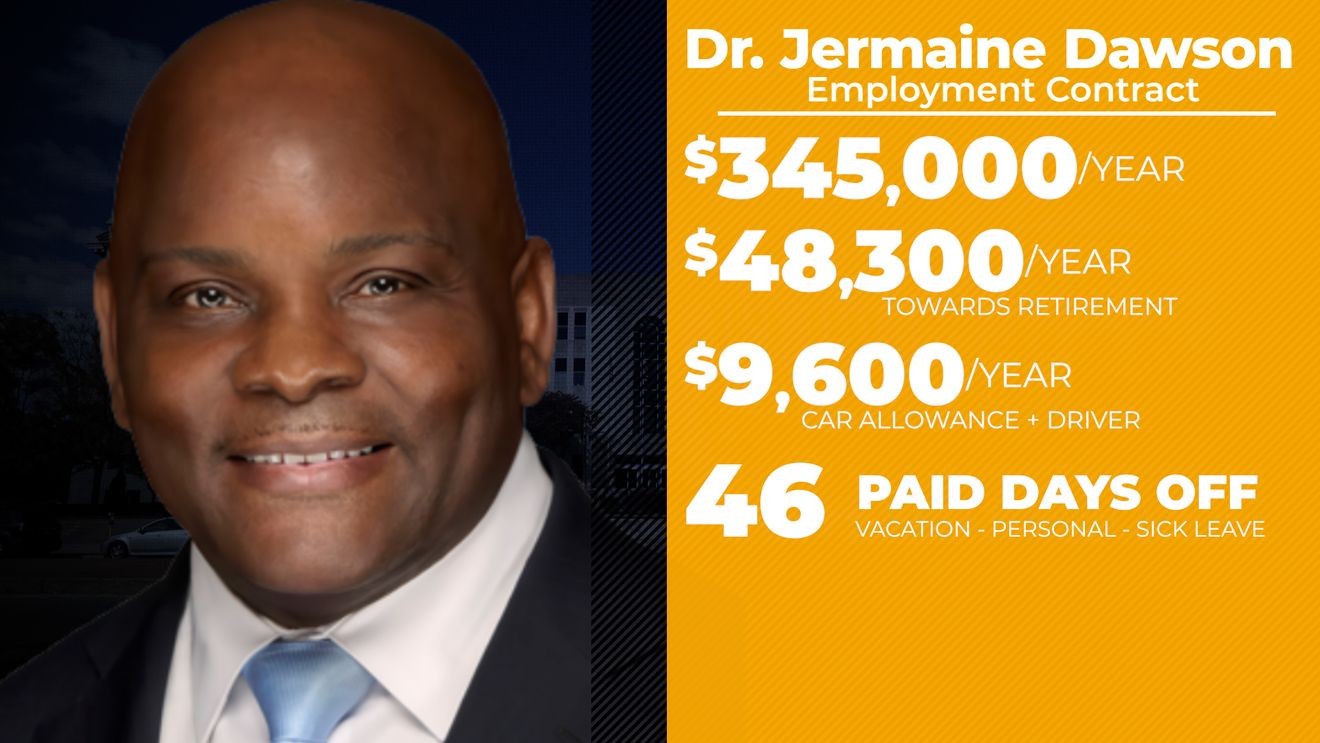
According to his employment contract, Dawson will earn a base salary of $345,000 as CEO, with an additional $48,300 in deferred compensation towards retirement. He also get a driver, a $9,600/year car allowance and 46 paid days off in vacation, personal and sick leave.
“That’s nearly ten weeks of work. Do you plan on taking off nearly ten weeks of work?” Questioned Papst.
“I am dedicated to the work, Chris. I recognize what we have to do here in Baltimore,” Dawson responded. “I didn’t come here to just take a job because of a salary or benefits. I want people to be able to see the work that I’m putting in and the hours that I’m putting in.”
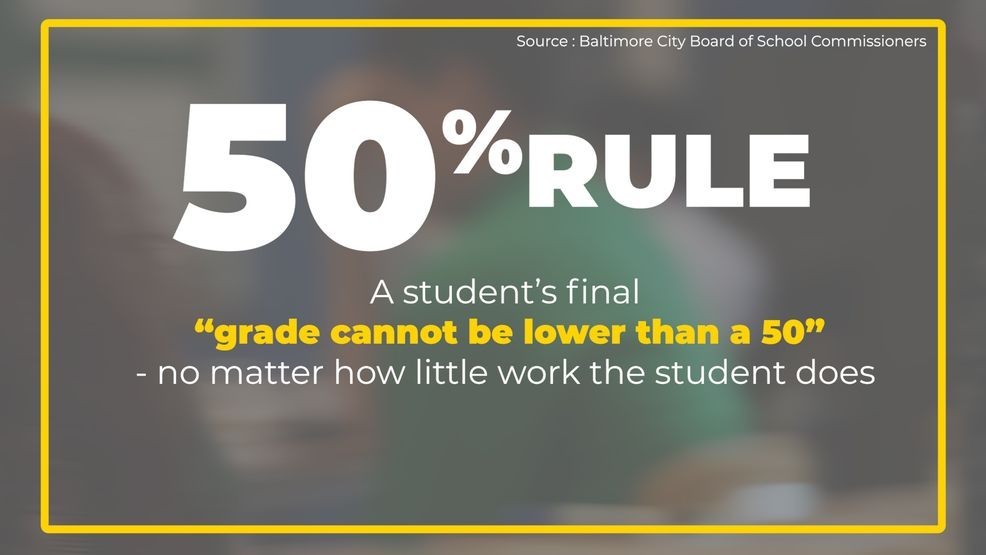
Baltimore City Schools has what’s known as a 50% Rule, which says a student’s final “grade cannot be lower than a 50” (WBFF)
Dawson is inheriting a school system with the state’s lowest attendance rate, graduation rate, English proficiency rate and average SAT scores.
Project Baltimore, over the years, has spoken to former educators, such as Dana Casey, who say academic outcomes are low due to the continued lowering of academic standards.
“They keep saying, let’s just lower the bar and lower the bar and lower the bar a little bit more,” Dana Casey told Project Baltimore in 2019.
At the time, Casey explained how she could not give students below 50% as a grade, even if they rarely attended her class.
ALSO READ | Inflated grades costing Maryland students thousands in career earnings, per study
“The emphasis is on passing. The emphasis is not on learning,” Casey stated in 2019.

Baltimore City Schools has a one-fail policy, that says a student “cannot be retained a second time prior to ninth grade.” (WBFF)
Baltimore City Schools has what’s known as a 50% Rule, which says a student’s final “grade cannot be lower than a 50” – no matter how little work the student does. The district also has a one-fail policy, that says a student “cannot be retained a second time prior to ninth grade.” Educators like Casey say these policies send a message that students will not be held accountable in the classroom, which leads to poor outcomes.
“How do you see policies like that?” Papst asked Dawson. “Are they good for students or do they hurt students?”
“I can’t really speak directly to that particular policy in city schools. I am still digging in, to be honest with you,” Dawson replied. “Chris, what I am after is to make sure that our students are academically successful and that means that we are not just looking at trying to social promote young people, but we really provide an opportunity for our young people to get a high quality education, that they will set them up for whatever future they so desire.”
Follow Project Baltimore’s Chris Papst on X and Facebook. Send news tips to cjpapst@sbgtv.com
 Local Story