The Savvy Investor
6:00 pm - 7:00 pm
HUNT VALLEY, Md. (WBFF) — The state of Mississippi, ten years ago, ranked near the bottom nationally for public education. Today, according to one recent study, the state has climbed into the top 20, surpassing Maryland. What’s behind Mississippi’s dramatic turnaround?
“We’re obviously excited about it,” said Dr. Lance Evans, the Mississippi State Superintendent of Education. “It’s not a miracle. It’s a marathon.”
Evans is referring to the findings of a new report by the Baltimore-based Annie E. Casey Foundation – which show his state is becoming a national leader in education.
The Annie E. Casey Foundation, every year, releases the Kids Count Data Book, which ranks states in various categories based on child well-being, including education. The study compares pre-school attendance, math and reading proficiency and high school graduation rates.
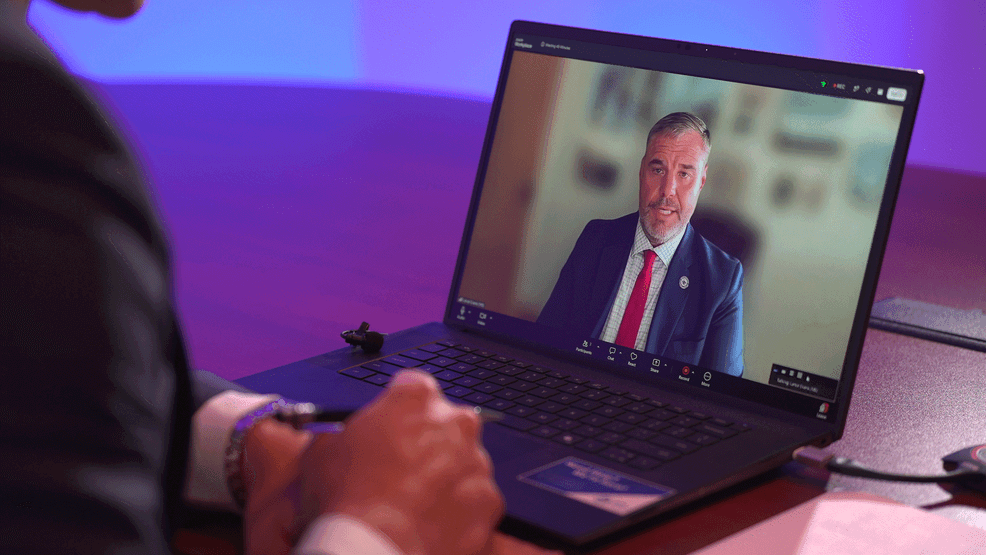
Mississippi State Superintendent of Education, Dr. Lance Evans (WBFF)
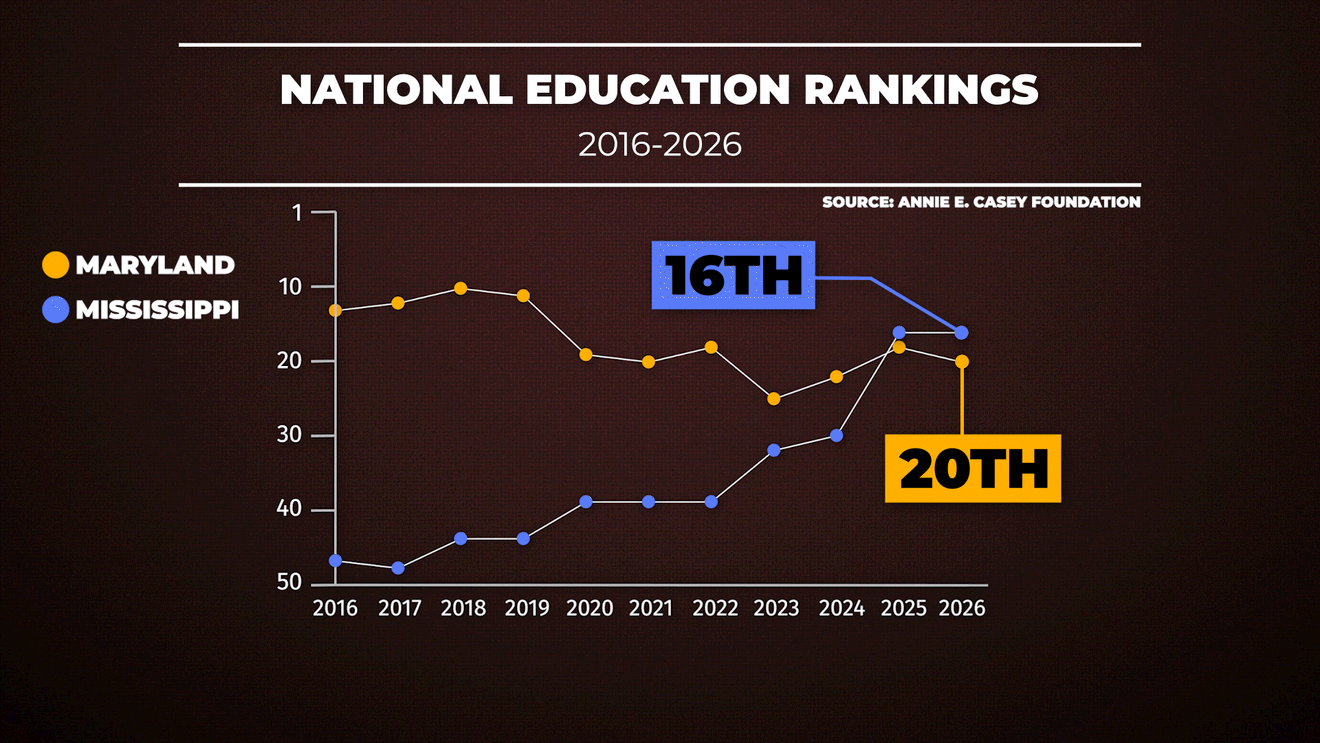
In 2016, according to the Kids Count Data Book, Maryland was ranked 13th for education, Mississippi was 47th. Ten years later, in 2026, Maryland had fallen seven spots to 20th, while Mississippi jumped 31 spots to number 16.
ALSO READ | State officials push back on decline in Maryland’s national education ranking
Mississippi spends far less money on education than Maryland. According to the U.S. Census, in 2024, the most recent year federal data is available, Maryland public schools spent $20,208 per student. Mississippi spent $12,324 per student. The U.S. Census does not take into account cost of living differences.
“What do you attribute your growth and your success to?” Project Baltimore’s Chris Papst asked Evans.
“A couple of things,” replied Evans.
First, Evans tells Project Baltimore, Mississippi does not chase fads.
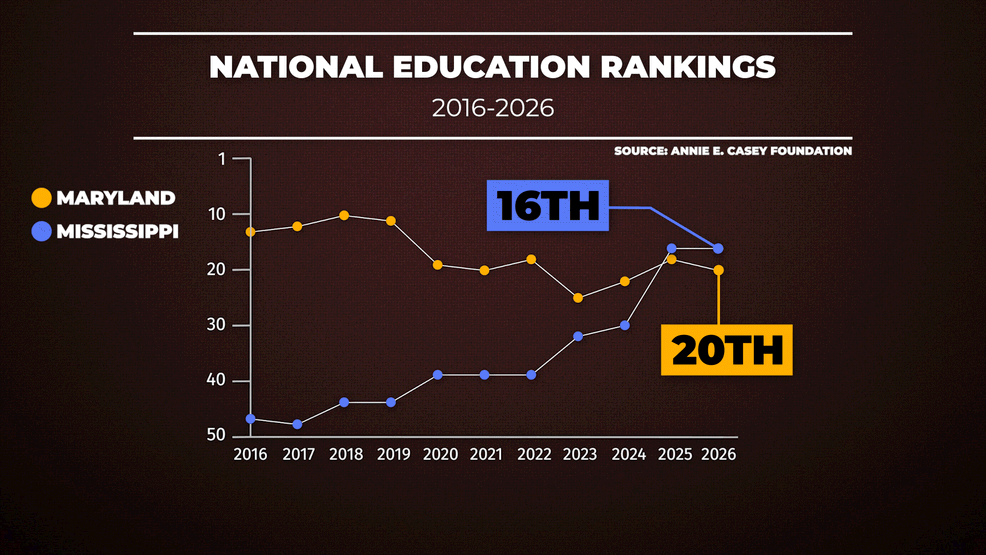
In 2026, according to the Kids Count Data Book, Maryland had fallen seven spots to 20th, while Mississippi jumped 31 spots to number 16 (WBFF)
“We’re not chasing the next educational silver bullet,” explained Evans. “So, we know what works in our state. So, we’re never going to change.”
For example, Mississippi, since 2015, has used the same state standardized test – the Mississippi Academic Assessment Program. Maryland, since 2014, has used four different standardized tests. In 2014, Maryland students took the Maryland State Assessment (MSA). In 2015, the state adopted the Partnership for Assessment of Readiness for College and Careers test (PARCC). In 2020, Maryland switched to the Maryland Comprehensive Assessment Program (MCAP). And next year, Maryland is moving to Maryland System of Testing Academic Readiness (MSTAR).
Second, Evans says, consistency in academic standards allows for greater accountability for students and teachers, because the benchmarks for success don’t change.
“While students are having to take the assessment. The assessment is really about adult accountability,” remarked Evans. “This is to ensure that our teachers are meeting the expectations of our state, meeting the expectations of what our business and industry needs are.”
ALSO READ | Maryland’s national school ranking falls despite billions in new funding, per report
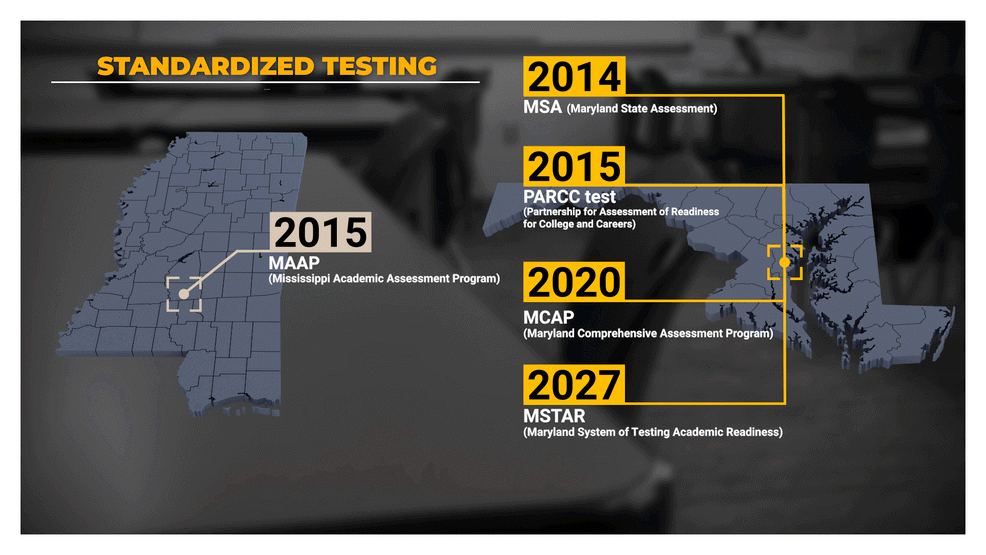
Maryland, since 2014, has used four different standardized tests while Mississippi has used the same test since 2015 (WBFF)
Third, according to Evans, educational standards have remained high. In Mississippi students have to pass state assessments in subjects such as English and math to graduate. Passing those assessments, Evans says, gives students and staff a goal to work towards. In Maryland, starting in 2020, students no longer have to pass state proficiency assessments to earn a diploma.
“The success that you’re seeing in Mississippi, could every state be doing the same thing?” Asked Papst.
“Yeah, in my opinion, every state can,” stated Evans. “I think that the states have to do it in a way that fits their processes. But I will tell you, I do think that the difference is that states don’t stay the course. They think that these changes, that it should generate some huge positive outcome within a year or two years. Well, we’re 12, 14 years into this, it takes time.”
Evans also credits his state’s academic success to the 2014 passing of a third grade reading retention policy, which says third grade students must read at grade level before moving to fourth grade. Maryland, under State Superintendent Dr. Carey Wright, who came from Mississippi, has passed a similar policy. But it’s not set to take effect until 2028 – 14 years after Mississippi.
Follow Project Baltimore’s Chris Papst on X and Facebook. Send news tips to cjpapst@sbgtv.com
 Local Story