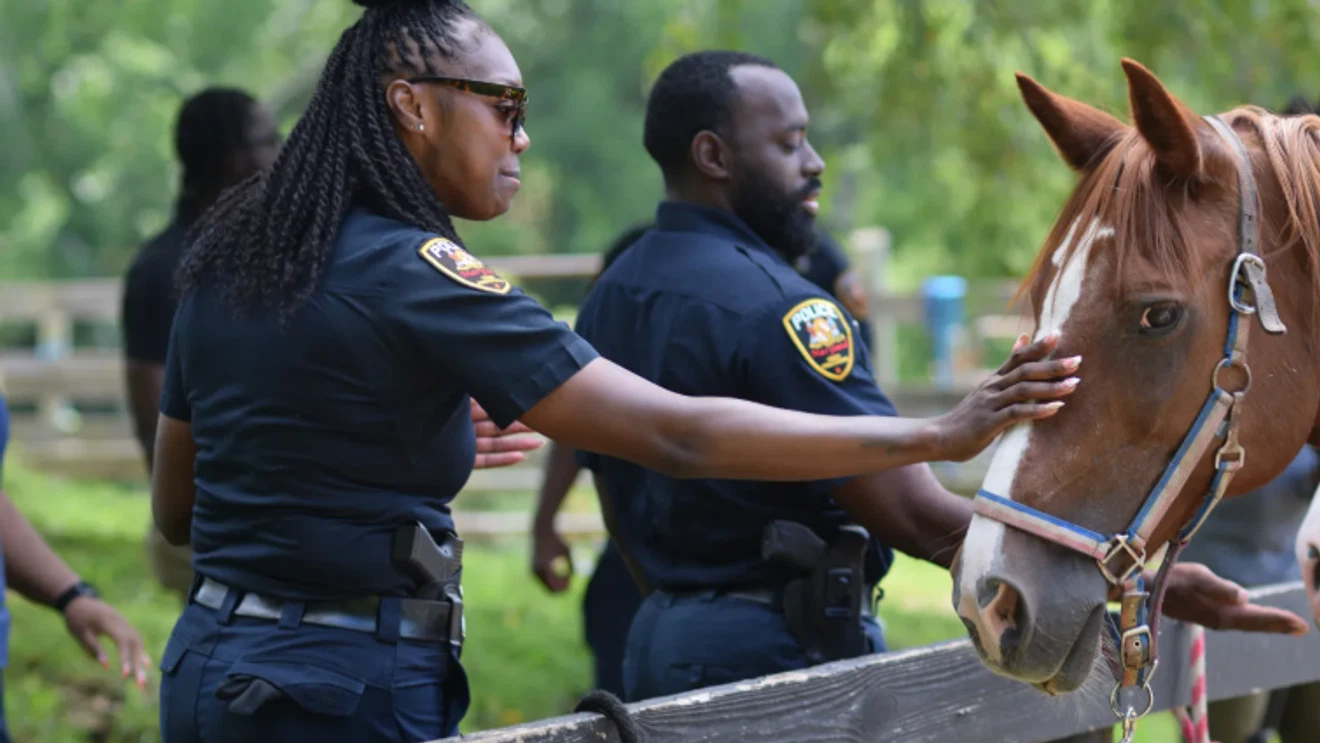
A Baltimore-area police sergeant watched a traffic stop take an unexpected turn when a man refused to take his hands out of his pockets.
For officers, hands hidden from view can signal danger. They are trained to be wary because an unseen hand can hold a weapon.
But Sgt. Kevin Moody recognized another possibility: The man might be responding to the encounter in a way shaped by a disability. It is the kind of distinction Moody and Baltimore advocate Mack Dawson are trying to teach through Badges and Bridges, a program that brings law enforcement officers and people with intellectual, developmental and invisible disabilities together before they meet in a crisis.
“He was saying things like, ‘Y’all just going to have to kill me today,’” said Moody, who works with the Maryland Department of Transportation Police Department. “I said, ‘We have to see your hands.’ He was like ‘Man, you just got to let me stim,’ I’d heard people say that 1,000 times prior to a year ago, and I never really knew what it meant.”
Instead of forcing the man to remove his hands, Moody patted him down while allowing him to keep them in his pockets, understanding that self-stimulatory behaviors — or stim — can relieve stress in individuals. The rest of the interaction was peaceful.
For Moody, it was an example of what can happen when an officer has another way to interpret behavior that might otherwise look threatening.
Read the full story on The Baltimore Sun’s website.
 Local Story