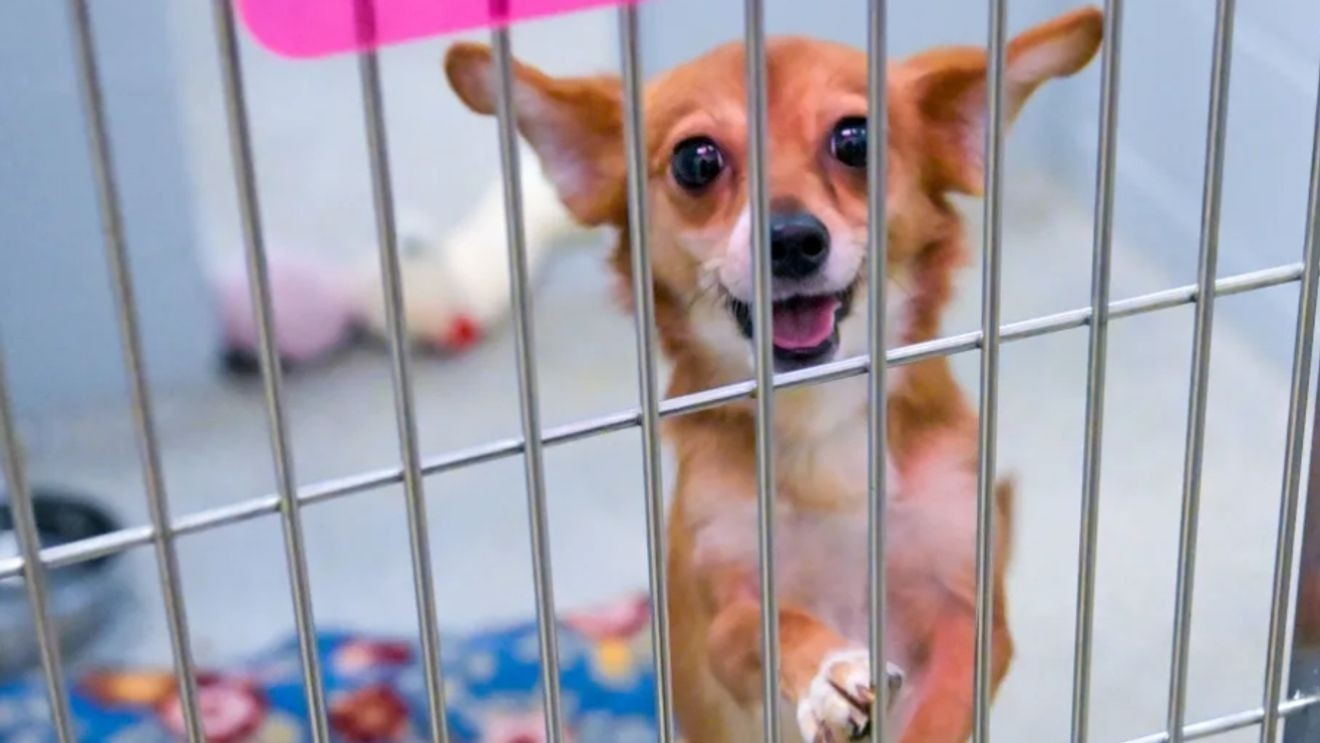
MARYLAND — Foxy, a 1-year-old half-Chihuahua dog, arrived at Baltimore’s busiest animal shelter as a stray about two weeks ago. She’s living in a 3×5-foot cinder-block enclosure at the city-linked facility, where she leaps a happy two feet in the air whenever a visitor walks by.
She could stand to put on a little weight, and she has no permanent owner, but Foxy is a lucky dog. Had she arrived at Baltimore’s city shelter 20 years ago, she would have faced a 98% chance of euthanasia. Today at Baltimore Animal and Rescue Center [BARCS] in Cherry Hill, she has an 85% chance of living. The improved odds are part of a sea change in animal welfare over the past few decades.
As recently as the 1970s, 15 million cats and dogs were put to death in shelters for lack of space in the United States. That figure plunged nearly 94% by 2016 and another 40% by 2024. And Maryland and Baltimore showed similar improvement. But they still haven’t pulled apart from the pack. Maryland’s statewide save rate of 88.5% in 2022 placed it sixth-worst in the country, and BARCS’ 2025 rate of 85% still falls short of the 90% set by one major anti-euthanasia group, Best Friends Animal Society, as the benchmark for its coveted “no-kill” ranking.
Few at BARCS seem preoccupied with that. Stop by any day and you’ll see staffers and volunteers socializing cats, keeping dogs exercised, and working the phones in an attempt to place as many of the 36 new animals that arrive daily as possible.
BE THE FIRST TO COMMENT
Read the full story by visiting the Baltimore Sun website.

 Local Story