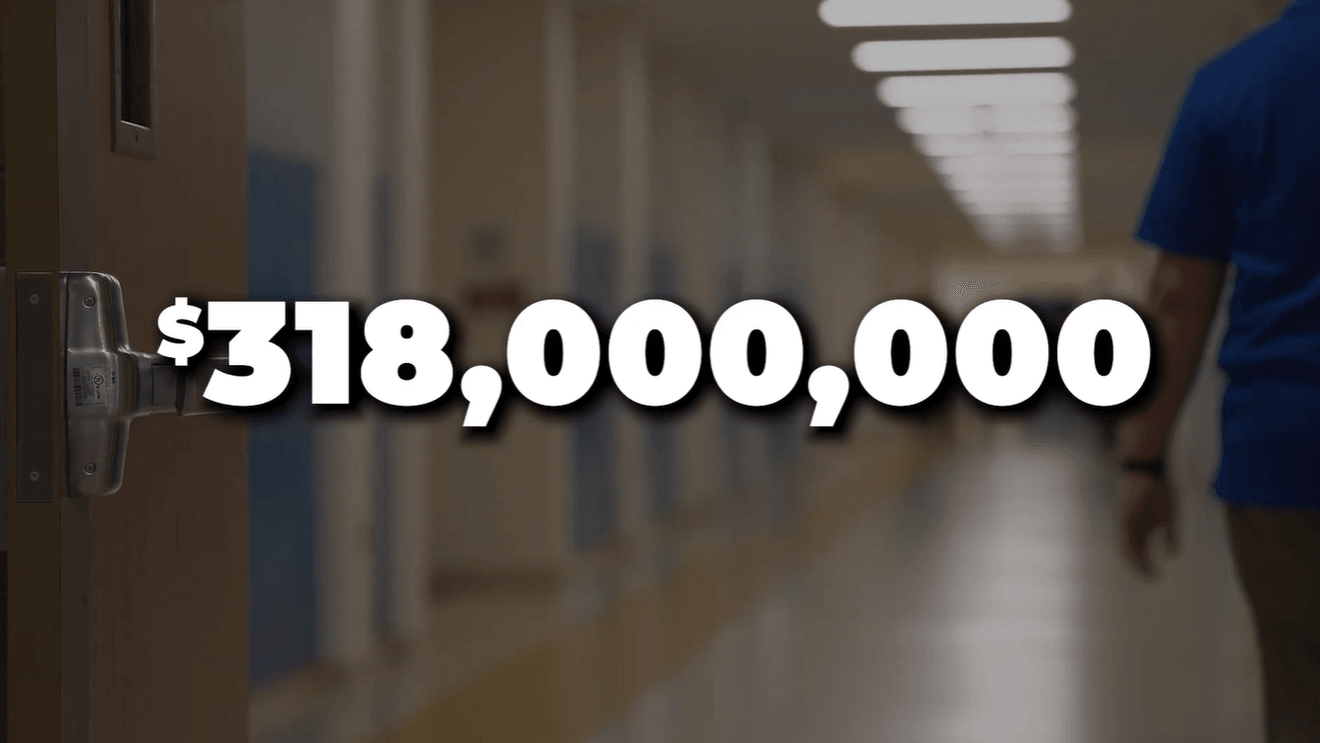
Baltimore (WBFF) — A FOX45 News investigation found Maryland taxpayers gave public schools around $318 million, over the last two school years, to educate students who stopped attending class.
For years, Maryland State Delegate April Rose, who represents Carroll and Frederick Counties, has introduced legislation in Annapolis to address this issue. She hopes 2026 will be the year it passes.
“I like to always remain hopeful,” stated Rose. “We work very hard for our money as citizens, and we pay a lot in taxes. And educating our students is important, but we need to make sure we’re doing it in a proper way.”
A Fox45 News investigation found Maryland taxpayers gave public schools around $318 million, over the last two school years, to educate students who stopped attending class (WBFF)
In Maryland, a school’s funding is based on the number of students enrolled on September 30th. The students counted on that day largely determine a school’s funding the following school year. This approach allows schools to budget early for the following year.
In 2024, 891,553 Maryland students were counted on September 30. Throughout the year, according to the Maryland State Department of Education, 7,440 of those students were unenrolled in grades 7-12, and they left school for unknown reasons, but taxpayers funded them anyway.
ALSO READ | Three Baltimore City Schools on verge of being labeled persistently dangerous
“We’re paying for them. They’re not getting an education,” explained Rose. “That’s why we need to do better.”
During the 2024/25 school year, according to state data, Maryland schools received, on average, $20,284 for each student enrolled. If 7,440 students were enrolled on September 30 and later left school, that means taxpayers gave about $150 million to schools to educate students who stopped attending class. Add that to the roughly $168 million, Fox45 News reported from the previous school year, and in the last two years taxpayers gave public schools around $318 million to educate students who were not there.
For at least the past 25 years these unenrolled students were labeled, “Whereabouts Unknown”. But this year, the Maryland State Department of Education changed the name to “Not Accessing Educational Services”.
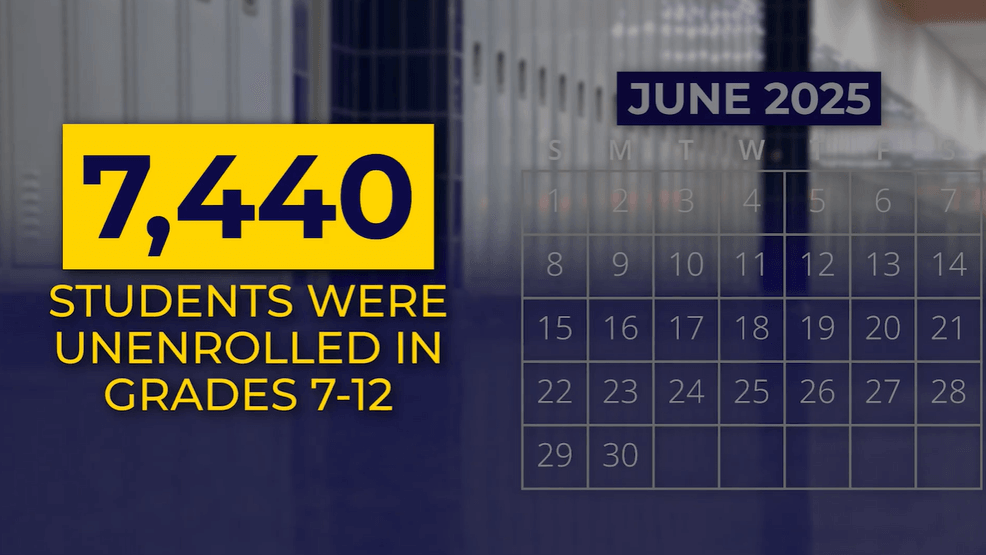
Last school year, 7,440 students were unenrolled after September 30. (WBFF)
Tim Guy, with MSDE, told Fox45 News that a recommendation was made by the state in 2020 to change the name of Whereabouts Unknown, which was deemed to be too broad. But it took six years to make the change – which eventually came after Fox45 began reporting on the issue.
“I don’t care what you call it. The kids are still missing,” Rose told Project Baltimore.
ALSO READ | Maryland high school dropout rate hits 13-year high, as funding surges
To try to protect tax dollars, Rose, this year, introduced The Education Funding Accuracy Act. It’s the fourth year she has introduced similar legislation, following Fox45 News reporting going back to 2021 on this topic.
If passed, the bill would change Maryland’s one-day enrollment count to two counts – once in September and once in the spring. School funding, for the following year, would then be determined by the average of the two counts.

However, if some schools get money to educate students who leave after September 30, that means other schools are being underfunded when students enroll after September 30. Rose says she’s working with MSDE to correct these discrepancies with her bill – to ensure education money goes to schools where students are attending.
“I’m really hoping that we can come to some sort of, even if it’s a baby step, a path forward to doing a better job at this issue,” stated Rose.
The Education Funding Accuracy Act is scheduled to go before the House Appropriations committee on March 11.
Follow Project Baltimore’s Chris Papst on X and Facebook. Send news tips to cjpapst@sbgtv.com

 Local Story