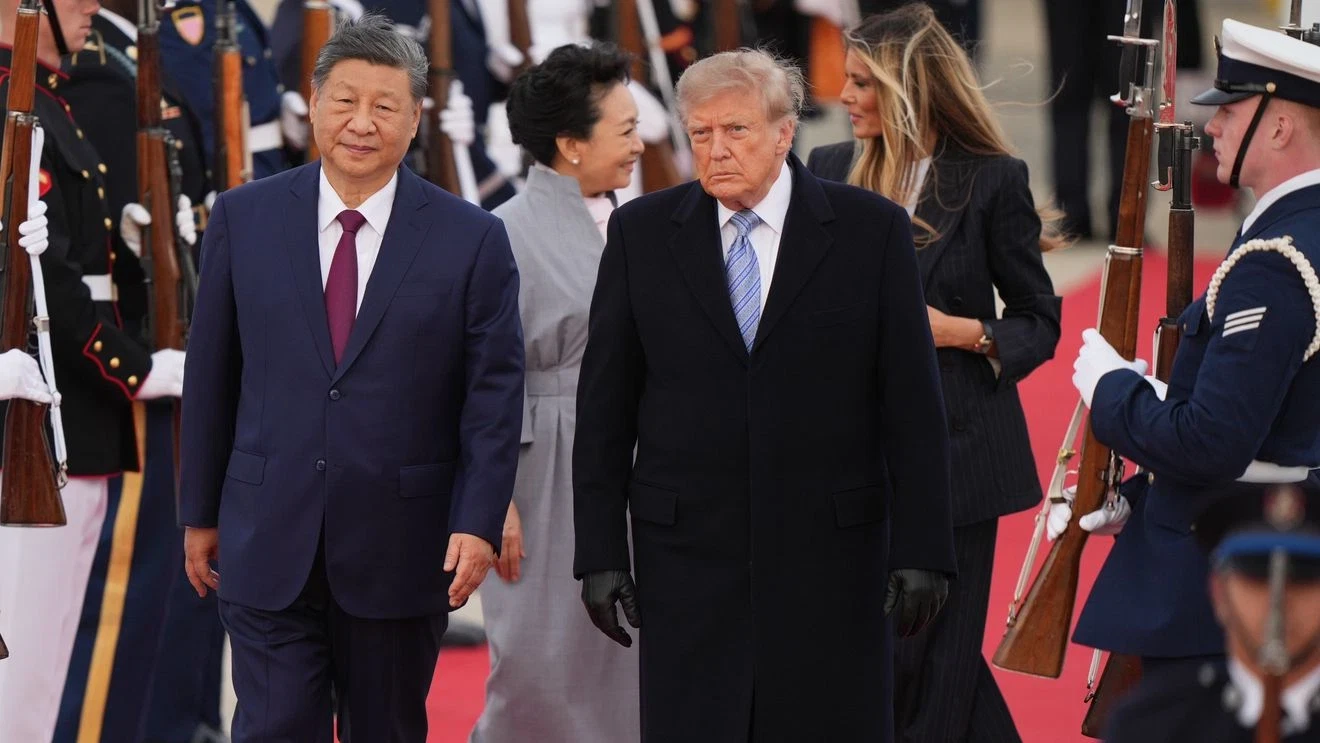
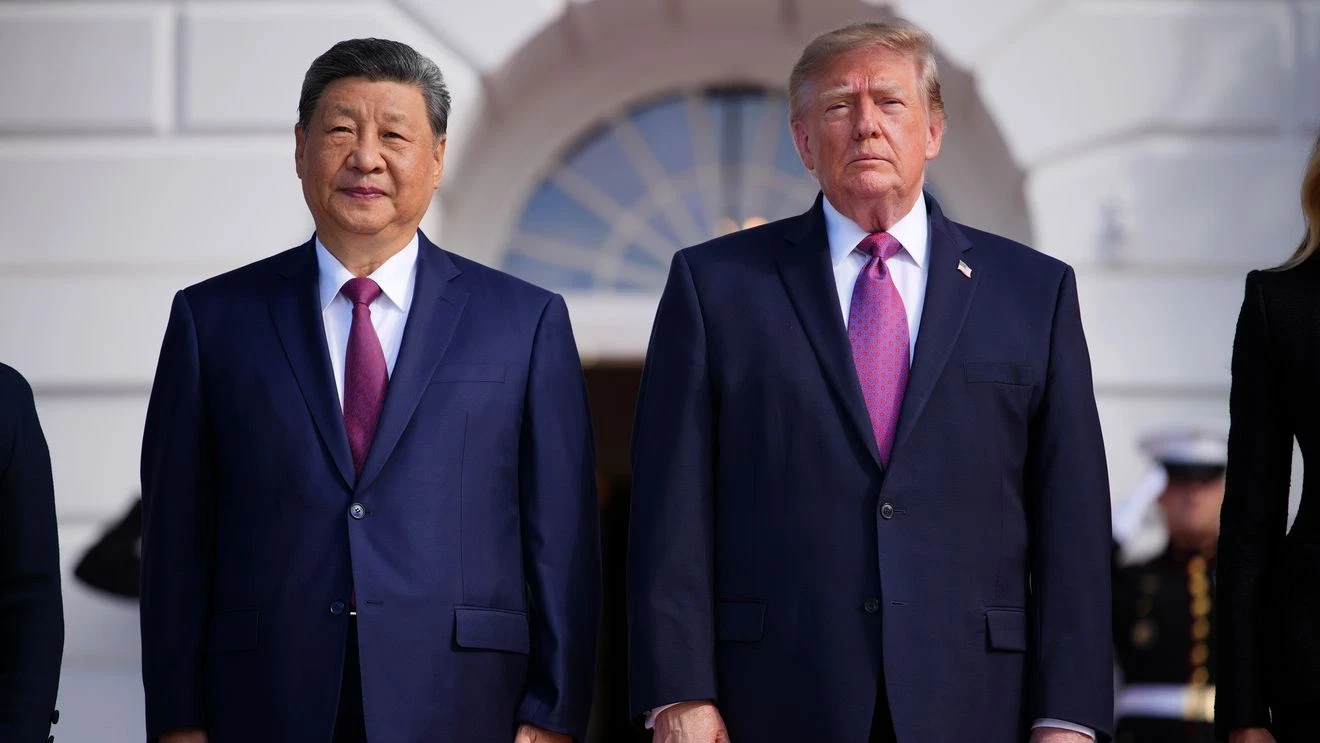
WASHINGTON (TNND) — President Donald Trump welcomed Chinese President Xi Jinping to the White House on Thursday for a high-profile state visit expected to center on trade, artificial intelligence, Taiwan and the war in Iran.
During a White House arrival ceremony, Trump hailed what he called a “truly great friendship” with Xi, built on “mutual respect and the vital interests of our people.” He said Xi is the first Chinese leader to make a second formal state visit to the United States.
Trump said the two leaders would discuss security, technology and artificial intelligence — which he calls “Super Intelligence” — and said the decisions they make could promote peace and prosperity “for decades and decades to come.”
“President Xi and I will continue working together to forge a better future for both of our nations,” Trump said.
Trump also pointed to the Board of Trade established during his May visit to Beijing, saying the new mechanism has helped the two countries pursue a more balanced trading relationship, including expanded market access for U.S. farmers and ranchers.
The leaders invoked the two countries’ shared history, including the Flying Tigers, the American volunteer pilots who fought alongside Chinese forces during World War II. Trump said he and Xi would visit the National Archives on Friday to view the Declaration of Independence, Constitution and Bill of Rights, as well as artifacts reflecting cultural exchanges between the United States and China.
Trump and Xi were scheduled to hold a private Oval Office meeting and an expanded bilateral session after the ceremony. They are expected to speak again before Thursday night’s state dinner.
The visit began with a tangible, if temporary, trade development. Treasury Secretary Scott Bessent told Fox News on Wednesday that the U.S. and China agreed to extend their one-year trade truce, which was set to expire Nov. 10, by two months. The extension averts an immediate escalation in tariffs but leaves negotiators searching for a broader agreement.
Taiwan is expected to be another major point of tension. Xi wants Trump to permanently halt U.S. arms sales to the self-governing island, which Beijing claims as its territory and has vowed to take by force if necessary.
The United States is required by law to provide Taiwan with hardware sufficient to deter an armed attack from the mainland. After meeting Xi in Beijing in May, Trump held off on final approval of a record $14 billion arms package for Taiwan that was in the pipeline. Trump has described arms sales to Taiwan as “a very good negotiating chip” with China.
The meeting also comes as the U.S. and China compete for dominance in AI, while technology leaders and lawmakers in both parties urge stronger safety rules to ensure people retain control of increasingly capable systems.
[embedded content]
The meeting also comes as the U.S. and China compete for dominance in AI, while technology leaders and lawmakers in both parties urge stronger safety rules to ensure people retain control of increasingly capable systems.
Trump called Thursday “a big day with President Xi of China” in a Truth Social post, adding that “Super Intelligence” would be a major topic of discussion.
“I want to leave it exactly where it is. That is China’s position also. Our guardrail is the DOJ!” Trump wrote.
During remarks Tuesday at the United Nations General Assembly, Trump said the United States is outcompeting China and the rest of the world in AI and that he intends to keep it that way. He rejected international limits on AI development, saying the Justice Department and other law enforcement agencies could address problems if they arise.
We’re leading now over China by a lot and everyone else. And we’re going to keep it that way. We’re going to keep it very, very straight and very strong. I’m not going to stifle growth of something that will be bigger than the industrial revolution, many say bigger than the industrial revolution or the internet itself,” Trump said.
One possible area of cooperation is a proposed notification mechanism for AI-related incidents that could affect national security. Bessent said the two leaders may be open to the idea, but it remains unclear whether they will reach an agreement.
OpenAI CEO Sam Altman, Nvidia CEO Jensen Huang and Amazon founder Jeff Bezos are among the technology leaders expected to attend Thursday’s state dinner. Altman’s company has called for the U.S. to lead on AI safety standards, while Huang has argued that existing laws are adequate.
The Iran war adds another layer of strain to Xi’s visit. China has resisted Trump administration calls to use its leverage with Tehran to push Iran to accept U.S. terms for ending the conflict, and Beijing has condemned U.S. and Israeli military action.
Trump could press Xi over China’s ties with Iran. A recent report by the U.S.-China Economic and Security Review Commission said China has provided Tehran with economic, technological and diplomatic support that has helped it mitigate sanctions, sustain oil exports and acquire dual-use technologies used in drones, ballistic missiles and other weapons.

 Local Story