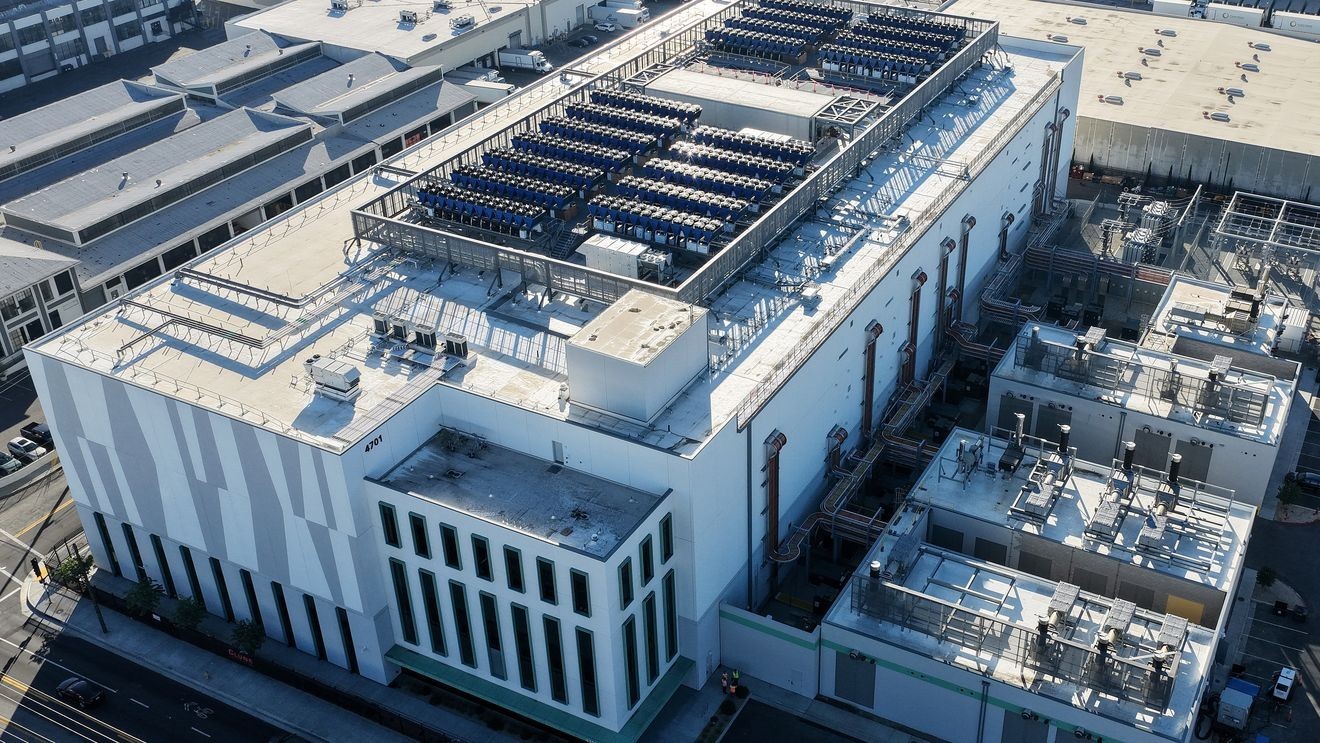
WASHINGTON (TNND) — The rapid expansion of artificial intelligence and the data centers that serve as the lifeblood of the industry are quickly becoming a political headache for local leaders all the way up to Washington with backlash from neighbors and concerns about running up the cost of utility bills that have already spiked this year.
It comes as inflation has increased costs for households by 25% since the pandemic on a wide range products and necessities. Household electricity prices rose 6.7% over the course of 2025, partially driven by increased demand from data centers.
Affordability was the primary issue in 2025’s off-year elections and is likely to stay that way with no signs of significant relief from higher prices on the way. Polling has found voters are casting blame on President Donald Trump and Republicans for failing to address the cost-of-living increases squeezing budgets.
Trump has made advancing the country’s booming AI industry a cornerstone of his economic agenda and moved to cut regulations and minimize state-level laws over concerns they could stand in the way of innovation and hold back its growth.
Democrats across the country have already capitalized on mounting resistance to the AI expansion and anxiety over electric bills going higher if a data center comes to town. Soon-to-be-Virginia Gov. Abigail Spanberger pledged to make data centers pay more, state legislature races were focused on the proliferation of data centers, and two Democrats were elected to Georgia’s Public Service Commission for the first time since 2007.
Some Republicans have also raised questions about letting the industry continue on without guardrails and are sensitive to the cost concerns. Republican Florida Gov. Ron DeSantis has proposed a policy that would allow local governments to ban construction of data centers to avoid higher utility bills and several GOP lawmakers in Congress have supported restrictions on AI despite Trump’s backing of the industry.
“Affordability is on everyone’s minds right now, so this is a good leverage point. I could see some cross partisanship here with people on the left in the more progressive wing teaming up with populist Republicans on this issue,” said Ray La Raja, a political science professor and co-director of the UMass Amherst poll.
The issue is only likely to grow more prominent, with some research estimating datacenters will account for as much as 21% of global energy demand by 2030 compared to 1-2% today, according to the Massachusetts Institute of Technology.
Concerns about the impact on the electric grid have also made their way to Congress, where Democratic Maryland Sen. Chris Van Hollen introduced a bill this week requiring technology companies to pay their fair share of the costs they are generating. The bill would direct states to evaluate whether to create a new rate class specifically for data centers to assign costs appropriately compared to consumers. It would also direct the Federal Energy Regulatory Commission to issue a rule requiring tech companies to pay for transmission upgrades that would otherwise be unnecessary if the project didn’t exist.
“Americans are already struggling to make ends meet – they shouldn’t have to foot the bill for big corporations’ massive expansion of data centers,” Van Hollen said in a statement. “The principle behind this legislation is simple: the huge corporations building and running data centers should cover the costs of the energy they need – not push those costs onto the backs of consumers.”
Sen. Bernie Sanders, I-Vt., has gone a step further and called for a moratorium of further construction, though the position is not widespread within the Democratic Party but a potential obstacle for the industry to navigate moving forward.
Tech companies are already trying to get in front of the problem.
Microsoft announced a multi-point plan on Tuesday including a vow to “pay our way to ensure our data centers don’t increase your electricity prices” and minimizing its water use. In a blog post, CEO Brad Smith said Microsoft would ask utility companies and public commissions to set their rates high enough to cover their costs and try to add supply to the grid.
“Whether it was canals, railroads, the electrical grid, or the interstate highway system, each era produced its own conflicts over who bore the burdens of progress. One enduring lesson is that successful infrastructure buildouts will only progress when communities feel that the gains outweigh the costs,” Smith wrote.
Tech companies’ main selling point on the construction of data centers has been splashy levels of job creation to build them and high-paying positions to help operate them, though there are questions about how long those benefits will last once the building boom period is over. Officials also have to discern whether mounting resistance and concerns about higher costs outweighs the potential for new jobs.
“This is a dilemma for governors, regardless of Republican or Democrat, because their job is to attract any form of business they can, but they also don’t want to be accused of increasing everyone’s costs in the short term,” La Raja said.
Trump endorsed Microsoft’s approach in a Truth Social post this week and said Big Tech companies must “pay their own way.” Michael Krastios, the director of the White House Office of Science and Technology Policy, told lawmakers during a hearing on the administration’s AI action plan that the White House wants to protect consumers from added electricity costs.
“We want to develop a regulatory environment that allows these products, the sort of standing up of this AI infrastructure to happen and also in a way that doesn’t necessarily adversely affect American ratepayers,” Kratsios said.

 National Headline