(TNND) — President Donald Trump warned Iran’s government overnight that the U.S. wouldn’t sit idly by if it used deadly force against protesters.
At least seven people have reportedly been killed amid protests that erupted earlier this week, fueled by economic struggles and discontent with the regime in Iran.
Trump said the U.S. would come to the rescue of protesters if the Iranian government tries to silence them with violence.
“We are locked and loaded and ready to go,” Trump said in a Truth Social post.
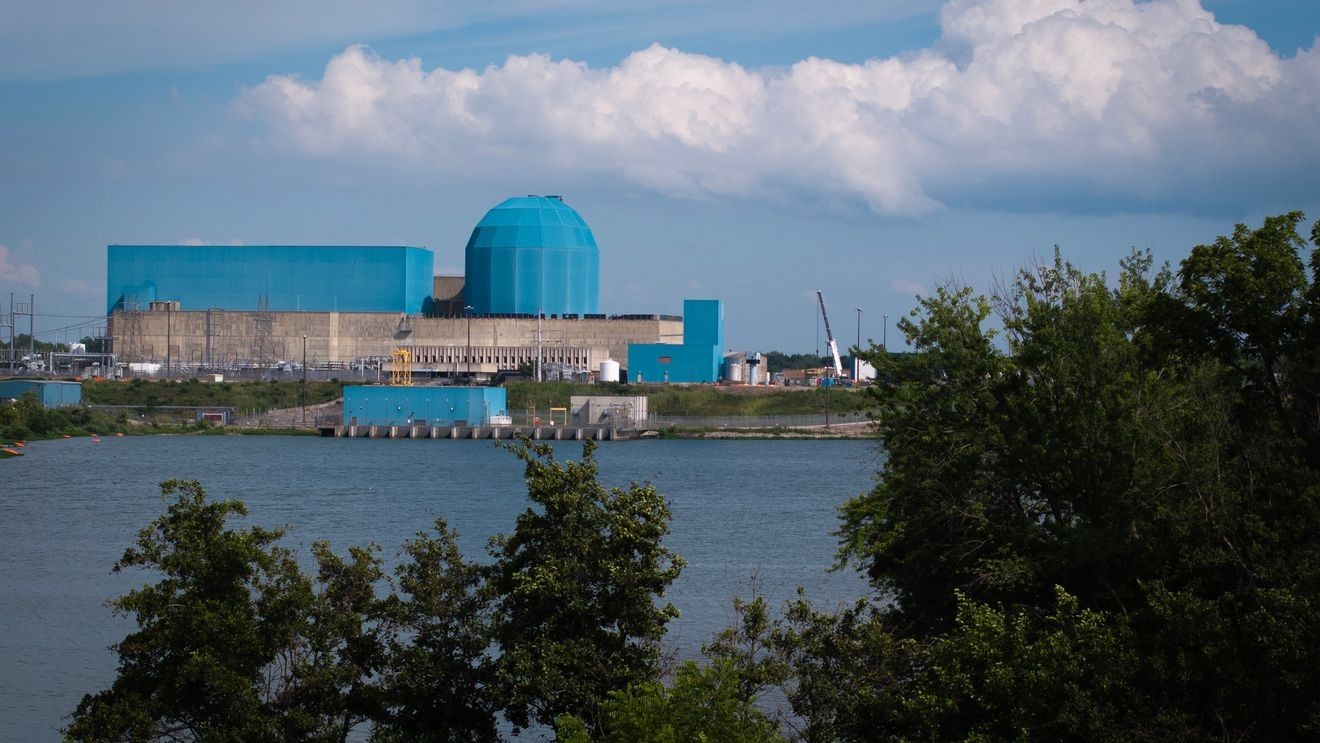
Days earlier, Trump told reporters that the U.S. was prepared to “knock the hell” out of Iran if it tries to rebuild its nuclear program. The U.S. bombed Iran’s nuclear sites in June as part of Israel’s “12-day war” against Iran.
Ali Shamkhani, an adviser to Supreme Leader Ayatollah Ali Khamenei, shot back online, criticizing American “rescuing” efforts of the past and vowing that an “intervening hand-nearing (Iran’s security) on pretexts will be cut off.”
So, is the U.S. on course for another round of direct military action against Iran?
Not necessarily.
“The signal there is for military force. That’s a possibility. But (Trump) has other cards to play, too,” said Raphael Cohen, an expert in foreign policy, military strategy and the Middle East at RAND.
The U.S. could sanction Iran, Cohen said.
Or Trump could backstop Israeli attacks on Iran.
“I wouldn’t necessarily say that this is indicative that the United States is going to send the B-2s again, although that’s a possibility,” Cohen said. “It does signal that the administration is going to take a hard-line stance against the regime unless something changes.”
Gordon Gray, a former ambassador who now teaches at the Elliott School of International Affairs at George Washington University, said he doubts there’s been any kind of military planning behind Trump’s online threat to Iran.
“It’s difficult to imagine what coming to the rescue of the demonstrators actually means, unless you’re talking about some kind of massive military intervention … aimed at regime change, which President Trump has been pretty clear that he does not want boots on the ground or another U.S. military intervention, particularly in the Middle East,” Gray said.
But Gray said Trump’s comments could backfire by giving Iranian government officials ammunition to accuse the U.S., without evidence, of stoking the demonstrations.
Iran’s economy is struggling.
The country’s currency has tanked, and inflation is 42%.
For comparison, the U.S. has an annual rate of inflation of 2.7%.
Both Gray and Cohen said there’s also a strong anti-regime, anti-government sentiment running through the protests.
“A few years ago, for example, there were demonstrations following the death of an Iranian woman who had been picked up by the morality police who accused her of not wearing her chador, her covering, correctly, and she mysteriously died from injuries after that,” Gray said. “That set off a big wave of demonstrations.”
They both pointed to protests in 2009 over election results.
And there are serious water supply problems in Iran’s capital of Tehran, which Gray said were caused by government mismanagement.
Gray said the Iranian population skews young, and the people of Iran are less extreme in the application of their religious beliefs than their rulers.
Iran’s regime is somewhat isolated within the region. Iran still has its terrorist proxies, such as the Houthis and Hezbollah, but it’s not friends with other countries in the Middle East.
“It doesn’t have the same favorable landscape that it once did,” Cohen said.
“Bashar al-Assad was probably the closest state-led proxy,” he said of the former president of Syria. “He’s no more, and (new Syrian leader Ahmad) al-Sharaa is certainly no fan of the Iranians.”
Cohen said Trump has been fairly consistent in his views of the Iranians over the years.
He doesn’t trust them, Cohen said. And he didn’t like the Iran nuclear deal.
“Now, what exactly he would do about it, I think is a different question,” Cohen said.
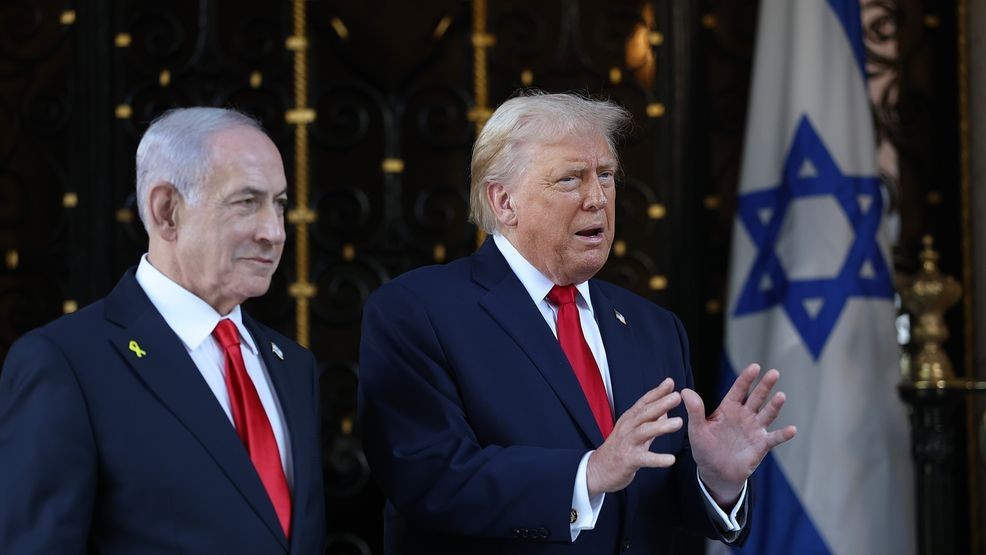
President Donald Trump talks to the media as he welcomes Israeli Prime Minister Benjamin Netanyahu to his Mar-a-Lago club on December 29, 2025, in Palm Beach, Florida. (Photo by Joe Raedle/Getty Images)
While both Cohen and Gray said military conflict is not inevitable, both men said the heated rhetoric from both sides risks escalation.
They said the Iranian regime is clearly in trouble, and autocratic rulers are primarily concerned with self-preservation.
Gray said Iran’s regime might feel like provoking an outside attack could get discontented citizens to rally around the flag.
Cohen said it’s also hard for a regime like Iran’s to back down in the face of massive anti-government protests.

 National Headline