Wealth without Risk
1:00 pm - 2:00 pm

A sudden airspace shutdown over El Paso this week left travelers scrambling and officials searching for answers.
Early reports indicated that no flights would be allowed in or out of El Paso for ten days — a restriction officials say we haven’t seen since the September 11 terrorist attacks. Multiple officials at the local, state, and federal levels said they had not been given advance notice. Just hours later, the Federal Aviation Administration (FAA) lifted the ground stop, but questions remain about how such a sweeping closure came to be.
New reporting suggests Border Patrol officials may have been preparing to test an anti-drone laser system on loan from the Department of Defense.
You can find our free Immigration Crisis podcast on Apple, Spotify, or wherever you listen to podcasts. You can also watch it on YouTube…
The federal government has made significant investments in countering cartel-operated drones, which are increasingly used along the southern border for surveillance and smuggling operations.
According to sources who spoke on condition of anonymity because they were not authorized to discuss the matter publicly, plans to test the laser did not include sufficient coordination with aviation authorities. As a precaution, the airspace was shut down altogether.
CNN reports the laser had already been tested in more rural areas in recent weeks, hitting Mylar balloons during trial runs. There had reportedly been a meeting scheduled for later this month to discuss the technology, but the Pentagon pushed to accelerate the timeline.
Shortly after the airspace reopened, the White House pointed to cartel drone incursions as justification.
Transportation Secretary Sean Duffy posted that Mexican cartel drones had crossed into U.S. airspace.
Drone incursions are not new. During a congressional hearing last year, a Department of Homeland Security official testified that drone crossings occur almost daily.
“Malicious actors in our backyard and across the homeland are finding new ways to use drones to facilitate criminal activity nearly every day,” said Steven Willoughby, the deputy director for DHS’s counter-drone program in July 2025. “Warring cartel functions have attacked one another using drone-delivered explosives, and it’s only a matter of time before Americans or law enforcement are targeted in the border region.”
Victor Manjarrez, a former Border Patrol Chief Patrol Agent, told Texas Border Watch that while counter-drone technology is necessary, major concerns remain.
“Have you ever seen a reaction like this to a drone incursion, fully shutting down the airspace?” Reporter Jordan Elder asked.
“I have not. This was pretty significant,” Manjarrez said. “When the FAA is gonna make a decision like that, it’s very impactful, not only for the federal agencies or local agents, but the region itself.”
Manjarrez wasn’t surprised to hear the government is testing technology to take out cartel drones, but he says he hopes officials consider the impact on the public when shooting them down.
The Department of Homeland Security has dedicated significant new resources to counter-drone operations, including establishing a specialized office focused solely on that mission.
For now, El Paso’s airspace is fully reopened, and it’s unclear if the laser was tested while airspace was restricted.
Governor Greg Abbott has issued a disaster declaration as Texas prepares for the possible arrival of the New World screwworm — a flesh-eating fly whose larvae pose serious threats to livestock.
While the screwworm has not yet reached Texas, state and federal leaders are taking aggressive preventative action.
Two major developments unfolded this week.
First, sterile flies are being dropped over a 50-mile stretch of South Texas, marking the first time this strategy has been deployed in the state. The sterile insect technique, used for decades in South America, involves releasing sterilized male flies to mate with wild females. The resulting eggs do not hatch, gradually reducing the screwworm population.
As the pest migrates northward, officials say expanding this program is critical to protecting Texas’ multi-billion-dollar cattle industry.
Second, a new sterile fly production facility has opened at Moore Air Base in Edinburg. The facility will manufacture the flies needed for ongoing suppression efforts, allowing for a faster and more localized response if the screwworm crosses into Texas.
Agriculture Secretary Brooke Rollins joined Texas leaders to announce the new initiative, emphasizing the importance of early intervention and coordinated federal-state efforts.
We maintain a large network of validated traps along our border, ensuring we will find and quickly eradicate it if it does come north. Every day, we are finding plenty of other kinds of flies. So far, we have trapped and tested 42,000 flies just here in Texas alone since June of last year, but none of them have tested to be the New World Screwworm. If the screw worm does indeed cross our border, we will immediately, within hours, notify our state and industry partners, Rollins said.
State officials say preparation is key. The goal is to stop the screwworm before it becomes an economic and agricultural crisis.
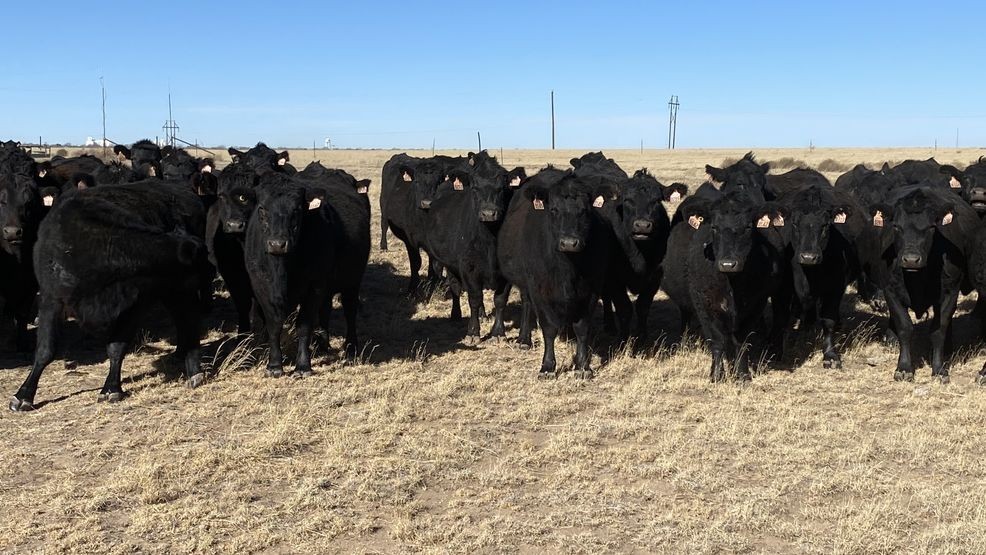
Texas A&M AgriLife Extension Service hosted a risk and protection seminar for crops and livestock in the Texas Panhandle and parts of Lubbock on Wednesday. Ag Producers and ranchers who attended the program earned 8 CEUs. (Drew Powell/KVII)
Texas A&M AgriLife Extension Service hosted a risk and protection seminar for crops and livestock in the Texas Panhandle and parts of Lubbock on Wednesday. Ag Producers and ranchers who attended the program earned 8 CEUs. (Drew Powell/KVII)
Texas A&M AgriLife Extension Service hosted a risk and protection seminar for crops and livestock in the Texas Panhandle and parts of Lubbock on Wednesday. Ag Producers and ranchers who attended the program earned 8 CEUs. (Drew Powell/KVII)
Several top U.S. officials testified before the House Homeland Security Committee this week as part of an oversight hearing on border security and immigration enforcement.
Among them was Customs and Border Protection (CBP) Commissioner Rodney Scott.
Scott defended current enforcement operations, describing the year as one marked by aggressive action and expanded operational capabilities.
We have now implemented effective policies, established unified priorities and objectives across all federal departments, and empowered our workforce to do their jobs by simply enforcing the laws that already exist. We have imposed consequences for those who break our laws, the laws that this body enacted.
Stay with Texas Border Watch for continuing coverage of border security developments across Texas and beyond.

 National Headline