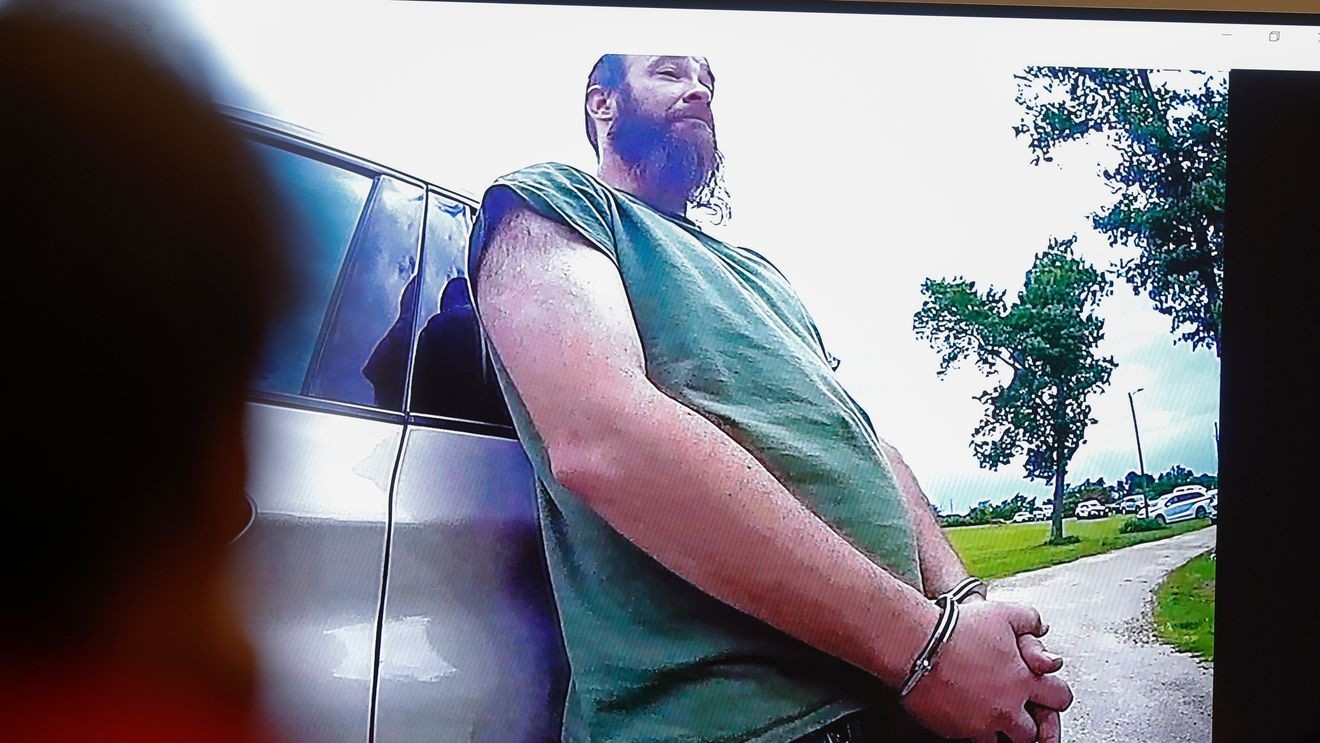
LINN COUNTY, Iowa — In the case against Luke Truesdell, the man convicted of killing four people in a rural Iowa outbuilding in 2024, prosecutors and victims’ families described a crime marked by brutality, complex evidence, and lasting emotional devastation.
“You know, this case was unique because a lot of questions people had right away was, ‘How do four people get killed and not any one of them notices it or stop it,’” said Linn County Attorney Jordan Schier.
Truesdell was sentenced in February, 2026, to three life sentences and a 50-year sentence for the murders of Brent Brown, Amanda Parker, Romondus Cooper and Keonna Ryan on June 5, 2024. Truesdell’s attorneys have since filed a notice to appeal with the Iowa Supreme Court.
The case marked Linn County’s first quadruple murder investigation. Investigators were able to find the murder weapon and got a confession to take to the courtroom.
“A lot of our trial preparation is determining how we’re going to tell a story,” said First Assistant Linn County Attorney Monica Slaughter. “We determine how we’re going to tell the story, and what chronology we’re going to do; witnesses and pieces of evidence. We essentially comb through everything that we’ve been given, which is thousands of pieces of evidence, thousands of photographs.”
Iowa’s News Now took a deep dive into the case – Watch Part 2: Crime Scene to Conviction: The Luke Truesdell Murders on YouTube.
Family members of the victims spoke about the enduring impact of the killings, emphasizing the personal loss behind the case.
Brent Brown’s family said his young son will grow up without ever knowing his father. Amanda Parker’s sister recalled their final conversation on the morning of June 5, 2024, just hours before the killings. Other relatives described shattered families and overwhelming grief, including a 13-year-old granddaughter struggling to cope with her father’s death.
“These lives don’t just end — the impact continues forever,” one speaker said.
Prosecutors Monica Slaughter and Jordan Schier explained that the case relied heavily on piecing together a timeline from surveillance footage, audio analysis, and physical evidence.
They said one of the biggest challenges was explaining how four people were killed in the same location without interruption — a question central to the investigation.
RELATED: DNA and surveillance video highlighted in quadruple murder trial
Surveillance video from the property did not clearly show the killings but captured movement around the outbuilding. Prosecutors argued the footage showed victims entering the building and never leaving, while Truesdell was seen moving in and out during key moments.
Investigators also analyzed audio from the scene. Despite strong wind noise, a sheriff’s lieutenant testified he heard what he believed was a scream, which prosecutors said helped establish the timeline of the attack.
Authorities identified a metal pipe as the murder weapon. According to prosecutors, Truesdell directed investigators to its location.
They said the pipe contained his DNA on the handle, and fragments consistent with the weapon were found in victims’ injuries. Prosecutors argued the DNA evidence indicated significant force was used.
“To get touch DNA, there has to be a certain degree of friction to rub enough of it off,” Slaughter said. “That pipe was just rough enough with the force that was used, right, to swing and strike, to actually collect DNA on the pipe itself was indicative to us when we were preparing for this case to demonstrate how forcefully that pipe was used to cause the injuries that were caused.”
ALSO WATCH: From Crime Scene to Conviction – Part 1
Prosecutors also said Truesdell confessed to the killings and told investigators he acted alone, repeatedly stating his father had no involvement.
They said his stated motives included drug addiction and a desire for notoriety, including wanting a movie made about him. However, portions of that confession were not presented to the jury during trial.
RELATED: Confession and evidence revealed in Truesdell murder trial
Defense attorneys questioned the reliability of the surveillance footage, arguing it showed only indistinct “shadows” or “blobs” and did not definitively identify individuals.
They also pointed to gaps in visibility due to vehicles blocking camera views and raised concerns about evidence that was not tested, including clothing worn by Truesdell’s father.
Prosecutors said their role was not to dramatize the crime but to present facts while being mindful of the victims’ families.
They also pushed back against public suspicion toward Truesdell’s father, saying evidence — including the defendant’s own statements — cleared him of involvement.
“Winning the big cases is not celebrated in the way that I think that the public thinks,” Slaughter said. “Even when you do win, those victims, those families can never be whole.”
 National Headline