Safe Money and Income (Adam Waskey)
6:00 pm - 7:00 pm
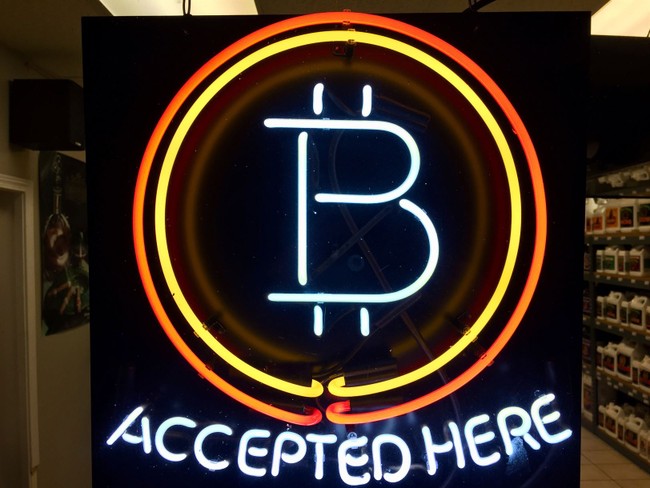
Zhao Wang, aka “Oscar,” pleaded guilty in federal court today and admitted he participated in a $27 million fraud and money laundering scheme targeting about 2,000 elderly victims across the United States.
Wang, a Chinese national, is the lead defendant charged in a five-defendant indictment unsealed in 2024.
According to public documents, members of the conspiracy operated a series of technical support, bank impersonation and government impersonation, and refund scams targeting elderly victims.
Victims received unsolicited phone calls, emails, and pop-up ads directing them to call a phone number. Unbeknownst to the victims, those phone numbers belonged to India-based scam call centers. Once a victim called the call center, members of the conspiracy used social engineering techniques to build trust with victims. In many instances, the conspirators had victims download commercially available remote desktop software, which the conspirators used to access victims’ computers and to carry on the scams.
One of the most frequent scams was a refund scam. In the refund scams, victims were told they were entitled to a small refund, for example, from a retailer for an alleged unauthorized charge. While pretending to process the refund, the victim would accidentally be “over-refunded” money. The conspirators would then instruct the victim to send the alleged over-refunded money through wire transfers or in cash via express mail to members of the conspiracy. In reality, the victims had been refunded any money and victims were scammed into sending their own money.
Victims were instructed to send the alleged over-refunded money via wire transfers and in bulk cash via express mail packages to members of the conspiracy, including defendant Zhao Wang, in the United States. When a victim was duped into sending bulk cash in the mail, Wang would provide his India-based co-conspirators a fictitious name plus an address of a retail location that could accept express mail packages. Those names and addresses would then be relayed to the victims, who were instructed to express mail the bulk cash. Then, once a victim had sent the cash in the mail, Wang and his co-conspirators would use fake IDs to get the packages of cash sent by the elderly victims.
In his plea agreement, Wang admitted that he obtained the fake IDs personally and provided them to his co-conspirators. Wang also admitted that he coordinated and oversaw the activities and recruited others, including his co-defendants, to work on his behalf in furtherance of the fraud scheme.
Investigators identified over 2,000 elderly victims from throughout the country, including victims in San Diego, who were defrauded and suffered over $27 million in losses over an approximately two-year period between 2021 and 2023.
In publicly filed documents, Wang also admitted that after receiving the fraud proceeds, he and his co-conspirators laundered the money using cryptocurrency back to their foreign-based counterparts.
Wang admitted that, typically each day after collecting victim packages, Wang’s co-conspirators would deliver the money from the packages to him. Wang would then coordinate with his foreign-based co-conspirators, who would provide a cryptocurrency wallet that Wang would use to transfer cryptocurrency. Wang took upwards of 18 percent of the fraud proceeds and transferred the rest via cryptocurrency to his co-conspirators. Wang also admitted that he laundered the proceeds to promote the fraud scheme by using fraud proceeds to pay co-conspirators and to purchase the fake IDs used in the scheme.
Wang and his four co-defendants were charged by indictment in June 2024. In August 2024, federal agents conducted a nationwide takedown of this investigation, which led to Wang’s arrest in Las Vegas, Nevada.
A sentencing hearing for Zhao Wang is scheduled for April 3, 2026, at 9:00 a.m., before U.S. District Judge Robert S. Huie.
This case is being prosecuted by Assistant U.S. Attorney Kevin Mokhtari.

 National Headline