(TNND) — Consumer sentiment is “treading water,” with a growing divide between the haves and the have-nots, according to Joanne Hsu, the director and chief economist of the University of Michigan Surveys of Consumers.
Each month, Hsu and her team update an index of consumer sentiment.
February’s final reading, released Friday, came in at “56.6.”
That’s more than a 20% drop from where the index stood at the start of last year and far below the long-term average reading of around 85.
But there’s been essentially no change over the last couple of months.
“It’s not really moving up. It’s not really moving down. It’s treading water,” Hsu said.
Under the hood, Hsu said they did see some movement within certain population groups.
February saw an increase in sentiment for consumers with the largest stock portfolios, given the strong performance in the markets.
But she said that was balanced out by an equally sized drop in sentiment for people who don’t own any stock.
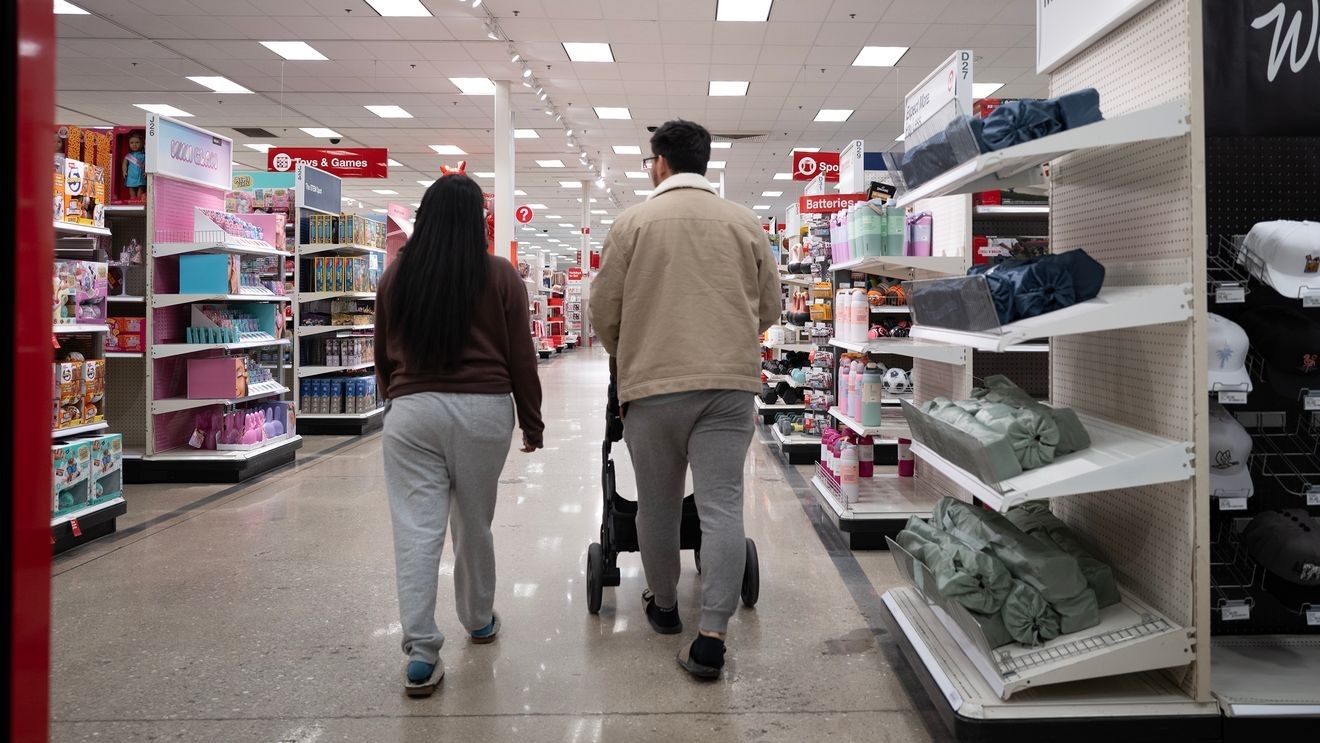
There’s been a lot made recently of the so-called K-shaped economy, in which lower-income people are disproportionately hurt by inflation while high-income households fare better.
Hsu said that’s actually nothing new in the economy. But she did say they’re seeing the gap widen.
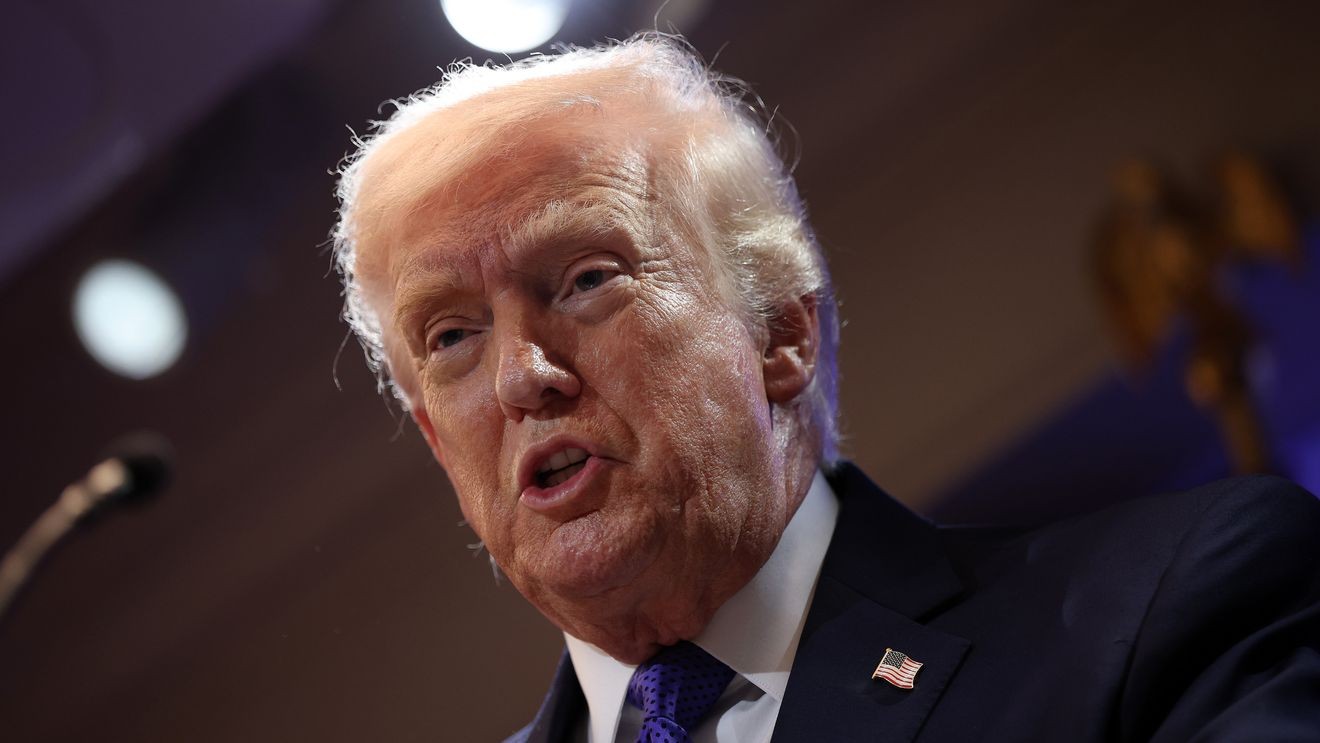
Sentiment dropped early last year among all income levels as President Donald Trump unveiled his tariff plans.
Since then, sentiment has rebounded for high-income people while it has continued to stagnate for lower-income folks.
The pain of high prices and the weakening labor market continue to be the top drags on consumer sentiment, Hsu said.
But wealthier people feel like they are better equipped to weather those challenges.
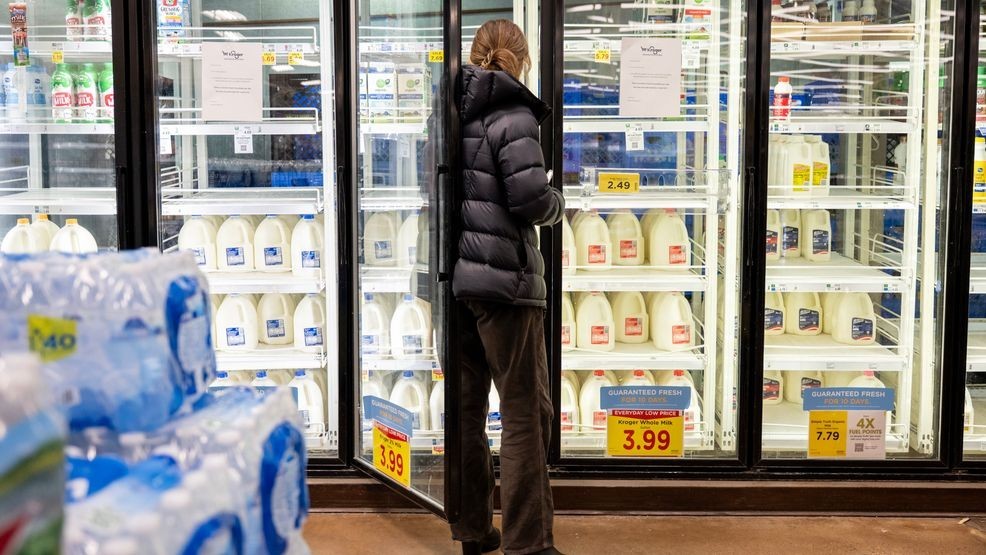
FILE – A customer shops at Kroger on January 22, 2026, in Little Rock, Arkansas. (Photo by Will Newton/Getty Images)
Bank of America Institute Senior Economist David Tinsley told The National News Desk a week ago that the K-shaped economy appears to be hitting the middle class harder now.
“It’s been there for a while, that gap, and we have noted it, but it’s getting wider,” Tinsley said. “And I think that’s the concern really. The economy for a long time was being driven by essentially higher- and middle-income households, but increasingly it’s being driven more and more by higher-income households, with the middle slowing. And that, in some respects, makes it a slightly more fragile picture, I would argue.”
Hsu said 46% of the University of Michigan survey respondents spontaneously mentioned high prices as a drag on their personal finances.
That’s a high share of unsolicited responses for any singular topic, and it’s particularly felt by lower- and middle-income people, she said. But Hsu said around a third of the wealthiest consumers were still mentioning prices this month.
“It absolutely still registers for them,” she said. “It might not be as painful, but when you ask them about their personal finances, it still comes up.”
Over 40% of consumers spontaneously mentioned tariffs, she said.
“I am really interested in what it’s going to look like after today,” Hsu said, referring to the Supreme Court decision on Friday that struck down Trump’s authority to impose sweeping tariffs.
Consumers point to tariffs as an upward pressure on prices, Hsu said. But she said policy uncertainty surrounding tariffs has also rattled consumers.
The tariff-related responses on the University of Michigan survey going forward will largely depend on how much uncertainty was resolved by the Supreme Court decision, she said.

 National Headline