CORPUS CHRISTI, Texas (WOAI/KABB) — Day one of the trial of former Uvalde CISD police officer Adrian Gonzales took a dramatic turn when unexpected testimony from a teacher prompted the judge to temporarily remove the jury and question the prosecution.
The trial, centered on Gonzales’ actions during the Robb Elementary shooting, hit a snag when a teacher gave testimony the defense said was never disclosed and differed from prior statements. Judge Sid Harle immediately excused the jury and questioned the district attorney about the disclosure.
The surprise testimony raises questions about the credibility of the witness and could have major implications for the case, including the possibility of a mistrial. Withholding information during the discovery process can be a serious offense, called a Brady violation.
The judge will meet with the lawyers on Wednesday to determine how to move forward.
The jury is set to return on Thursday.
This followed an emotional first day in which jurors and victims’ family members listened to frantic 911 calls and were presented with disturbing evidence tied to the Robb Elementary School shooting.
Opening statements began Tuesday morning in a tightly secured courtroom, where victims’ families and media members listened as prosecutors and defense attorneys laid out sharply different narratives about Gonzales’ actions during one of the deadliest school shootings in U.S. history.
RELATED: Jury presented with harrowing evidence during testimony in Robb Elementary shooting trial
A prosecutor told jurors Tuesday that Gonzales arrived outside the school just before the teenage gunman went inside but didn’t make a move to stop him even when a teacher pointed to where he was firing in a parking lot.
The officer went into Robb Elementary only “after the damage had been done,” special prosecutor Bill Turner said during opening statements.
Jurors were shown graphic images from the scene and heard a frantic 911 call placed by Gilbert Limones, a part-time pastor at Hillcrest Funeral Home, who encountered the gunman before the attack at the school. In the recording, Limones could be heard desperately pleading for help as the shooter fired at a passing truck.
“There’s kids out there! There’s kids out there! He’s shooting at a truck going by! Hurry please!” Limones shouted during the call, followed by a prayer that left many in the courtroom visibly shaken.
Tissue boxes were brought to the families as the testimony began. Some shook their heads as they listened to audio from the first calls for help. Their cries grew louder as the horror unfolded on the recordings.
Uvalde District Attorney Christina Mitchell accused Gonzales of failing to follow his active shooter training and not moving toward gunfire. Special Prosecutor Bill Turner, appearing emotional, described children inside classrooms 111 and 112 sitting in darkness, following lockdown procedures as they waited for help.
“The children in 111 and 112 are doing as trained, lights off, be quiet, and the gunshots get near and the slaughter begins,” Turner told jurors.
The defense, led by former Bexar County District Attorney Nico LaHood, argued that responsibility for the massacre rests solely with the deceased gunman, Salvador Ramos, not Gonzales.
Defense attorneys disputed that Gonzales did nothing, saying he radioed for more help and evacuated children as other police arrived.
“The government makes it want to seem like he just sat there,” said defense attorney Nico LaHood. “He did what he could, with what he knew at the time.”
Defense attorney Jason Goss said prosecutors were attempting to inflame jurors’ emotions by showing graphic evidence.
“They want you so mad at Adrian that you convict him because of this horrible thing that’s happened,” Goss said.
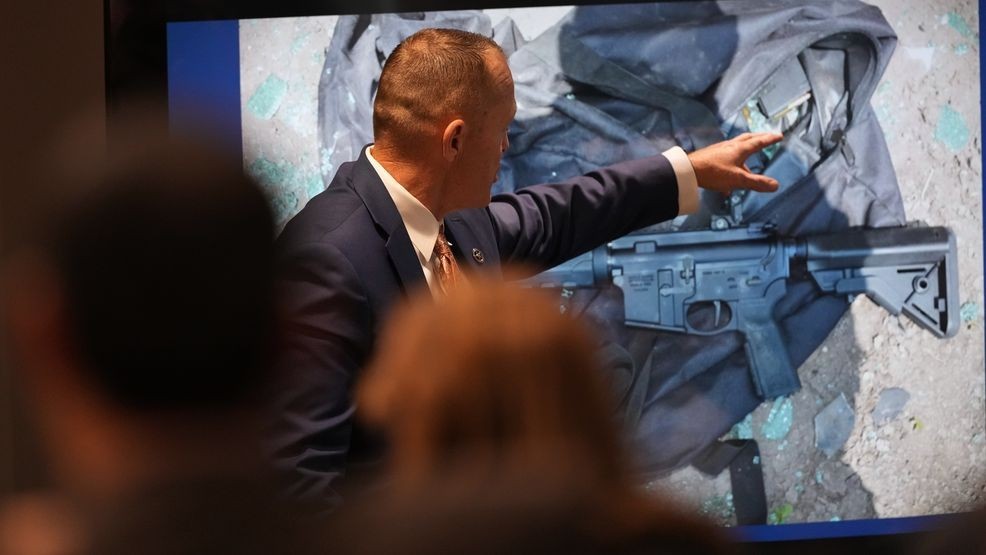
Texas Ranger detective Jason Shea gives testimony during a trial for former Uvalde school district police officer Adrian Gonzales at the Nueces County Courthouse in Corpus Christi, Texas, Tuesday, Jan. 6, 2026. (AP Photo/Eric Gay)
Limones was the first witness to testify, recounting how he tried to speak to the shooter before being fired upon. He ran back to the funeral home and called 911, a moment that reduced some parents and jurors to tears.
Prosecutors focused sharply on Gonzales’ steps in the minutes after the shooting began and as the first officers arrived. They did not address the hundreds of other local, state and federal officers who arrived and waited more than an hour to confront the gunman, who was eventually killed by a tactical team of officers.
A jury of 12, along with four alternates, includes 11 women and five men.
Gonzales, who has pleaded not guilty, faces 29 counts of child abandonment or endangerment and could be sentenced to up to two years in prison if convicted.
He is one of only two officers criminally charged over the law enforcement response to the 2022 shooting that killed 19 students and two teachers. Former Uvalde CISD Police Chief Pete Arredondo has also been charged, though his trial has not yet been scheduled.
The trial was moved to Corpus Christi at the request of Gonzales’ attorneys, who argued he could not receive a fair trial in Uvalde.
Defense attorneys said Tuesday that Gonzales was focused on assessing where the gunman was while also thinking he was being fired on without protection against a high-powered rifle.
“This isn’t a man waiting around. This isn’t a man failing to act,” defense attorney Jason Goss said.
Gonzales and former Uvalde schools Police Chief Pete Arredondo are the only two officers to face criminal charges over the response. Arredondo’s trial has not been scheduled.
Gonzales, a 10-year veteran of the police force, had extensive active shooter training, the special prosecutor said.
“When a child calls 911, we have a right to expect a response,” Turner said, his voice trembling with emotion.
As Gonzales waited outside, children and teachers hid inside darkened classrooms and grabbed scissors “to confront a gunman,” Turner said. “They did as they had been trained.”
It’s rare for an officer to be criminally charged with not doing more to save lives.
“He could have stopped him, but he didn’t want to be the target,” said Velma Lisa Duran, sister of teacher Irma Garcia, who was among the 19 students and two teachers who were killed.
Some families of the victims have voiced anger that more officers were not charged given that nearly 400 federal, state and local officers converged on the school soon after the attack.
An investigation found 77 minutes passed from the time authorities arrived until they breached the classroom and killed Salvador Ramos, who was obsessed with violence and notoriety leading up to the shooting.
State and federal reviews of the shooting cited cascading problems in law enforcement training, communication, leadership and technology, and questioned why officers waited so long.
The officer’s attorneys told jurors that there was plenty of blame to go around — from the lack of security at the school to police policy — and that prosecutors will try to play on their emotions by showing photos from the scene.
“What the prosecution wants you to do is get mad at Adrian. They are going to try to play on your emotions,” Goss said.
“The monster who hurt these children is dead,” he said.
Prosecutors likely will face a high bar to win a conviction. A Florida sheriff’s deputy was acquitted by a jury after being charged with failing to confront the shooter in the Parkland, Florida, school massacre in 2018 — the first such prosecution in the U.S. for an on-campus shooting.

 National Headline