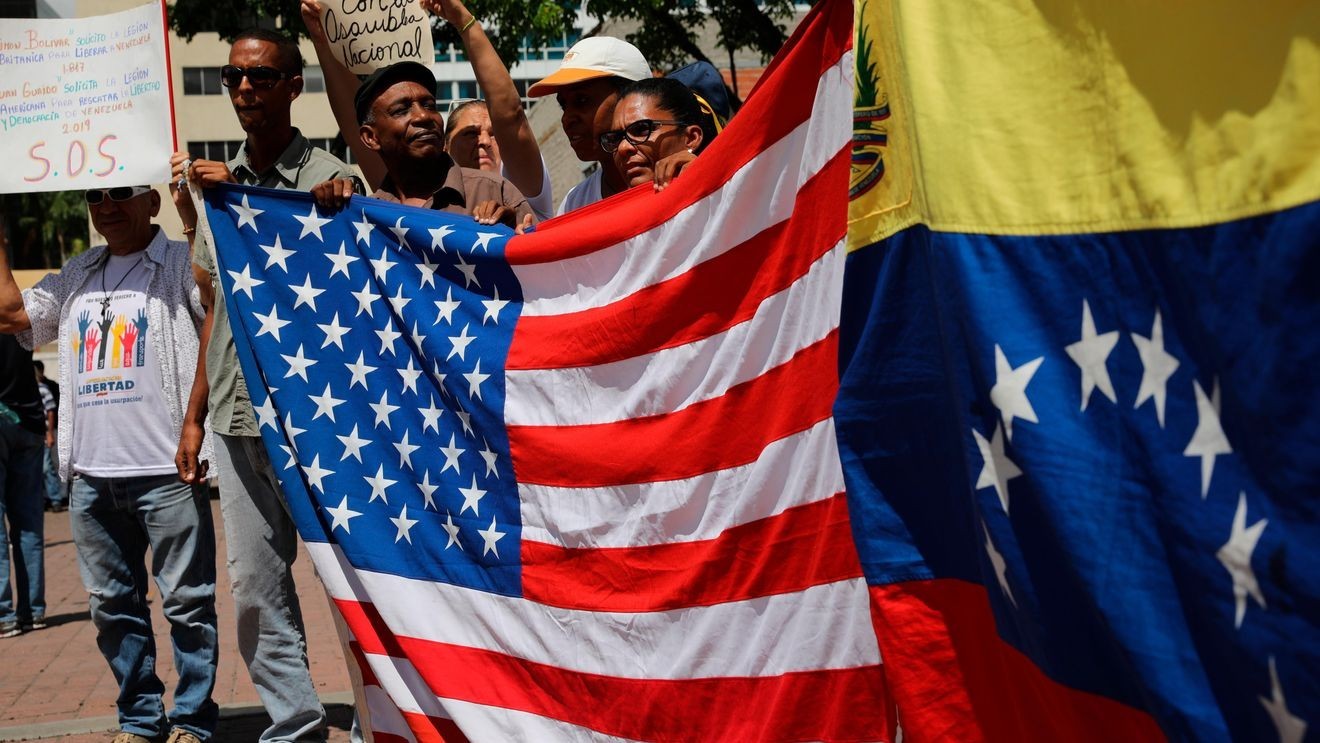

WASHINGTON (TNND) — Tensions between the United States and Venezuela are once again climbing. While recent headlines focus on drug smuggling and U.S. strikes tied to trafficking routes, this standoff has been building for decades.
How did we get here?
According to the Congressional Research Service, the breakdown in U.S.–Venezuela relations really began accelerating in the mid-2000s. Since 2005, the U.S. has imposed targeted sanctions on Venezuelan individuals and entities accused of corruption, democratic backsliding, human rights abuses, and criminal activity. Those actions weren’t tied to just one administration, they’ve come through both Congress and the White House under multiple presidents.
U.S. officials have long pointed to disputed elections and crackdowns on opposition groups under former President Hugo Chávez and current President Nicolás Maduro as key turning points. Over time, diplomacy gave way to sanctions and pressure as Venezuela’s political crisis deepened and its relationship with Washington deteriorated.
Trump taking action
That pressure ramped up significantly under President Donald Trump. The Council on Foreign Relations says Trump revived a “maximum pressure” strategy, accusing Venezuela of playing a major role in cocaine trafficking into the United States. His administration expanded sanctions, designated Venezuela-linked criminal groups like Tren de Aragua as terrorist organizations, and increased military and economic actions tied to narcotics interdiction and regional security.
Trump Administration officials have been clear that their central issue isn’t just policy differences, it’s Nicolás Maduro himself. The administration argues his government is illegitimate, corrupt, and destabilizing, framing Venezuela less as a normal diplomatic partner and more as a regional security threat connected to organized crime.
But to really understand why Venezuela is in this position, you have to zoom out, way back, to oil.
Zooming in on the origin of Venezuela’s issues
Venezuela’s modern political system took shape in the early 1900s, after the discovery of massive oil reserves transformed the country almost overnight. Oil quickly became the backbone of the economy and the main source of government power, centralizing wealth and decision-making in the state, according to the Council on Foreign Relations. Whoever controlled the government, controlled the oil, and that dynamic defined Venezuelan politics for generations.
A major turning point came in 1976, when Venezuela formally nationalized its oil industry, as documented by The New York Times. The decision fueled expanded social spending and government power, but it also locked the country into near-total dependence on oil revenues.
That dependence only deepened under Hugo Chávez. Data from the Council on Foreign Relations shows oil exports rose from about 71 percent of Venezuela’s total exports in 1998 to nearly 98 percent by 2013. When global oil prices collapsed in 2014, the economy collapsed with them, triggering shortages, debt, and widespread unrest that still shape life in Venezuela today.
Economists say that boom-and-bust cycle left Venezuela especially fragile. According to the Economics Observatory, decades of oil dependence, weak institutions, and entrenched corruption hollowed out the broader economy. As state revenues dried up, criminal networks grew more powerful and the government’s ability to function steadily eroded.
All of that context matters now. Today’s U.S.–Venezuela tensions aren’t just about a single strike or a single policy decision, they’re the result of years of political decay, economic mismanagement, and a long-running confrontation between Washington and a government it sees as illegitimate and destabilizing.

 National Headline