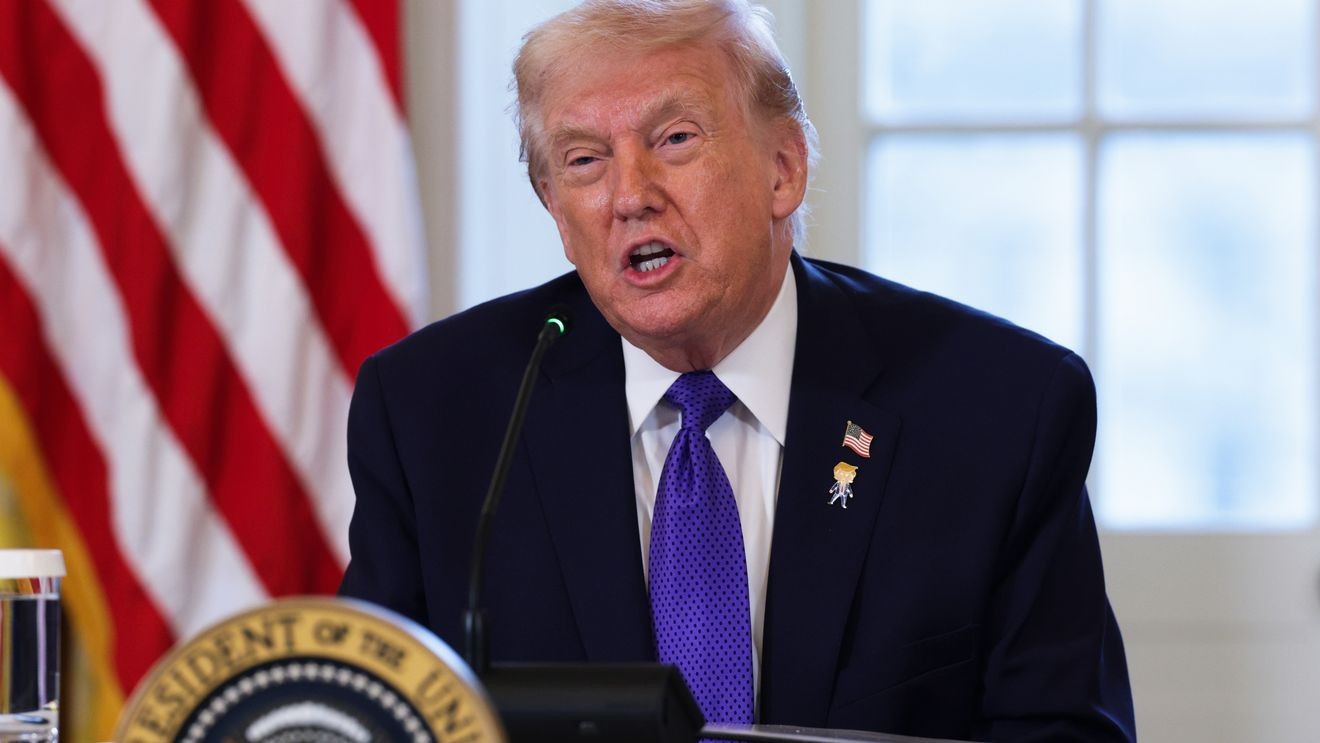

WASHINGTON (TNND) — President Donald Trump has now “greenlit” a sweeping Russian sanctions bill that would impose 500% tariffs on any country supporting Moscow, according to reporting from the Associated Press, dramatically raising the economic stakes for nations aligned with Russia, as the war with Ukraine approaches its fourth year.
But Ukraine is just one piece of a much larger and increasingly volatile global picture.
Conflicts erupting around the World
According to the Council on Foreign Relations Global Conflict Tracker, multiple major conflicts are unfolding simultaneously across nearly every region of the world. In Sudan, a brutal civil war between rival military factions and armed groups has dragged on for more than three years, triggering mass displacement and widespread humanitarian suffering. In Gaza, repeated ceasefire efforts have failed to fully halt fighting, with deadly clashes continuing between Israel and Hamas. Myanmar remains locked in a civil war as ethnic armed organizations battle the country’s central government, while Nigeria continues to face persistent insurgencies from extremist groups such as Boko Haram, which the U.S. designates as a foreign terrorist organization. Meanwhile, tensions between Israel and Iran, though not a declared war, have flared repeatedly through proxy violence and regional strikes, keeping the region on edge.
And the data suggests this surge in violence isn’t anecdotal, it’s historic.
The Global Peace Index reports that more than 60 state-based armed conflicts were recorded globally in 2023 and 2024, the highest level since records began after World War II. In 2024 alone, researchers counted 61 ongoing conflicts across 36 countries, marking the most widespread global violence since 1946.
Against that backdrop, questions naturally turn to the United States’ role.
America’s indirect role in conflicts
While the U.S. is not officially at war in any of today’s major global conflicts, it remains deeply and strategically involved. The Council on Foreign Relations notes that the United States maintains an extensive military footprint in the Middle East, including permanent bases and naval assets. American forces are currently engaged in limited combat and counterterrorism operations in countries such as Iraq, Syria, Yemen, and Somalia, while also backing allies indirectly through weapons, funding, intelligence sharing, and deterrence strategies in flashpoints like Ukraine, Israel–Gaza, and Taiwan–China tensions.
Taken together, this marks a clear shift from past decades. Instead of large-scale ground wars, the U.S. is now operating in an era defined by persistent, global, lower-level military engagement and proxy conflicts, often without formal declarations of war.
One of the biggest areas of uncertainty right now remains the standoff between Israel and Iran. After a brief direct clash and ceasefire last year, both sides publicly insist they do not want a full-scale war, yet both are actively preparing for one if tensions escalate. Israel continues targeted strikes against Iran-backed groups such as Hezbollah, while Iran signals it is prepared to respond. Analysts warn this creates a precarious situation where miscalculation or proxy attacks could rapidly spiral into a broader regional conflict.
The bottom line
While the wars themselves differ in location and scope, the trend is unmistakable. The world is experiencing the highest level of conflict since World War II, and the United States, even without formally declaring war, remains deeply entangled in how those conflicts evolve next.

 National Headline