WASHINGTON (TNND) — The price tag on the U.S. war with Iran is climbing fast—and it’s already in the tens of billions.
Early estimates from the Center for Strategic and International Studies (CSIS) put the cost at about $16.5 billion by day 12 of what the Pentagon has called Operation Epic Fury, based in part on briefings provided to Congress reported by The New York Times. Now, on day 18 of the conflict, the Pentagon hasn’t publicly confirmed official figures.
Why did the costs skyrocket early?
The short answer is simple: weapons, and a lot of them. According to CSIS, the biggest driver of early costs was high-end munitions, especially in the opening days of the campaign. The U.S. relied heavily on long-range precision weapons like Tomahawk cruise missiles, which can cost roughly $3.5 million per missile, which adds up fast. Reporting from The Washington Post, citing Pentagon briefings, found that about $5.6 billion was spent on munitions in just the first two days of fighting. Combined with other operational costs, total daily spending in the early phase reached as high as $2 billion per day, according to CSIS estimates.
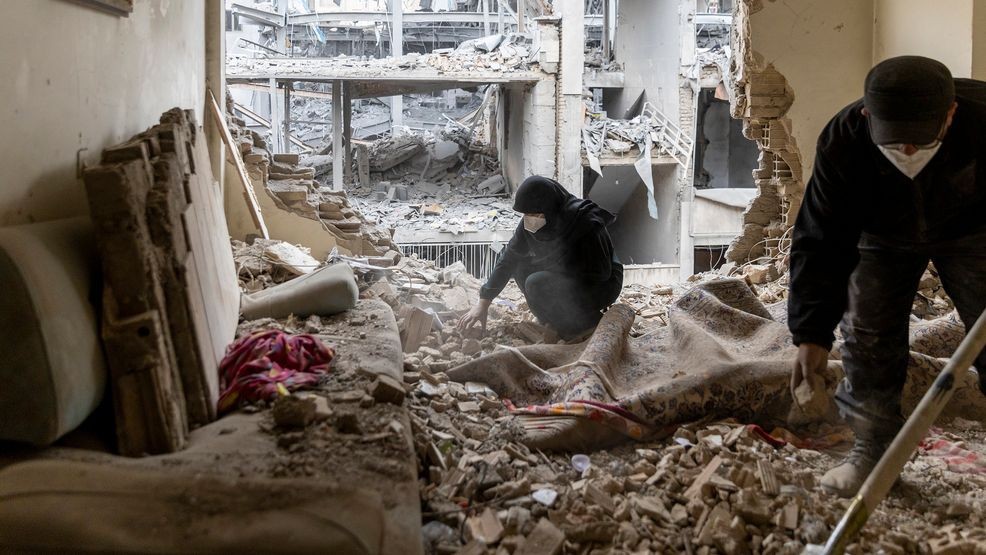
TEHRAN, IRAN – MARCH 15: People sift through the rubble in a house in the Beryanak District after it was damaged by missile attacks two days before, on March 15, 2026 in Tehran, Iran. The United States and Israel continued their joint attack on Iran that began on February 28. Iran retaliated by firing waves of missiles and drones at Israel, and targeting U.S. allies in the region. (Photo by Majid Saeedi/Getty Images)
Why are daily costs starting to fall
CSIS analysts say the U.S. hit what officials describe as a “munitions transition point” around day four, a shift away from the most expensive, long-range weapons toward more cost-effective options. Instead of firing multi-million-dollar cruise missiles, U.S. forces have increasingly used JDAM-guided bombs, which can cost under $100,000 each. That shift has brought daily costs down significantly. Current estimates suggest the U.S. is now spending closer to $500 million per day, according to CSIS analysis and Pentagon reporting. Still, even at that reduced rate, the burn rate remains substantial.
What the $16.5 billion doesn’t include
And that headline number, $16.5 billion, doesn’t tell the whole story. Early in the war, CSIS estimated daily costs at roughly $900 million during the initial phase, but analysts caution that these figures represent only the immediate cost of combat operations. Reporting from The New York Times notes that long-term costs are not yet accounted for, and history suggests those can dwarf early estimates. Wars in Iraq and Afghanistan ultimately cost the U.S. trillions of dollars once veterans’ care, equipment replenishment, and long-term operations were included.
In other words, what we’re seeing now is just the opening bill.
The hidden costs: defense and deterrence
It’s not just offensive weapons driving the price. A major, and often overlooked, cost is defending against Iranian attacks, particularly in Israel and across the region. Iran launched thousands of drones and hundreds of ballistic missiles early in the conflict, according to U.S. and allied officials. In response, the U.S. deployed advanced air defense systems like Patriot and THAAD interceptors, some of the most expensive munitions in the American arsenal. Those systems are not only costly to use but also difficult to replenish quickly, raising longer-term concerns about sustainability, according to CSIS.
The human cost is rising, too
Beyond the financial toll, the war is already exacting a human cost. As of today, 13 U.S. service members have been killed since the start of the conflict, and more than 200 have been injured, though the civilian toll in the Middle East is far higher. While exact figures remain unclear, hundreds, if not thousands, of civilians in Iran and across the region have been killed, based on early reporting and regional assessments. As with most conflicts, those numbers are expected to rise as more data becomes available.

 National Headline