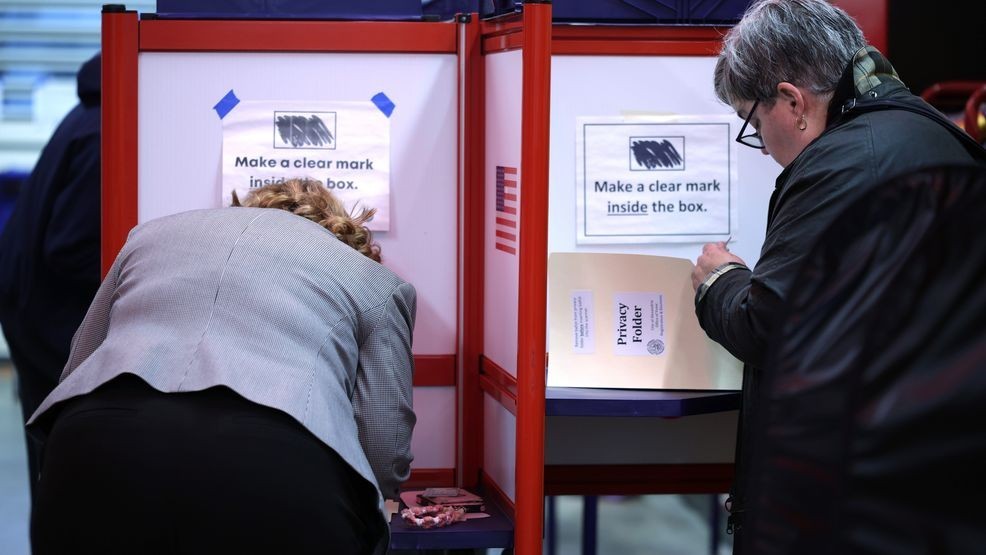
WASHINGTON (TNND) — House Republicans are pushing to strengthen election security, a central priority this Congress, advancing multiple bills they argue are aimed at tightening voting rules and preventing fraud. Among the most prominent proposals are the Safeguard American Voter Eligibility (SAVE) Act and a newer, broader package known as the Make Elections Great Again Act (MEGA).
Overlapping goals, different scope
According to House Administration Committee Chairman Bryan Steil, the MEGA Act is meant to strengthen voter confidence and election integrity. In a statement, Steil said the proposal includes “commonsense voter ID requirements, clean voter rolls, and citizenship verification,” arguing the reforms would make elections “easy to vote, but hard to cheat”.
The SAVE Act is more narrowly focused. It would require individuals to provide proof of U.S. citizenship when registering to vote in federal elections and would tighten verification requirements for mail-in registration applications. The bill also places new obligations on states to ensure only U.S. citizens are added to the voter rolls.
The MEGA Act, by contrast, would significantly overhaul federal election rules. In addition to citizenship verification provisions similar to those in the SAVE Act, the broader bill layers in national voter ID requirements, mandates more aggressive voter list maintenance, and restructures parts of federal registration law.
Criticism from policy experts
In a blog post published by the Cato Institute, adjunct scholar Stephen Richer warned that the legislation could undermine state authority over elections. Richer argued the proposal would prohibit states from offering universal mail-in voting, currently used in states such as Utah, California, and Oregon, and would bar states from counting mail ballots sent by Election Day but received afterward. The bill would also prohibit voters from giving sealed mail ballots to neighbors for delivery, a practice currently allowed in 18 states. Richer contended these changes run counter to principles of federalism by stripping states of long-held discretion over how elections are administered.
Are the changes necessary?
Non-citizen voting in federal elections is already prohibited under the U.S. Constitution and federal statute. A law passed by Congress in 1996 explicitly bars non-citizens from voting in federal elections. Still, Republican lawmakers, including Chairman Steil, argue that existing protections lack sufficient enforcement clarity and should be strengthened.
A 2025 analysis by the Brennan Center for Justice of Louisiana voter rolls found roughly 30 suspected non-citizen votes out of approximately 23.5 million ballots cast over multiple election cycles—about 0.0001 percent of total votes.
Despite the low incidence, conservative policy groups argue that election safeguards should not be based solely on frequency. The America First Policy Institute has emphasized the importance of photo ID requirements, strict ballot-harvesting laws, and firm ballot return deadlines to maintain election security, regardless of how rare violations may be. The group recently released a state-by-state assessment ranking election systems by perceived security. In that analysis, states such as Oregon, California, and New York were rated as less secure, while states including Florida, Tennessee, and Montana were ranked as more secure, according to the institute’s criteria.
As debate continues on Capitol Hill, the dueling perspectives highlight a central tension in the election reform conversation: how to balance voter access, state autonomy, and public confidence in election integrity, especially as lawmakers weigh how much federal involvement is appropriate in a system historically run by the states.

 National Headline