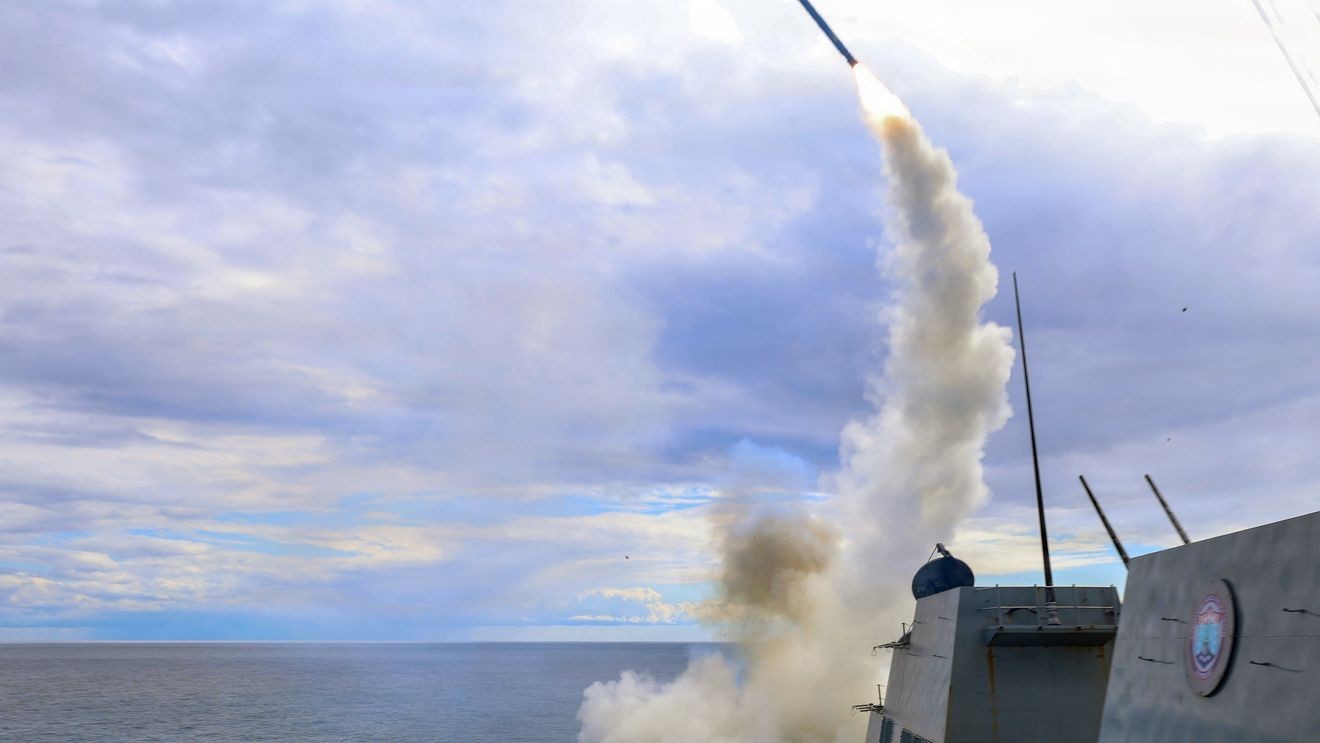
WASHINGTON (TNND) — The White House says the U.S. is prepared to protect commercial shipping through the Strait of Hormuz, as tensions with Iran intensify.
The Strait of Hormuz is one of the most important energy choke points on the planet. The U.S. Energy Information Administration says oil flows through the strait averaged about 20 million barrels per day in 2024, roughly 20% of global petroleum liquids consumption. So, when the Strait looks unstable, markets react fast.
In the last few days, Reuters reported that at least three tankers were damaged in the Gulf as the conflict escalated, adding to fears that energy shipments could be disrupted. On Tuesday, Reuters also reported Brent settled at $81.40 a barrel (up 4.7% that day), as the conflict intensified and traders priced in higher supply risk.
That kind of oil move can feed into U.S. gasoline prices, and GasBuddy has been warning of a near-term jump. A GasBuddy-linked report cites analyst Patrick De Haan saying drivers could see a 10–30 cent per gallon increase.
If shipping through Hormuz is meaningfully slowed, or temporarily halted, the impact wouldn’t be contained to the Gulf. The EIA notes that most oil that transits Hormuz is headed to Asia, and China and India are among the largest destinations for those flows, which is why the risk is global, not local.
And here’s the key point for Americans: even though the U.S. produces a lot of its own oil and gas, we still buy and sell energy in a global market.
The EIA estimates the U.S. received relatively small shares of its petroleum liquids through Hormuz, about 2% of total U.S. petroleum liquids consumption (and about 7% of total U.S. crude oil imports), but global prices still set the tone.
Not for a sustained period in modern history.
A Columbia Center on Global Energy Policy report explains that while Iran has threatened disruption repeatedly, a complete, prolonged shutdown hasn’t happened, and historically, even during major conflict, traffic has continued under heightened risk. Britannica similarly frames the strait as a repeatedly contested chokepoint, but not one that’s been fully and durably sealed off to global shipping.
The closest time to a total shutdown was the 1980s “Tanker War” during the Iran–Iraq conflict: ships were attacked and damaged, but shipping didn’t fully stop.
How did the world keep oil moving then?
Escorts – and a lot of them.
A Strategic Studies Institute / U.S. Army War College publication (via JSTOR) notes that in March 1987 the U.S. agreed to transfer Kuwaiti tankers to the American flag, and in July 1987 the U.S. Navy began Operation Earnest Will, providing naval escorts to tankers in the Persian Gulf. In other words: the playbook was “keep the route open, even in a high-threat environment.”
President Trump said the U.S. Navy would escort tankers through the Strait of Hormuz if necessary, which is essentially a modern version of the Earnest Will concept.
That matters because, as the EIA points out, even without a formal “closure,” the risk of attacks can raise shipping and insurance costs and tighten supply, which can push prices higher.

 National Headline