(TNND) — Israel is fighting a war now on two fronts, one against Iran and one against the Iranian-backed terrorist group Hezbollah.
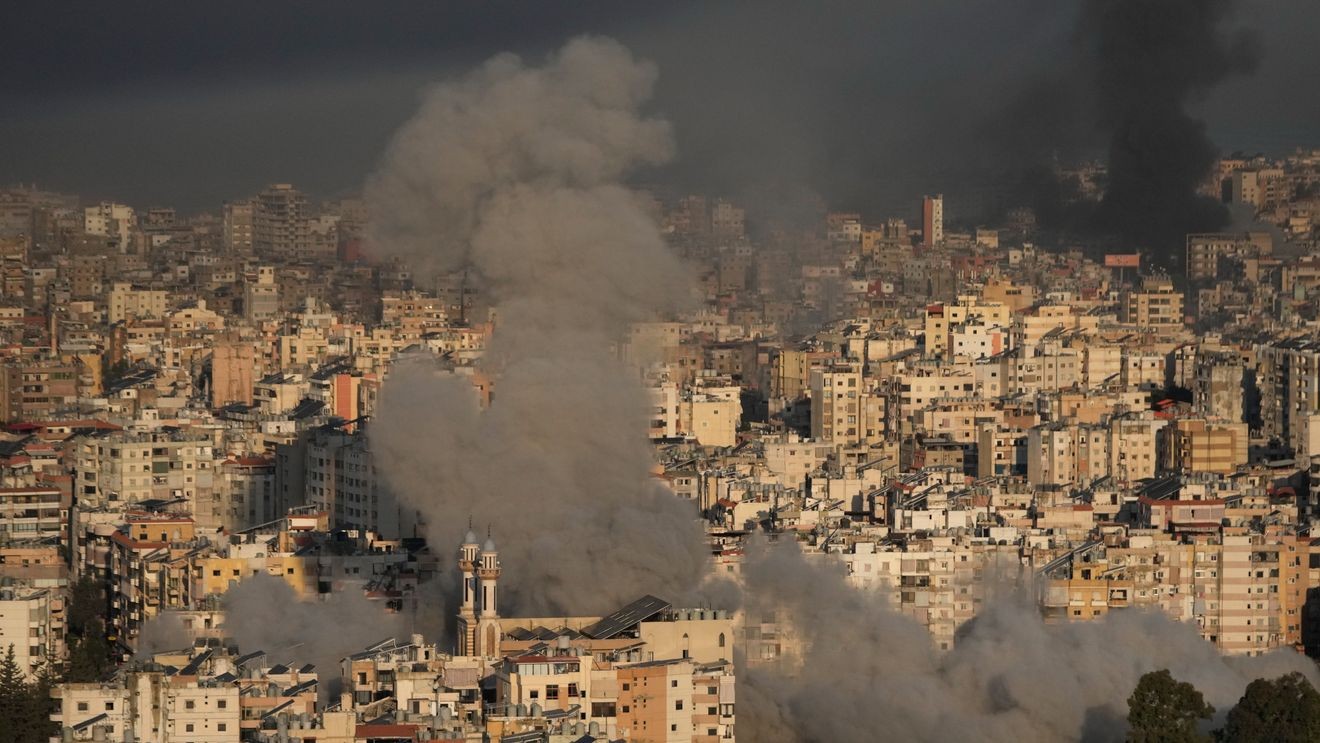
An uneasy ceasefire between Israel and Hezbollah broke this week after Hezbollah fired rockets and launched drones into northern Israel as retaliation for the killing of Iran’s Supreme Leader Ayatollah Ali Khamenei.
Israel responded with force, bombing terrorist targets and sending more troops to southern Lebanon as an extra security buffer.
Hezbollah operates from Lebanon, which borders Israel to the north, though Hezbollah’s military wing operates outside the control of the Lebanese government. And Lebanon’s prime minister announced a new ban on Hezbollah’s military activities.
Israel and Hezbollah routinely exchanged fire after the onset of the Gaza war between Israel and Hamas, another Iranian-backed terrorist group. Fighting between Israel and Hezbollah intensified through late 2024 before a U.S.-brokered ceasefire took hold.
Since then, Hezbollah has been slowly trying to reconstitute its military presence in southern Lebanon, which has been met with limited Israeli strikes.
But that changed when Hezbollah attacked northern Israel early Monday in retaliation for Khamenei’s killing in airstrikes on Iran that were carried out by American and Israeli forces.
Senior Hezbollah official Mohamoud Komati reportedly accused Israel of seeking “an open war” as the hostilities were renewed.
Israel Defense Forces spokesman Lt. Col. Nadav Shoshani said in a video that Hezbollah fired several rockets and drones towards Israeli civilians for the first time in months.
Shoshani said Israel will strike back against Hezbollah and create an additional layer of security with the ground maneuver into Lebanon.
“Hezbollah once again chose the Iranian regime over the safety of the Lebanese people, all for the sake of a fight they cannot win,” Shoshani said in the video. “They will once again realize their mistake and pay the price, because we will continue operating to defend the people of Israel.”
Raphael Cohen, an expert in foreign policy, military strategy and the Middle East at RAND, said it was notable that Hezbollah didn’t retaliate on behalf of Iran during last June’s “12-day war” carried out by Israel and the U.S., in which American bunker-buster bombs struck Iranian nuclear facilities.
But Hezbollah did retaliate on behalf of Iran this time.
And Cohen said that decision puts the lives of Hezbollah’s leadership on the line.
Cohen said it’s hard to completely destroy terrorist organizations, as we’ve seen with American efforts to eradicate al-Qaida and ISIS.
But the powerful Israeli military can seriously degrade Hezbollah’s capabilities with the ceasefire now set aside.
So, given the risk, what was Hezbollah’s rationale for attacking Israel this time?
“I hate to put myself in the shoes of a terrorist group, but if you’re Hezbollah, you’re caught in between here,” Cohen said. “Which is on the one hand, you need to make your Iranian masters happy, because they fund you among other things. They give you weapons and so forth. On the other hand, if you act, you’re going to incur the wrath of the Israelis in particular.”
Cohen said Israel is capable of fighting on multiple fronts. And he said the hostilities with Hezbollah are likely to continue as long as there’s a war in Iran.
Despite multiple foes, Iran is clearly the top priority for Israel, Cohen said.
The Israelis view Iran as “the head of the snake, Hezbollah being the tail,” he said.
Fighting a two-front war is a strain, but it would’ve been harder for Israel had it not already weakened both enemies in previous operations over the last couple of years, Cohen said.

 National Headline