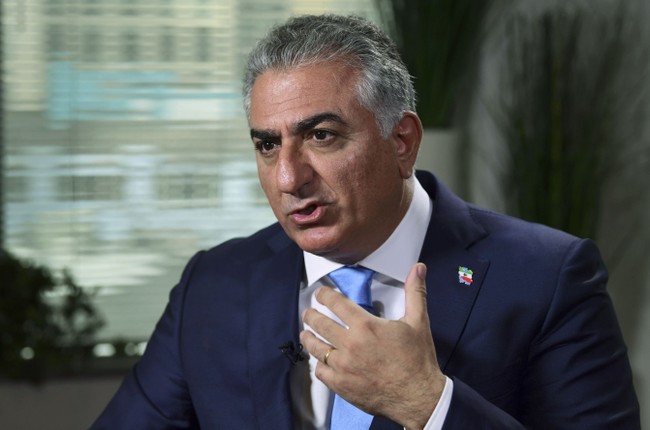
Various Kurdish factions were reportedly involved in a plot to assassinate Crown Prince Reza Pahlavi, the exiled son of Iran’s last shah.
Multiple sources told the Times of Israel about the plot, which allegedly involved a former Voice of America reporter.
Advertisement
Recent reports, based on information provided by activists inside Iran who requested their reporting be published, have exposed what appears to be a coordinated attempt to target Crown Prince Reza Pahlavi, a leading figure in Iran’s opposition. Sources indicate that Kurdish separatist factions—including Komala, the Democratic Party of Iranian Kurdistan (PDKI), the Kurdistan Freedom Party (PAK), the PKK, and Khabat—as well as individuals with historical ties to the Mojahedin-e Khalq (MEK/MKO/NCRI), may have been involved. While the alleged assassination plot did not materialize, concerns over ongoing threats remain, highlighting the perilous political environment surrounding Crown Prince Reza Pahlavi.
For decades, Crown Prince Pahlavi has been a steadfast advocate for Iran’s unity and territorial integrity, rejecting separatist agendas and political fragmentation. His vision for a united Iran has put him in direct opposition to groups seeking autonomy or independence.
Historical grievances—including the execution of Qazi Mohammad and the suppression of Kurdish uprisings during the Pahlavi era—continue to shape political rivalries and contribute to lingering hostility between separatist factions and monarchist or nationalist circles.
Advertisement
Iranian supporters of Pahlavi wish to replace the Islamic regime with a secular, democratic system of government that still respects the nation’s monarchy-era national identity. They point out that the Pahlavi dynasty brought modernization, women’s rights reforms, and closer ties to the West. They view Pahlavi as a unifying figure for various opposition groups inside and outside Iran.
A Wllat Media report claims Ali Javanmardi, a Kurdish-Iranian journalist based in the United States, was paid to target opponents of the Iranian regime, including Pahlavi. The report claims that after Javanmardi “decided to seriously confront Reza Pahlavi and his supporters,” he allegedly organized violent actions and possible assassination plots against the prince and other regime opponents.
A media source claimed Javanmardi “requested 3 million dollars from the intelligence apparatus of the Kurdistan Region to ‘eliminate’ those figures with whom he has problems or who will cause him problems in the future,” and that “this creates the suspicion that his money would be used for assassinating his rivals in the heart of Europe.”
The journalist’s alleged targets include Iranian soccer player Ali Karimi and Pahlavi himself.
Advertisement
The Times of Israel reported that Kurdish separatist media launched a campaign to undermine Pahlavi’s credibility. However, the plan failed and has only empowered the prince and further established him as a prominent enemy of the Iranian regime.
The report further suggests that the alleged plot involved luring Pahlavi to Iraqi Kurdistan under the pretense of political meetings. They planned to kill him there instead of in the United States, where his primary residence is located.
The plan was to use Kurdish separatist-linked intermediaries and safe houses to isolate Pahlavi. This would make it easier to stage an accident or a way to maintain plausible deniability. However, the scheme never actually materialized.
The Kurdish separatist factions in Iran consist of groups of ethnic Kurds who fight for independence from the Iranian regime. They view the government as oppressive to their culture and their rights.
Separatist factions have carried out several violent attacks over the past decade. The Democratic Party of Iranian Kurdistan (KDPI) claimed responsibility for an attack on an Islamic Revolutionary Guard Corps (IRGC) facility in 2018. They killed and wounded several Iranian soldiers.
Advertisement
The Kurdistan Free Life Party (PJACK) has engaged in repeated clashes with Iranian forces along the Iran-Iraq border. They employed embus and roadside bomb attacks that have caused numerous casualties.
Despite sharing animosity toward the Iranian regime, the Kurds also view Pahlavi as their enemy. Several Kurdish groups have criticized Pahlavi for opposing their right to self-determination.
Pahlavi has not explicitly opposed Kurdish independence. But he has argued for Iran’s territorial unity and called for equal rights, decentralization, and protections for minorities. However, he has also contended for preserving Iran’s borders, a stance that Kurdish critics say is a rejection of their right to decide their own political future.
Editor’s Note: Do you enjoy Townhall’s conservative reporting that takes on the radical left and woke media? Support our work so that we can continue to bring you the truth.
Join Townhall VIP and use promo code MERRY74 to get 74% off your membership.

 National Headline